From Patient to Master
The Remarkable Story of Hawayo Takata
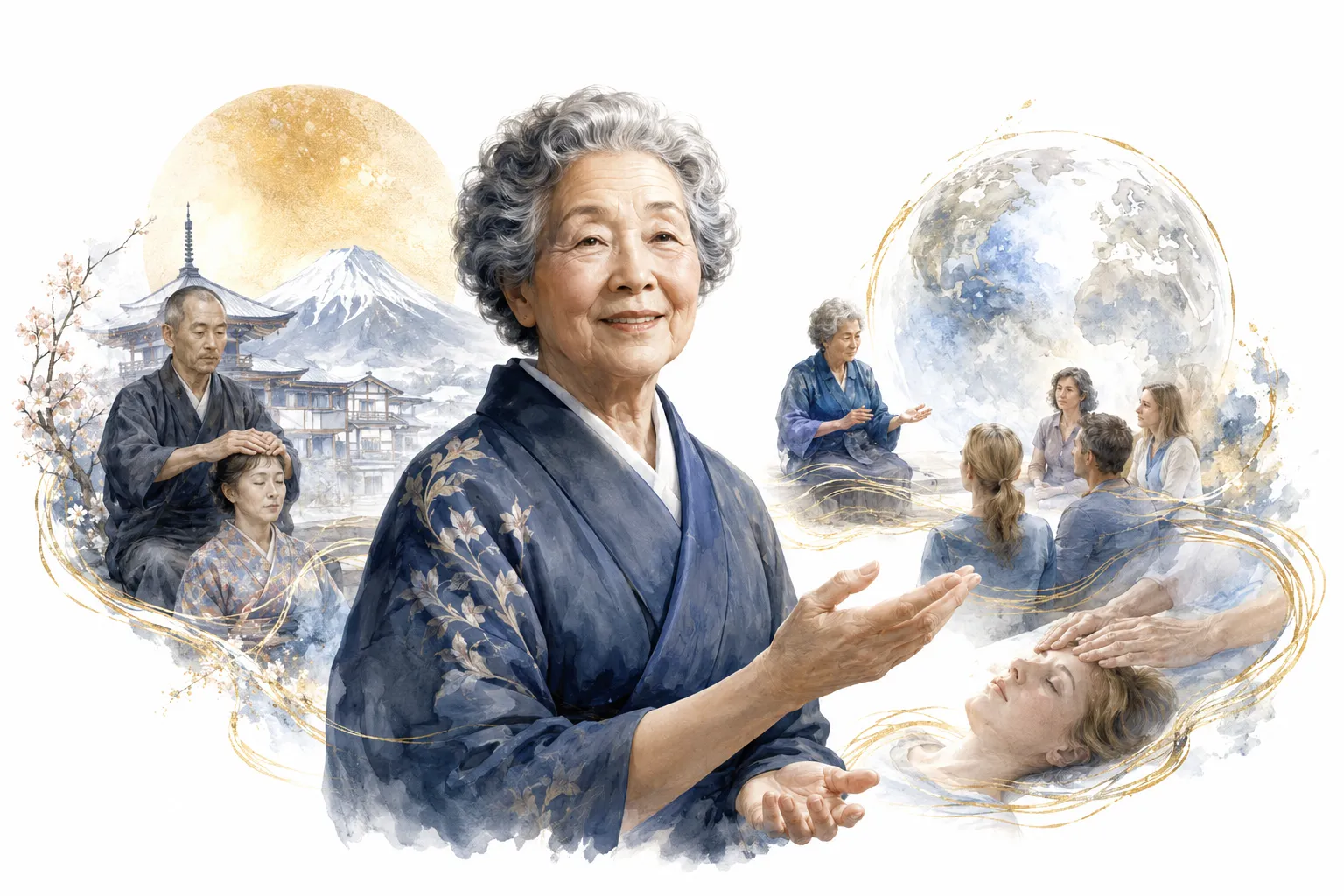
Hawayo Takata was born in 1900 on the island of Kauai, Hawaii. Her parents were Japanese immigrants. She grew up working on sugar plantations.
In 1935, she was a widow with two daughters. She had serious health problems: tumors, gallstones, severe pain. Doctors recommended surgery.
Instead, she traveled to Japan to receive Reiki at Chujiro Hayashi's clinic. She healed. She then asked to learn Reiki. Hayashi trained her, making her a Reiki master in 1936.
Takata returned to Hawaii and began teaching Reiki. She eventually trained 22 masters, who spread Reiki across North America and the world. She died in 1980, leaving an enormous legacy.
Takata's Lineage
How Reiki passed from Usui to Hayashi to Takata to the world.
Mikao Usui (1865-1926)
Founder. Developed Reiki in Japan.
Chujiro Hayashi (1880-1940)
Successor. Systematized Reiki. Trained Takata.
Hawayo Takata (1900-1980)
Brought Reiki to West. Trained 22 masters.
22 Masters
Takata's students. Spread Reiki across North America and Europe.
Worldwide Reiki
Today, Reiki is practiced globally. Millions of practitioners.
Takata's Life Timeline
- Born on Kauai, Hawaii, to Japanese immigrant parents.Grew up in two cultures: Japanese heritage, American context.
- Marries Saichi Takata. Has two daughters.Becomes a wife and mother.
- Widowed. Has serious health problems. Doctors recommend surgery.The crisis that leads her to Reiki.
- Travels to Japan. Receives Reiki at Hayashi's clinic. Heals.Her healing convinces her of Reiki's power.
- Trains with Hayashi, becoming a Reiki master.The bridge is established.
- Returns to Hawaii. Begins teaching Reiki.Reiki begins its Western journey.
- Teaches Reiki in North America. Trains 22 masters.Reiki spreads across the West.
- Dies in Hawaii.Her 22 masters continue her work.
The Miracle That Started It All
How Takata Healed Herself and Became a Reiki Master
In 1935, Takata was in serious pain. She had tumors, gallstones, and other health problems. Doctors recommended surgery. She was afraid.
She remembered hearing about Reiki. Her sister had received Reiki treatment in Japan. Takata decided to try it before surgery. She traveled to Japan and went to Hayashi's clinic.
She received Reiki treatments for several months. She healed. Her tumors disappeared. Her gallstones passed. Her pain vanished.
She was so convinced that she asked to learn Reiki. Hayashi trained her, making her a Reiki master in 1936. She returned to Hawaii and began teaching.
Strategic Changes
How Takata Adapted Reiki for Western Audiences
Takata was a brilliant cultural translator. She knew that Americans in the 1970s would be suspicious of a Japanese Buddhist healing practice.
She presented Usui as a Christian-educated academic. She added the 'Dr' title to his name. She told a story of Usui discovering healing through the Bible.
She also standardized Reiki into three levels with a fee structure. This made it teachable and financially sustainable.
Modern historians have corrected some of her inaccuracies. But most acknowledge that her changes were strategic and helped Reiki spread. Without her adaptations, Reiki might not have left Japan.
Reiki is love. Love is healing. Healing is love. Reiki is the way to love, and love is the way to Reiki.
The 22 Masters Takata Trained
Takata's 22 Masters
The original Western Reiki lineageTakata trained 22 Reiki masters between 1970 and 1980. Their names are recorded in Reiki history. They spread Reiki across North America and Europe.
Phyllis Lei Furumoto
Takata's granddaughter and successorBecame a Reiki master under Takata. Led the Reiki Alliance after Takata's death.
Bethel Phaigh
One of the 22 mastersTaught Reiki in the United States. Her students spread Reiki further.
Barbara McCullough
One of the 22 mastersTaught Reiki in the United States. Influential in Western Reiki.
Key takeaways
The shortest useful version of this page.
Hawayo Takata was a Japanese-American woman who brought Reiki from Japan to the West.
She healed herself of serious health problems through Reiki, then trained to become a Reiki master.
She trained 22 Reiki masters, who spread Reiki across North America and the world.
She adapted Reiki for Western audiences, including adding the 'Dr' title to Usui and creating a Christian origin story.
Modern historians have corrected some of her inaccuracies while honoring her contribution.
Without Takata, Reiki might not be known in the West today.
Frequently asked questions
Was Hawayo Takata Japanese?
She was Japanese-American. She was born in Hawaii to Japanese immigrant parents. She spoke both Japanese and English.
Did Takata change Reiki?
Yes. She adapted Reiki for Western audiences. She added the 'Dr' title to Usui, created a Christian origin story, and standardized the teaching into three levels.
Why did Takata charge money for Reiki?
She charged a fee for teaching Reiki. This was controversial, but she argued that people value what they pay for. The fees also made teaching sustainable.
How many Reiki masters did Takata train?
She trained 22 Reiki masters between 1970 and 1980. Those 22 masters spread Reiki across the West.
Is Takata considered the 'Grand Master' of Western Reiki?
Many consider her the Grand Master of Western Reiki. Her lineage is the source of most Western Reiki today.
Sources
Sources are listed for transparency. A citation supports only the claim it directly addresses. Prefer primary research, systematic reviews, government health agencies and official institutional pages when evaluating health-related statements.
- Frank Arjava Petter, Reiki Fire, 1997.
- Bronwen and Frans Stiene, The Reiki Sourcebook, 2003.
- Hawayo Takata's own teachings and records.
- Reiki Alliance historical materials.
Found a broken source or unsupported claim? Report a correction .