The Stress-Sleep Cycle
How Reiki May Improve Sleep
Insomnia is often driven by stress. Stress raises cortisol. Cortisol keeps you awake. The more stressed you are, the less you sleep. The less you sleep, the more stressed you become.
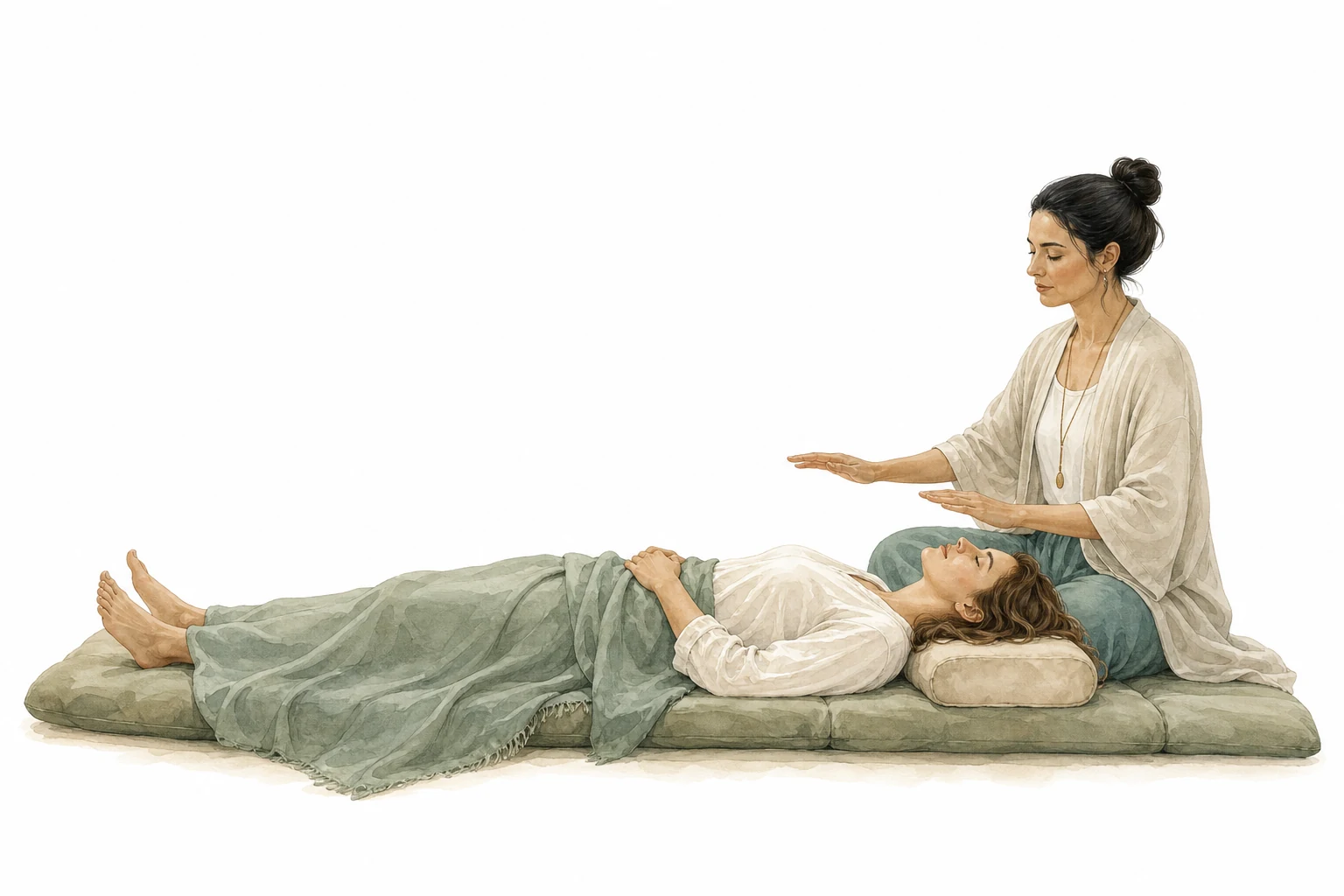
Reiki reduces stress. It activates the relaxation response. Cortisol drops. Heart rate slows. Breathing deepens. The body shifts from fight-or-flight to rest-and-digest.
When the body is in rest mode, sleep comes more easily. Reiki does not force sleep. It creates the conditions for sleep. It quiets the engine. Then sleep can come.
How Reiki May Improve Sleep
The stress-sleep pathway.
Reiki Session
Activates relaxation response. Reduces stress.
Lower Cortisol
Stress hormone decreases. Body leaves fight-or-flight.
Parasympathetic Activation
Rest and digest mode. Heart rate slows. Breathing deepens.
Better Sleep
Fall asleep faster. Stay asleep longer. Wake rested.
What Research Says About Reiki for Sleep
A review of studies on Reiki and sleep quality.
Reiki improves sleep quality
Scientific Study
Reiki reduces time to fall asleep
Scientific Study
Reiki reduces cortisol (stress hormone)
Scientific Study
Reiki improves sleep in cancer patients
Scientific Study
Reiki treats medical sleep disorders
Medical Guidance
How Practitioners Work with Insomnia Clients
Many clients come for sleep. After one session, they often sleep deeper that night. After regular sessions, their sleep pattern changes. They fall asleep faster. They wake less often. They feel more rested. Reiki does not force sleep. It creates the conditions for sleep.
Reiki is not a sleeping pill. It works differently. It reduces the stress that keeps you awake. Less stress, better sleep. It is a natural approach. Combine with good sleep hygiene for best results.
If you have chronic insomnia, see a doctor. There may be underlying medical issues. Reiki can complement medical care. It cannot replace it.
Before Bed
Self-Reiki Techniques for Better Sleep
Before bed: Lie down in a comfortable position. Take three deep breaths. Place your hands on your head. Hold for 2 minutes. Move hands to your heart. Hold for 2 minutes. Move hands to your lower abdomen (hara). Hold for 2 minutes. Draw Cho Ku Rei over your body. Intend: 'I release the day. I am safe. I sleep deeply.'
If you wake during the night: Do not stress. Gently place your hands on your heart or lower abdomen. Draw Sei He Ki on your forehead. Intend: 'I release racing thoughts. I return to sleep.' Breathe deeply.
For anxiety-related insomnia: Draw Sei He Ki on your heart before bed. Intend: 'I release anxiety. I am at peace.' Hold for 5 minutes.
Key takeaways
The shortest useful version of this page.
Reiki may help with insomnia by reducing stress, calming the nervous system, and promoting relaxation.
The mechanism is the relaxation response: lower cortisol, slower heart rate, deeper breathing.
Many people report falling asleep faster and sleeping more deeply after Reiki.
Reiki is not a cure for medical sleep disorders. See a doctor for persistent insomnia.
Combine Reiki with good sleep hygiene for best results.
Daily self-Reiki before bed can improve sleep quality over time.
Frequently asked questions
Can Reiki cure my insomnia?
Reiki is not a cure for chronic insomnia disorders. It may help with stress-related sleep problems. See a doctor for persistent insomnia.
How many Reiki sessions for sleep problems?
Many people notice improvement after one session. For lasting change, weekly sessions or daily self-Reiki are recommended.
Can I do Reiki on myself before bed?
Yes. Self-Reiki before bed is very effective. Even 5-10 minutes can help you sleep better.
Is Reiki safe for people with sleep apnea?
Yes. Reiki is very safe. But it does not treat sleep apnea. Continue using your CPAP machine. Reiki can complement medical care.
Can Reiki help with nightmares?
Some people report fewer nightmares after Reiki. Reiki reduces stress and anxiety, which can reduce nightmare frequency.
Sources
Sources are listed for transparency. A citation supports only the claim it directly addresses. Prefer primary research, systematic reviews, government health agencies and official institutional pages when evaluating health-related statements.
- Studies on Reiki and sleep quality.
- National Center for Complementary and Integrative Health (NCCIH).
- Bronwen and Frans Stiene, The Reiki Sourcebook, 2003.
Found a broken source or unsupported claim? Report a correction .