Strategic Adaptation
Why Takata Changed Reiki's History
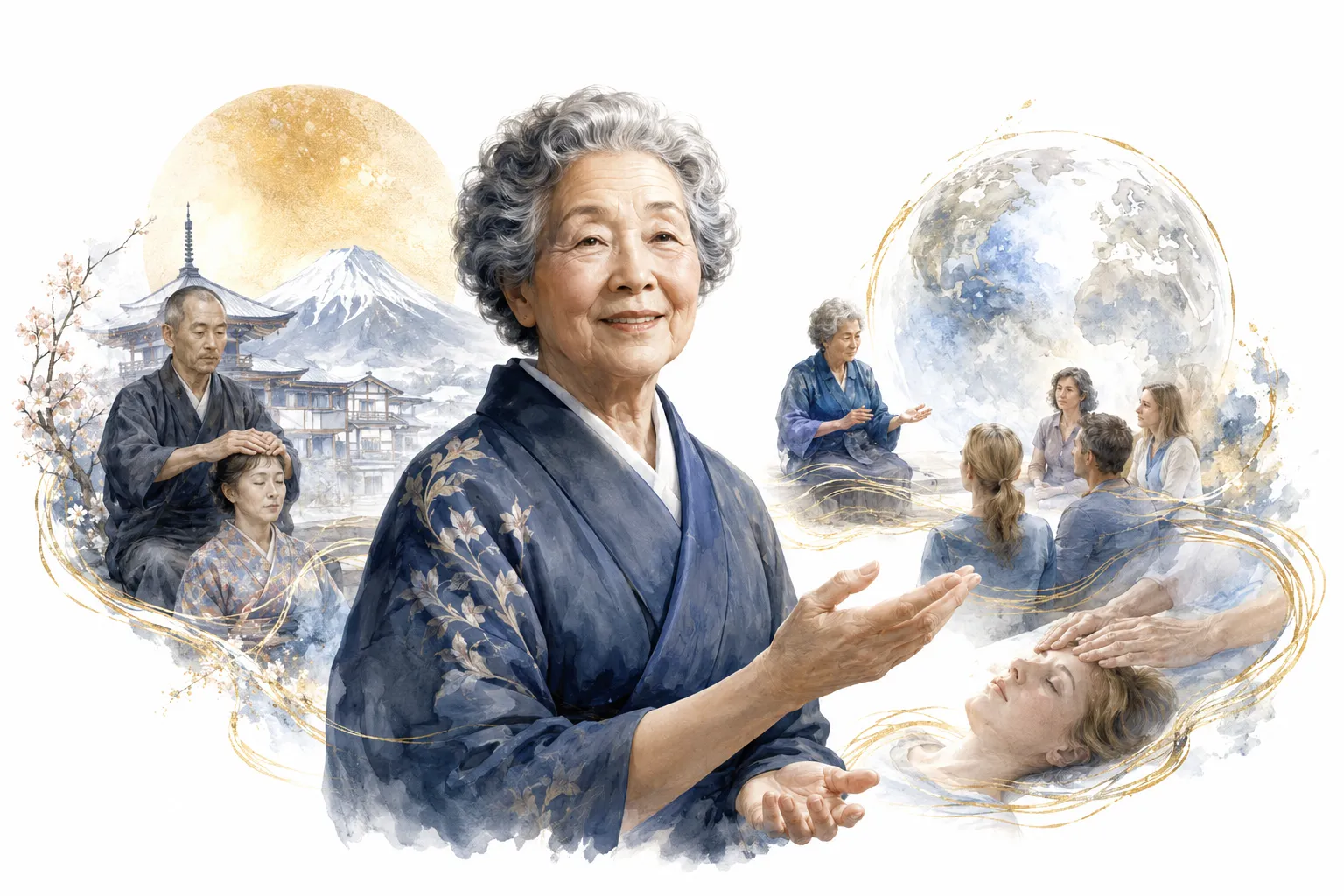
Hawayo Takata was not just a Reiki master. She was a cultural translator. She understood that American audiences in the 1970s were different from Japanese audiences in the 1920s.
She made strategic changes to Reiki's history. These changes were not malicious. They were adaptations. She wanted Reiki to spread. She knew it would not spread if it seemed too foreign.
Modern historians have corrected many of Takata's adaptations. But her contributions are still honored. Without her, Reiki might still be a small Japanese practice.
Takata's Adaptations
What Takata changed and why.
Added 'Dr' Title
Americans respected academic credentials. Takata added 'Dr' to Usui. Not historically accurate.
Christian Origin Story
America was Christian. Takata presented Usui as Christian. Not historically accurate.
Removed Buddhism
Buddhism was foreign. Takata removed Buddhist elements. Made Reiki seem non-religious.
Simplified History
Complex history was hard to teach. Takata simplified it. Made Reiki easier to spread.
The Evolution of Reiki's Story
- Usui teaches Reiki in Japan. The history is Japanese, Buddhist, and complex.The original story is not well-known outside Japan.
- Takata learns Reiki from Hayashi. She experiences healing firsthand.She becomes committed to spreading Reiki.
- Takata begins teaching Reiki in Hawaii and North America. She adapts the history.Reiki spreads quickly in the West.
- Japanese Reiki researchers (Petter, Stiene, Inamoto) reveal the original history.The Reiki community learns the truth about Takata's adaptations.
- Most Reiki practitioners know both versions: the adapted history and the original history.Practitioners can choose which story to emphasize.
The Made-Up Doctorate
How Usui Became 'Dr' Usui
In Takata's telling, Mikao Usui was a Christian educator who held a doctorate from the University of Chicago. Neither was true. Usui was a Buddhist lay practitioner. The University of Chicago has no record of him.
Takata added the 'Dr' title because she knew Americans respected academic credentials. In the 1970s, a 'doctor' was seen as credible. A Buddhist lay practitioner was seen as foreign.
The 'Dr' title is still used in many Western Reiki books. It is one of the most persistent adaptations. Some practitioners continue to use it. Others have dropped it.
The Non-Christian Christian
How Usui Became a Christian Educator
Takata presented Usui as a Christian educator. She told a story of how his students asked him how Jesus healed. He then studied the Bible, discovered healing, and developed Reiki.
In reality, Usui was Buddhist. He may have studied Christian texts, but he was not Christian. Takata created the story because Christianity was the dominant religion in America.
The Christian origin story helped Reiki spread. Americans who were suspicious of Eastern religions could accept Reiki because it was framed as Christian. The story was effective, even if it was not historically accurate.
The Strategy
Why Takata Made These Changes
Takata was not trying to deceive. She was trying to spread Reiki. She knew that Americans would not accept a Japanese Buddhist healing practice. They would accept a Christian healing practice.
She made the changes because she believed Reiki would help people. She wanted Reiki to reach as many people as possible. The changes were strategic, not malicious.
Today, we can understand the original history. We can also understand why Takata adapted it. Both perspectives are valuable.
What Takata Changed and What Was True
Usui held a doctorate from the University of Chicago.
Usui had no doctorate. The university has no record of him.
Usui was a Christian educator.
Usui was a Buddhist lay practitioner.
Usui discovered Reiki by studying the Bible.
Usui discovered Reiki through a Buddhist spiritual retreat on Mount Kurama.
Takata's history is completely false.
Takata adapted some details. The core of Reiki (the practice, the principles) is authentic.
I have been guided by the spirit of Reiki to bring it to the West. I have made changes that were necessary. The essence is the same.
Key takeaways
The shortest useful version of this page.
Takata added the 'Dr' title to Usui to make him seem credible to Americans.
She created a Christian origin story to make Reiki acceptable in Christian America.
She removed or downplayed Buddhist elements to make Reiki seem non-religious.
She simplified Reiki's history to make it easier to teach.
Her adaptations were strategic, not malicious. She wanted Reiki to spread.
Modern historians have corrected these adaptations while honoring Takata's contributions.
Frequently asked questions
Did Takata lie about Reiki's history?
She adapted it for Western audiences. Some would call it strategic storytelling. Others would call it deception. Most historians see it as cultural translation.
Why did Takata make Usui Christian?
She wanted Reiki to spread in Christian America. A Christian origin story was more acceptable to American audiences.
Does the 'Dr' title still appear in Reiki books?
Yes, in many older books. Modern Reiki historians and some newer books have dropped the title or note that it is not historically accurate.
Should we use Takata's version of history or the original?
Most modern Reiki practitioners use the original Japanese history, while acknowledging Takata's contributions. Some use both.
Is Takata's Reiki 'wrong' because she changed the history?
No. The practice of Reiki (the principles, the hand positions, the attunements) is authentic. The history was adapted, but the practice remains.
Sources
Sources are listed for transparency. A citation supports only the claim it directly addresses. Prefer primary research, systematic reviews, government health agencies and official institutional pages when evaluating health-related statements.
- Frank Arjava Petter, Reiki Fire, 1997.
- Bronwen and Frans Stiene, The Reiki Sourcebook, 2003.
- Hawayo Takata's own teachings and records.
- University of Chicago records (no Usui enrollment).
Found a broken source or unsupported claim? Report a correction .