Remarkable Safety Record
Why Reiki Is Considered One of the Safest Complementary Practices
Reiki has no known serious side effects. It does not interact with medications. It does not require physical manipulation that could injure. It is non-invasive. This safety record is remarkable.
The reason is simple: Reiki is gentle. It is primarily hands-on or hovering. There is no forceful manipulation. No ingestion of substances. No electrical stimulation. Just gentle touch and intention.
The real risks are not from Reiki itself but from what people might do instead of Reiki: delaying medical care, stopping medications, ignoring emergencies. Ethical practitioners always prioritize medical care.
Reiki Safety by Population
Safety ratings and precautions for different groups.
Infants & Children
Very safe. Keep sessions short (10-15 min). Use light touch.
Pregnancy
Very safe. Avoid belly in first trimester. Otherwise beneficial.
Elderly
Very safe. Use gentle touch or hovering. Helps with pain, anxiety.
Cancer Patients
Very safe. Offered in many hospitals. Helps with side effects.
Pacemakers
Very safe. No electrical or magnetic components.
Little Ones
Reiki for Infants and Children
Reiki is very safe for children. In fact, children often respond more quickly than adults because they have less mental resistance and fewer blocked energy patterns.
For infants, sessions should be very short (5-10 minutes) with very light touch or hovering. Babies often fall asleep during Reiki. It is calming for colic, teething, and sleep issues.
For older children, sessions can be 15-20 minutes. Explain what you are doing. Let them set the pace. If they want to stop, stop. Consent matters for children too.
Growing a Baby
Reiki During Pregnancy
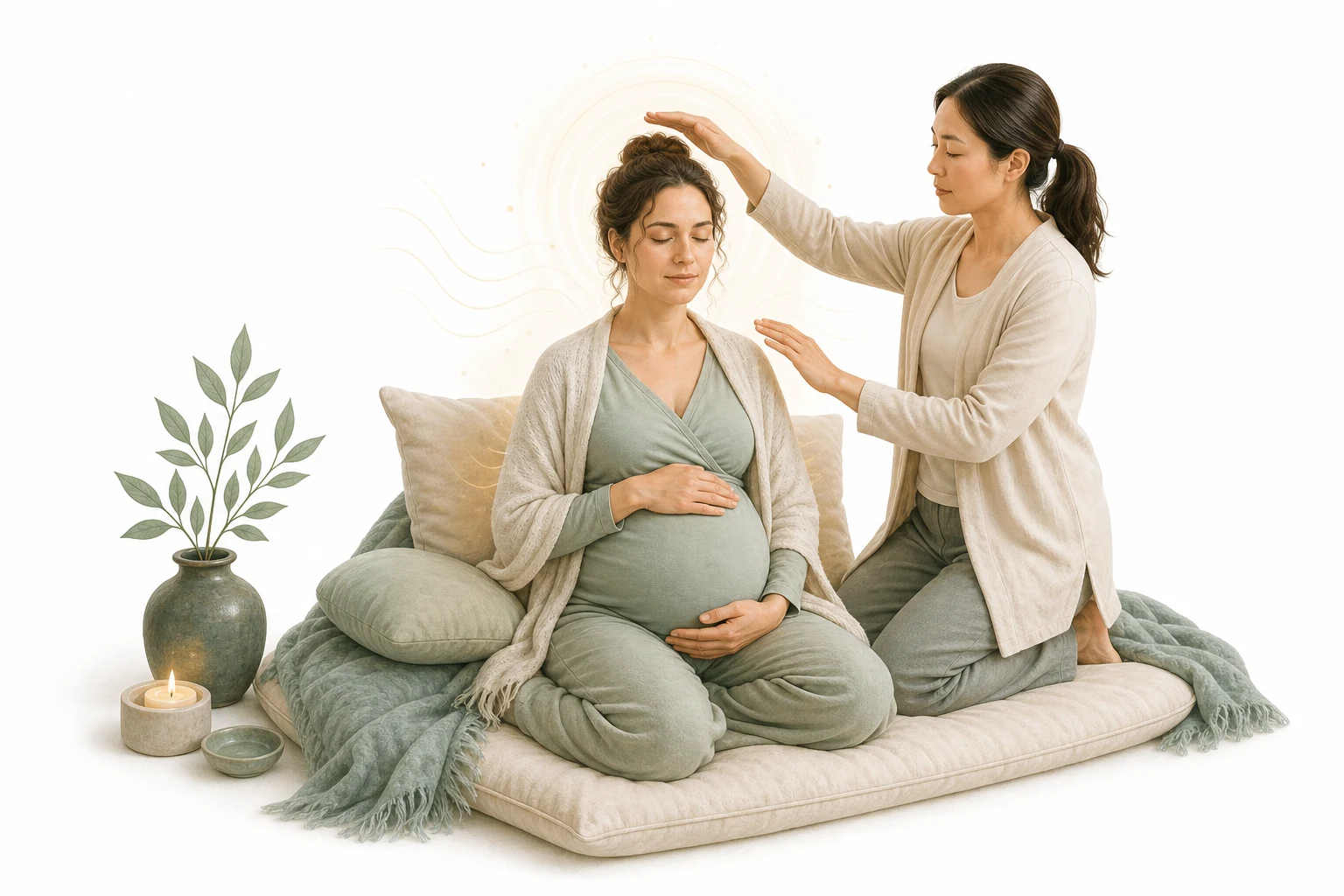
Reiki is not only safe during pregnancy, many women find it profoundly helpful. The relaxation response benefits both mother and baby. Reiki can help with pregnancy discomforts: back pain, fatigue, anxiety, sleep issues.
Most practitioners recommend avoiding direct belly touch in the first trimester as a precaution. After the first trimester, light touch on the belly is fine. Hovering hands are always safe.
Some women use Reiki during labor for pain management and relaxation. Always work with your medical team. Reiki complements medical care, it does not replace it.
Alongside Treatment
Reiki for Cancer Patients
Many major cancer centers offer Reiki as a complementary therapy. Memorial Sloan Kettering, Dana-Farber, and others include Reiki in their integrative medicine programs.
Research suggests Reiki helps cancer patients with: pain, fatigue, anxiety, stress, and quality of life. It does not treat cancer. It helps with the symptoms and side effects.
Reiki is safe during chemotherapy and radiation. It does not interfere with treatment. Always tell your oncology team about any complementary practices you are using.
Key takeaways
The shortest useful version of this page.
Reiki is very safe for almost everyone, including children, elderly, pregnant women, and cancer patients.
There are no known drug interactions or serious side effects.
The few exceptions are medical emergencies, untreated psychosis, lack of consent, and direct touch on severe wounds.
Reiki complements medical care. It does not replace it.
Always consult a doctor for medical concerns. Reiki is not a substitute.
Frequently asked questions
Is Reiki safe for babies?
Yes. Keep sessions very short (5-10 minutes). Use very light touch or hovering. Babies often fall asleep during Reiki.
Is Reiki safe during chemotherapy?
Yes. Many cancer centers offer Reiki alongside chemotherapy. It helps with side effects like fatigue, pain, and anxiety. Tell your oncology team.
Is Reiki safe for people with pacemakers?
Yes. Reiki has no electrical or magnetic components. It does not interfere with pacemakers.
Is Reiki safe for people with epilepsy?
Yes. Reiki does not trigger seizures. Some people report reduced seizure frequency, but this is not medically proven.
Is Reiki safe during a fever?
Reiki itself is safe, but a fever indicates infection. See a doctor. Use Reiki alongside medical care, not instead of it.
Sources
Sources are listed for transparency. A citation supports only the claim it directly addresses. Prefer primary research, systematic reviews, government health agencies and official institutional pages when evaluating health-related statements.
- Memorial Sloan Kettering, About Reiki.
- National Center for Complementary and Integrative Health (NCCIH), Reiki Research.
- Bronwen and Frans Stiene, The Reiki Sourcebook, 2003.
- Hospital Reiki program safety protocols.
Found a broken source or unsupported claim? Report a correction .