Two Lenses, One Truth
Understanding Reiki Through Traditional and Scientific Lenses
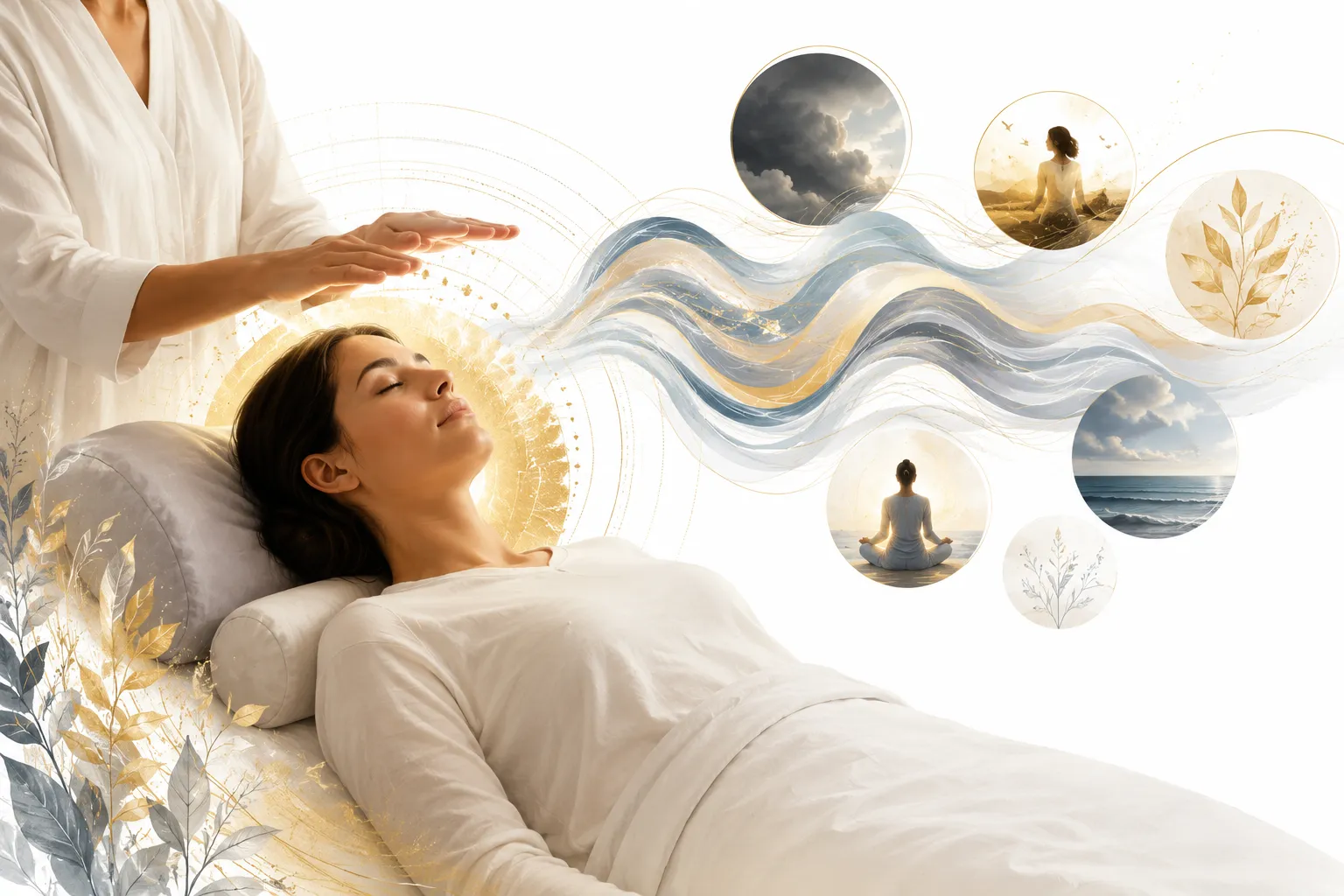
Reiki works. That is not in question for the millions who practice it. But how it works depends on which lens you use.
The traditional lens speaks of energy. Ki flows through the practitioner's hands. It goes where it is needed. It balances the recipient's energy field.
The scientific lens speaks of physiology. The relaxation response activates. Stress hormones drop. Heart rate slows. The body shifts from survival mode to healing mode.
Both lenses describe the same phenomenon. They just use different words. Choose the lens that makes sense to you.
How Reiki Works: Two Perspectives
Traditional energy explanation vs scientific physiological explanation.
Traditional Explanation
Practitioner channels ki. Energy flows to recipient. Balances energy field. Clears blockages. Supports self-healing.
Scientific Explanation
Parasympathetic activation. Lower cortisol. Slower heart rate. Oxytocin release. Reduced pain perception. Better sleep.
Result
Deep relaxation. Body shifts from stress mode to healing mode. Self-healing activated.
The Scientific Explanation of How Reiki Works
What happens in the body during a Reiki session.
Relaxation Response Activation
The gentle touch, quiet environment, and focused attention signal safety to the nervous system. The parasympathetic nervous system activates.
Like taking your foot off the gas pedal.Stress Hormone Reduction
Cortisol and adrenaline levels drop. The body leaves fight-or-flight mode. Inflammation may decrease.
Like turning off a loud alarm.Oxytocin Release
Compassionate touch releases oxytocin, the bonding and safety hormone. The recipient feels cared for and safe.
Like a warm hug.Pain Perception Change
Relaxation and reduced stress change how the brain processes pain signals. Pain may feel less intense.
Like turning down the volume on a loud radio.Self-Healing Activation
When the body is relaxed, it can direct energy toward healing. Blood flow improves. Immune function may increase. Sleep improves.
Like a repair crew finally able to work.
Energy Explanation
The Traditional Explanation of How Reiki Works
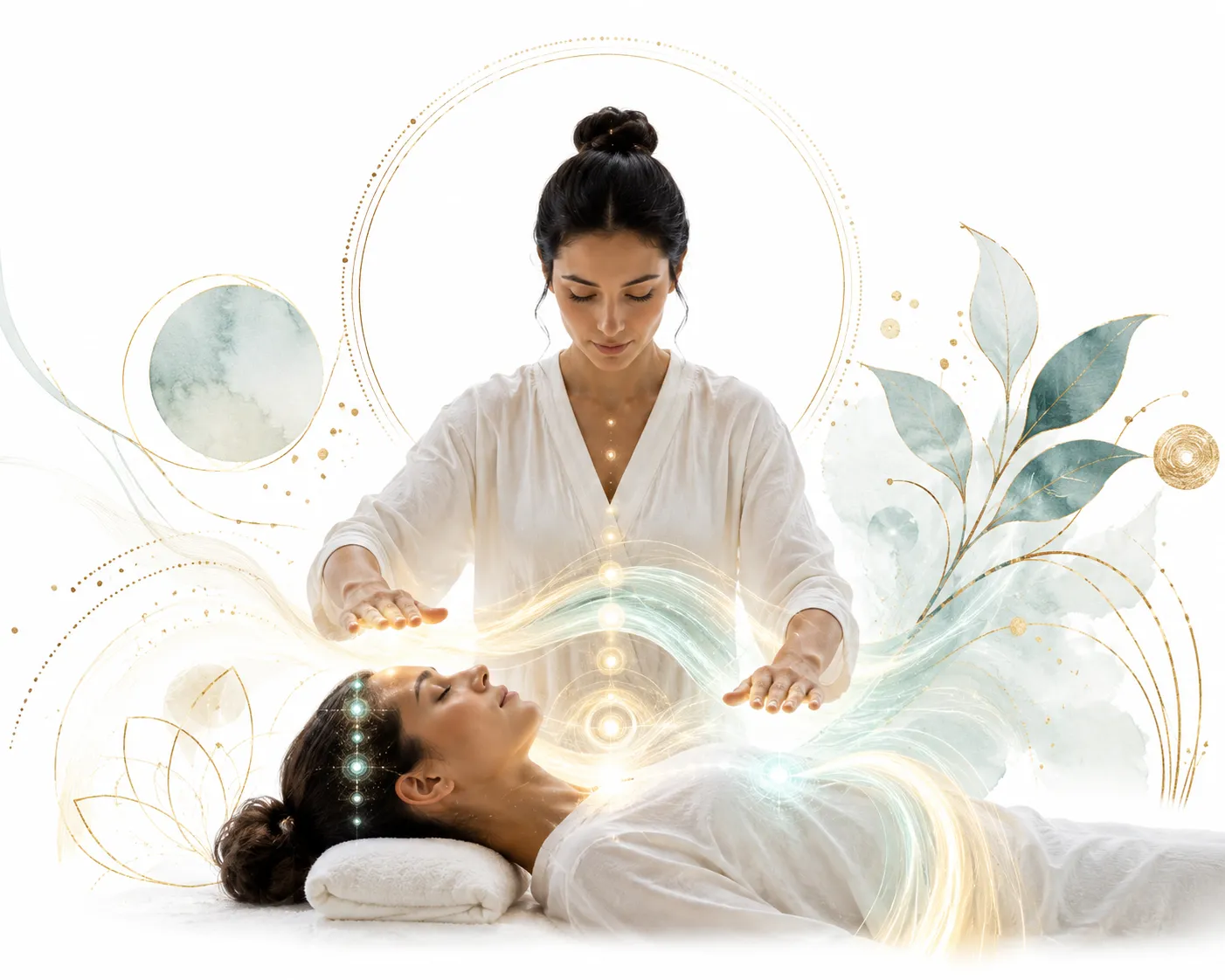
In traditional Reiki, the practitioner receives Reiki energy through attunement. This attunement opens their energy channel. They become a conduit for universal life energy (ki).
When the practitioner places their hands on or near the recipient, the energy flows. It goes where it is needed most. It does not need to be directed. It knows where to go.
The energy balances the recipient's energy field. It clears blockages in chakras and meridians. It supports the recipient's natural self-healing ability.
The practitioner is not the source. They are a channel. The energy flows through them, not from them. This is why practitioners do not get tired from giving Reiki.
How Practitioners Understand Reiki's Mechanism
I feel the energy flowing through my hands. Heat. Tingling. Pulsing. I trust that it goes where it is needed. I do not need to understand it intellectually. I just need to get out of the way and let it flow.
Reiki works. Whether you call it energy or physiology, the result is the same: relaxation, reduced stress, healing. The map is not the territory. The explanation is not the experience. Experience Reiki. Decide for yourself.
Reiki is not a substitute for medical care. It works alongside medicine, not instead of it. The mechanism does not matter as much as the outcome.
Key takeaways
The shortest useful version of this page.
Traditionally, Reiki works by channeling universal life energy (ki) through the practitioner's hands.
Scientifically, Reiki works by activating the parasympathetic nervous system and the relaxation response.
Measurable effects include lower cortisol, slower heart rate, lower blood pressure, and oxytocin release.
The relaxation response allows the body to shift from survival mode to healing mode.
Both explanations describe the same healing process using different language.
You do not need to understand how Reiki works for it to work.
Frequently asked questions
Is there scientific evidence for how Reiki works?
Yes. Studies show Some researchers have explored whether Reiki sessions are associated with relaxation-related physiological changes, but current evidence does not establish a Reiki-specific mechanism, reduces cortisol, and induces the relaxation response. The mechanism is physiological.
Do I need to believe in energy for Reiki to work?
No. Reiki works regardless of belief. The physiological effects occur whether you believe in ki or not.
Is Reiki just the placebo effect?
Placebo likely plays a role, as it does in all healing. But studies show Reiki often outperforms placebo, suggesting specific effects beyond expectation.
Can Reiki be explained by science?
The relaxation response, stress reduction, and physiological changes are well-understood scientifically. The concept of 'ki' is not scientifically measured, but the effects are.
Why does Reiki work even when hands are not touching the body?
Distance Reiki works through intention. Scientifically, the recipient's expectation and relaxation response may still activate. The mechanism is not fully understood.
Sources
Sources are listed for transparency. A citation supports only the claim it directly addresses. Prefer primary research, systematic reviews, government health agencies and official institutional pages when evaluating health-related statements.
- Studies on parasympathetic activation and Reiki.
- Studies on cortisol reduction with Reiki.
- Porges, S. (2011). The Polyvagal Theory.
- Bronwen and Frans Stiene, The Reiki Sourcebook, 2003.
Found a broken source or unsupported claim? Report a correction .