Your First Steps
Everything a Beginner Needs to Know About Reiki
Reiki is simple. Do not let anyone tell you otherwise. It is gentle touch that helps you relax. Relaxation may support comfort and general well-being, but it should not be described as treating or healing a medical condition. That is the core of it.
The word Reiki comes from Japanese. 'Rei' means universal. 'Ki' means life energy. Together, they mean 'universal life energy.' Practitioners believe this energy flows through all living things.
You do not need to believe anything special to benefit from Reiki. You do not need to be spiritual. You do not need to change your religion. Practitioners often say Reiki does not require a particular belief system, but scientific evidence has not established that Reiki produces a specific therapeutic effect independent of context or expectation.
Your Reiki Beginner's Journey
The path from curious to practitioner.
Curious
You have heard about Reiki. You want to know more.
Research
Read articles, watch videos, ask questions. You are here now.
First Session
Book a session with a practitioner. Experience Reiki yourself.
Experience
Notice how you feel. Relaxed? Peaceful? Energized?
Consider Training
If you want to learn self-Reiki, find a Level 1 class.
Self-Practice
If you choose to learn self-Reiki, you can incorporate it into a personal relaxation or reflective routine. Then consider helping others.
The Basics
What Exactly Is Reiki?
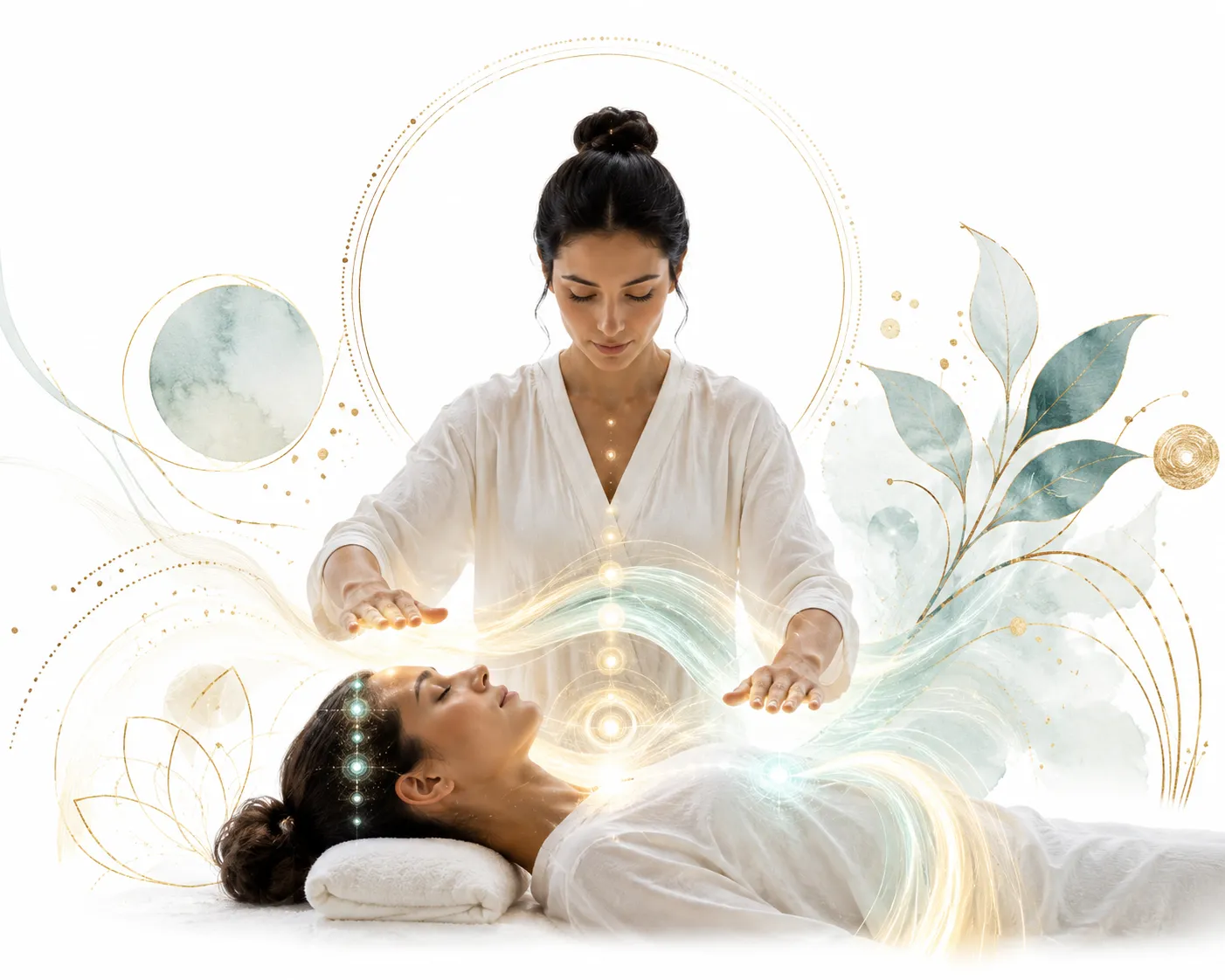
Reiki is a Japanese healing technique. The practitioner places their hands gently on or near your body. The touch is very light. It is not massage. There is no kneading or pressure.
During a session, most people feel deeply relaxed. Some feel heat or tingling. Some fall asleep. Some cry. Some feel nothing at all. All of these responses are normal.
The goal of Reiki is to reduce stress and promote relaxation. When the body is relaxed, it can heal itself more effectively. Reiki supports your body's natural healing abilities.
Your First Session
What Happens During a Reiki Session?
You will lie down on a massage table or sit in a comfortable chair. You remain fully clothed. The practitioner will ask about your health and intentions.
The practitioner will place their hands in a series of positions. Starting at your head, then moving to your shoulders, stomach, legs, and feet. Each position is held for 2-5 minutes.
You may feel heat, tingling, or deep relaxation. You may fall asleep. You may cry. You may feel nothing at all. Everything is normal.
A typical session lasts 45-90 minutes. After the session, drink water. Rest if you feel tired. Avoid alcohol and caffeine for 24 hours.
Key takeaways
The shortest useful version of this page.
Reiki is a Japanese healing technique using gentle touch to promote relaxation.
It was developed by Mikao Usui in Japan in 1922.
Reiki is not a religion. No special beliefs are required.
You remain fully clothed during sessions. The touch is very gentle.
You can receive sessions or learn Reiki yourself through training.
Start by booking a session or taking a Level 1 class.
Frequently asked questions
Is Reiki safe for beginners?
Yes. Reiki is very safe. It is gentle and non-invasive. It can be used alongside any medical treatment.
How do I find a Reiki practitioner near me?
Search online directories like the Reiki Membership Association. Ask for recommendations from friends. Read reviews.
How much does a Reiki session cost?
Typically $50-$150 per hour. Prices vary by location and practitioner experience.
Can I learn Reiki online?
Some teachers offer online training with distance attunements. In-person training is traditional. Research your teacher carefully.
What should I wear to a Reiki session?
Wear comfortable, loose-fitting clothes. Remove shoes and glasses. Avoid belts or tight clothing.
Sources
Sources are listed for transparency. A citation supports only the claim it directly addresses. Prefer primary research, systematic reviews, government health agencies and official institutional pages when evaluating health-related statements.
- Frank Arjava Petter, Reiki Fire, 1997.
- Bronwen and Frans Stiene, The Reiki Sourcebook, 2003.
- Practitioner experience and beginner guidance.
Found a broken source or unsupported claim? Report a correction .