PTSD and the Nervous System
How Reiki Might Help With Trauma Symptoms
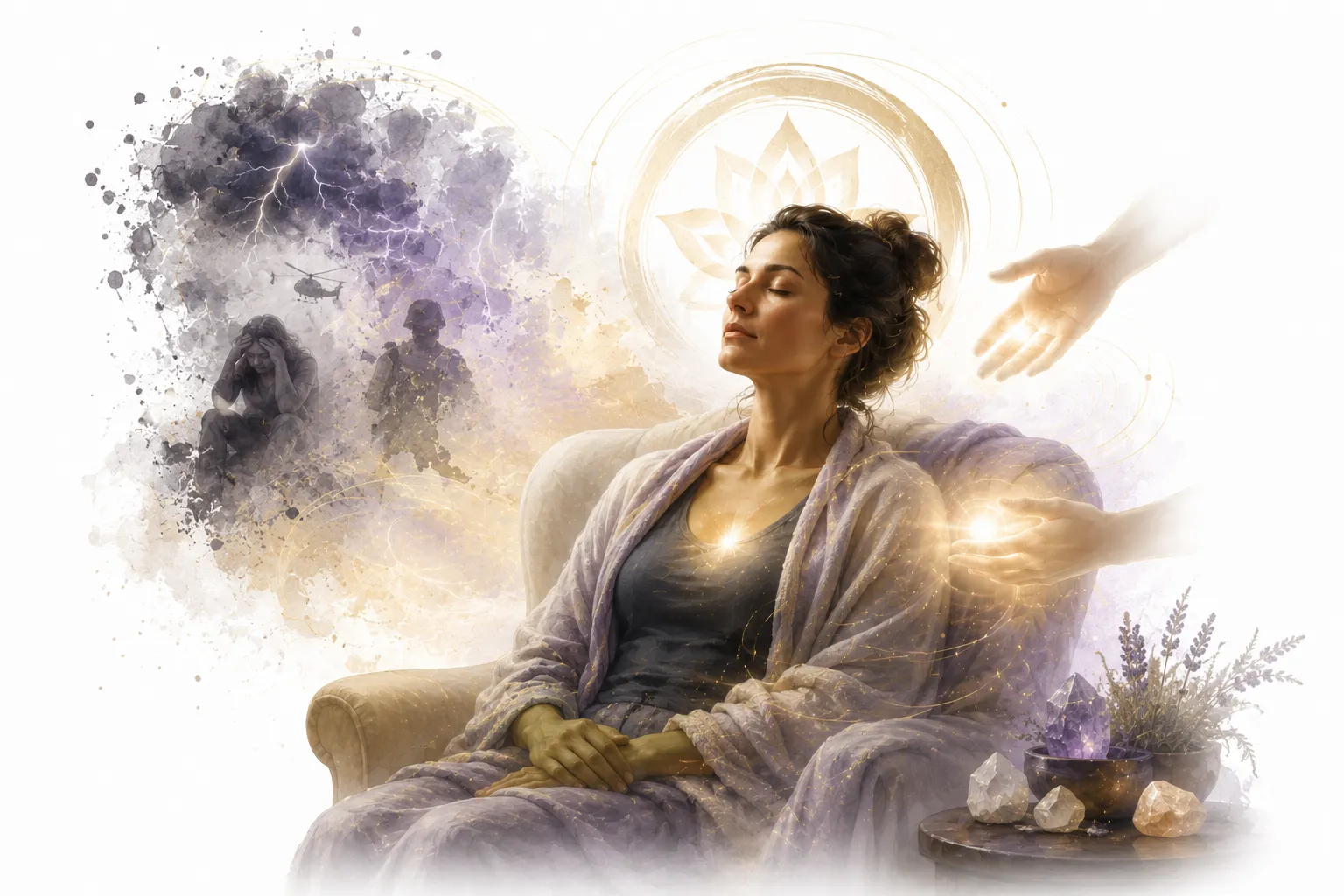
PTSD is primarily a nervous system disorder. The traumatic event is over, but the nervous system remains stuck in survival mode. Hyperarousal. Hypervigilance. Startle response. Difficulty sleeping. The body keeps the score, as Bessel van der Kolk wrote.
Some researchers have explored whether Reiki sessions are associated with relaxation-related physiological changes, but current evidence does not establish a Reiki-specific mechanism. The rest and digest response. Heart rate slows. Blood pressure drops. Muscles relax. The threat response decreases. For someone stuck in sympathetic overdrive, this is profoundly healing.
However. And this is a large however. Reiki does not process traumatic memories. It does not help you integrate what happened. It does not address the cognitive and emotional patterns that keep you stuck. For that, you need trauma therapy: EMDR, somatic experiencing, CBT, or other evidence-based approaches.
Reiki and the PTSD Nervous System
How Reiki may affect the dysregulated nervous system in PTSD.
PTSD Nervous System
Stuck in sympathetic overdrive. High alert. Hypervigilant. Difficulty resting.
Reiki Session
Gentle touch or distance. Relaxation response activates.
Parasympathetic Activation
Rest and digest. Heart rate slows. Breathing deepens. Muscles relax.
Symptom Reduction
Less anxiety. Better sleep. Reduced hyperarousal. Temporary but cumulative with practice.
What Research Says About Reiki for PTSD
A careful review of available studies, with appropriate caveats about evidence quality and the need for more research.
Reiki reduces PTSD symptoms in veterans
Scientific Study
Anxiety or hyperarousal measures after Reiki in small studies
Scientific Study
Effects may be due to placebo or general relaxation
Skeptical View
Reiki should complement, not replace, trauma therapy
Medical Guidance
How Reiki Practitioners Approach PTSD
Reiki helps calm the nervous system. For trauma survivors, this can be profoundly healing. Many clients report better sleep, less anxiety, and feeling safer in their bodies after regular Reiki sessions. However, Reiki is not therapy. We do not process trauma. We support the nervous system so therapy can work better.
The evidence is promising but not conclusive. Reiki seems to help with the physiological symptoms of PTSD: hyperarousal, sleep problems, anxiety. It does not address the psychological processing of trauma. The best approach is Reiki alongside trauma therapy, not instead of it.
Trauma survivors can be triggered by touch, by being in a vulnerable position, or by unexpected sensations. Work only with Reiki practitioners who have trauma-informed training. Tell your practitioner about your triggers. You remain in control of the session at all times.
Key takeaways
The shortest useful version of this page.
Reiki may help manage PTSD symptoms, especially anxiety, hyperarousal, and sleep problems.
Evidence is limited but promising. More research is needed.
Reiki is not a cure for PTSD and does not replace trauma therapy.
Work with trauma-informed Reiki practitioners who understand triggers and safety.
Use Reiki alongside professional mental health care, not instead of it.
The mechanism is likely nervous system regulation, not trauma processing.
Frequently asked questions
Can Reiki cure PTSD?
No. Reiki is not a cure for PTSD. It may help manage symptoms, but it does not treat the underlying trauma. You need evidence-based trauma therapy for that.
Is Reiki safe for people with PTSD?
Generally yes, but with caveats. Touch can be triggering. Vulnerability can be triggering. Work only with trauma-informed practitioners. You remain in control.
How often should I get Reiki for PTSD symptoms?
There is no standard. Some people benefit from weekly sessions. Others prefer less frequent. Consistency matters more than frequency. Regular self-Reiki can also help.
Can Reiki make PTSD worse?
In rare cases, relaxation practices can surface emotions that feel overwhelming. This is usually temporary. Work with a practitioner who can support you and coordinate with your therapist.
Do veterans' hospitals offer Reiki for PTSD?
Some VA hospitals offer Reiki as a complementary therapy. It is not standard everywhere, but acceptance is growing.
Sources
Sources are listed for transparency. A citation supports only the claim it directly addresses. Prefer primary research, systematic reviews, government health agencies and official institutional pages when evaluating health-related statements.
- Jain, S., et al. (2017). Reiki for veterans with PTSD. Military Medicine.
- National Center for Complementary and Integrative Health (NCCIH), Reiki Research.
- Van der Kolk, B. (2014). The Body Keeps the Score.
- Trauma-informed Reiki practitioner guidelines.
Found a broken source or unsupported claim? Report a correction .