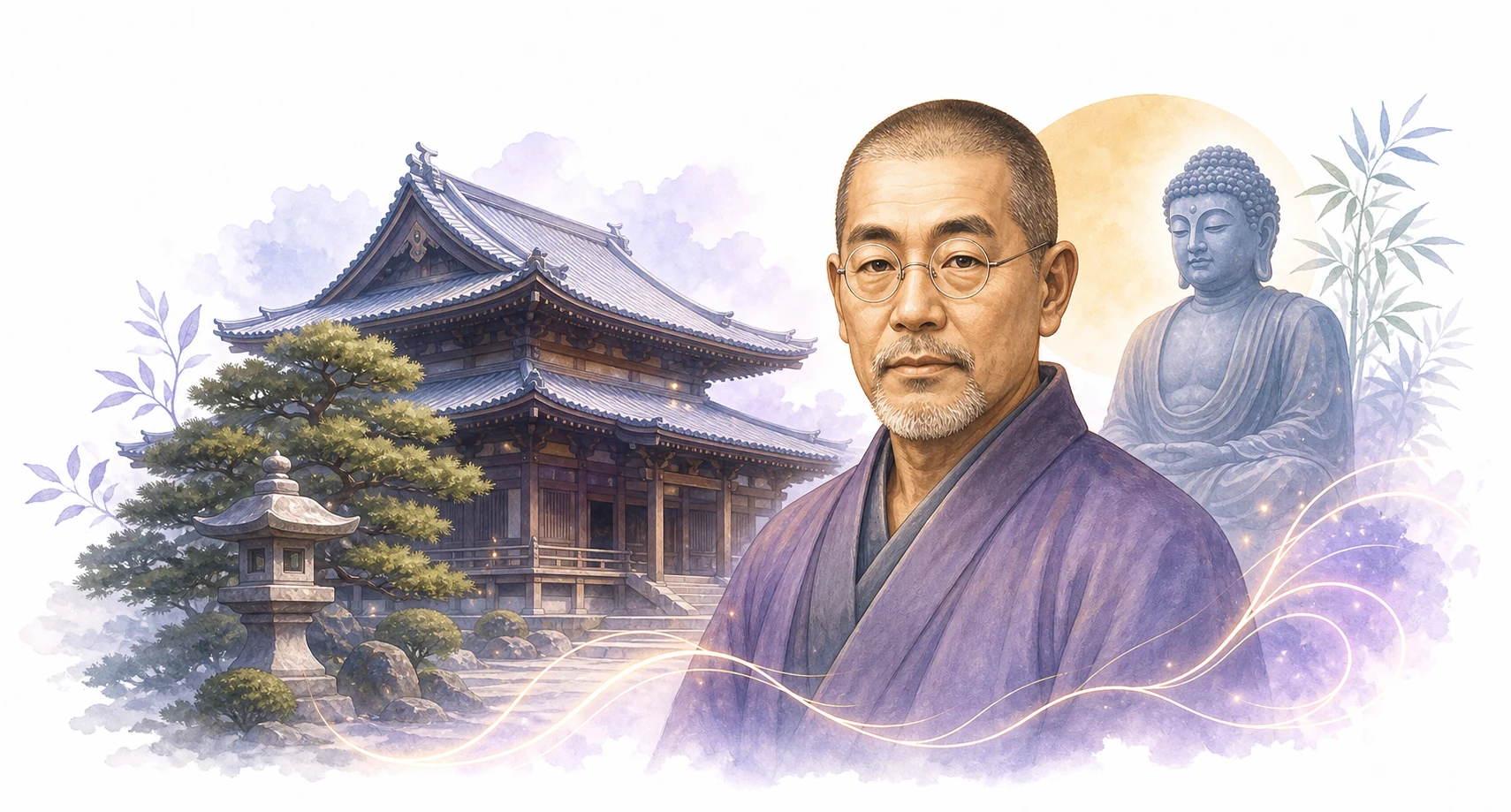
From Seeker to Founder
The Three Acts of Usui's Life
Act One is the long quiet. For fifty-six years, Usui lived an ordinary life by external measures. He was born in a mountain village. He received a classical education. He worked as a civil servant, a journalist, a businessman. He married. He had children. And all through these ordinary years, he was asking an extraordinary question: how can suffering be healed?
Act Two is the turn. In 1922, at age fifty-six, Usui did something unusual even by Japanese spiritual standards. He went to Mount Kurama, a sacred mountain north of Kyoto, and sat in meditation for twenty-one days. He fasted. He prayed. He waited. On the final morning, he saw a flash of light. Something opened. He came down the mountain with Reiki.
Act Three is the waterfall. In his final four years, Usui accomplished what most people could not accomplish in forty. He founded a school. He treated thousands after a devastating earthquake. He trained senior masters. He built a system that would survive him. And then he died, leaving the streams to spread on their own.
The Arc of a Life
Usui's journey from ordinary seeker to global influence.
Act One: The Seeker
1865-1921. 56 years of education, ordinary work, broad study, family life. The long quiet before the waterfall.
Act Two: The Turn
1922. 21 days on Mount Kurama. Fasting, meditation, waiting. The flash of light. The awakening.
Act Three: The Waterfall
1922-1926. 4 years. Found school. Treated earthquake survivors. Trained successors. Changed healing history.
The Complete Timeline
- Born in Taniai, Gifu Prefecture, into a samurai-class Buddhist family.His family background gave him discipline and spiritual orientation from childhood.
- Receives classical education. Works as civil servant, journalist, business operator. Marries Suzuki Sadako.The long period of ordinary life and broad study built the foundation for Reiki.
- Retreats to Mount Kurama for 21 days. Experiences spiritual awakening. Develops Reiki.The central transformative event. Everything changed.
- Founds Usui Reiki Ryoho Gakkai in Tokyo.Creates an organization to transmit the system.
- Great Kanto Earthquake. Usui treats thousands of survivors.Demonstrates Reiki's practical application on a massive scale. Gains public recognition.
- Teaches extensively. Trains senior masters including Chujiro Hayashi.Secures succession before his death.
- Dies in Fukuyama at age 60. Memorial stone erected at Saihoji Temple.His students preserve his memory. The lineage continues through Hayashi and others.
What Was He Looking For?
The Question That Drove Usui
We do not know exactly what question Usui was asking. The memorial stone says he wanted to discover the method by which ancient Buddhist masters had healed. But that is vague. What we know is that he was driven. He studied widely, across disciplines and traditions, as if he was assembling pieces of a puzzle no one else could see.
In his twenties and thirties, he held ordinary jobs. Civil servant. Journalist. Business operator. But all through these years, he was reading. Buddhist sutras in Sanskrit. Chinese medical texts. Western anatomy. Christian theology. Taoist philosophy. He was, by all accounts, intellectually voracious.
And somehow, none of it was enough. The books gave him information. They did not give him what he was looking for. So he went to the mountain. He stopped reading. He started sitting. And something happened that the books could not have given him.
Mount Kurama
The Twenty-One Days That Changed Everything
Mount Kurama is not the tallest mountain in Japan. It is not the most remote. But it has been a spiritual site for over a thousand years, sacred to both Buddhism and Shinto. There is something about it. People who climb it report a particular quality of air, a particular silence, a particular sense of being held.
Usui climbed it in 1922. He was fifty-six years old. He found a spot near the waterfall and sat. He gathered small stones and arranged them in a circle. He began to fast. He meditated. He waited.
On the twenty-first morning, he saw a flash of light. What happened next is described differently in different accounts. Some say he felt a shock wave of energy. Some say he saw symbols in the light. Some say he understood everything at once. What is clear is that he came down the mountain with Reiki. The quest was over. The teaching had begun.
Separating Legend from History
Usui discovered Reiki through studying the Bible.
Usui was a Buddhist. The Bible story was added by Western teachers for cultural reasons.
Usui was a doctor or held a PhD.
No. The 'Dr' title was added by Hawayo Takata. Usui had no doctorate.
Usui was a monk who lived in a monastery.
Usui was a married lay householder who lived in ordinary housing.
Usui's Reiki was a secret tradition he discovered fully formed.
Usui developed Reiki gradually. He continued refining it until his death.
The Complete Usui Timeline
- Mikao Usui born in Taniai, Gifu Prefecture.Begins a life that will change healing history.
- Receives classical education. Studies martial arts. Works as civil servant.Builds discipline and broad knowledge base.
- Marries Suzuki Sadako. Has children. Works as journalist and businessman.Establishes householder pattern that will define his teaching.
- Begins 21-day retreat on Mount Kurama.The turning point. Everything changes.
- Experiences awakening. Develops Reiki.The system is born.
- Founds Usui Reiki Ryoho Gakkai in Tokyo.Creates institution to transmit the system.
- Great Kanto Earthquake destroys Tokyo and Yokohama. Usui treats thousands.Reiki proves its value in crisis. Public recognition follows.
- Teaches extensively. Trains Chujiro Hayashi and other senior masters.Ensures succession after his death.
- Travels to Fukuyama, Hiroshima, to teach.His final teaching trip.
- Suffers a stroke and dies in Fukuyama.The waterfall stops. The streams continue.
Key takeaways
The shortest useful version of this page.
Mikao Usui spent fifty-six years seeking before his awakening at age fifty-six.
The awakening occurred during a twenty-one day retreat on Mount Kurama in 1922.
Usui taught Reiki for only four years, from 1922 to 1926.
He treated thousands after the 1923 Great Kanto Earthquake, demonstrating Reiki's practical value.
He trained senior successors, including Chujiro Hayashi, who carried the system forward after his death.
The Usui story is one of long seeking, sudden awakening, concentrated teaching, and enduring legacy.
Frequently asked questions
How long did Usui actually teach Reiki?
About four years, from his awakening in early 1922 until his death in March 1926.
Did Usui charge money for Reiki?
Yes. He charged fees for teaching and healing. This was normal for Japanese healers of his era.
How many students did Usui train?
Approximately 2,000, with 16 to 20 trained to the level of senior master or shihan.
Did Usui write any books?
No surviving books. The Reiki principles are attributed to him but were written down by students. He was a teacher, not an author.
Why is Usui's story important for Reiki practitioners?
Because the story models the values of Reiki: patience in seeking, courage in practice, compassion in application, and generosity in teaching.
Sources
Sources are listed for transparency. A citation supports only the claim it directly addresses. Prefer primary research, systematic reviews, government health agencies and official institutional pages when evaluating health-related statements.
- Usui Memorial Stone, Saihoji Temple, Tokyo
- Frank Arjava Petter, Reiki Fire, 1997
- Bronwen and Frans Stiene, The Reiki Sourcebook, 2003
- William Lee Rand, Reiki research at the International Center for Reiki Training
- Japanese historical research by Tetsuya Ishii and Hyakuten Inamoto
Found a broken source or unsupported claim? Report a correction .