A Step-by-Step Walkthrough
What to Expect from Arrival to Aftercare
If you have never had a Reiki session, the unknown can be unsettling. Let me walk you through exactly what happens, from the moment you arrive to the moment you leave.
The short version: you lie down, the practitioner places hands gently on or near you, you rest, and then you get up feeling different. The long version has more detail.
Remember: every practitioner is slightly different. Some talk during sessions. Most do not. Some use many hand positions. Some use few. The core is always the same: gentle touch or hovering, quiet space, deep relaxation.
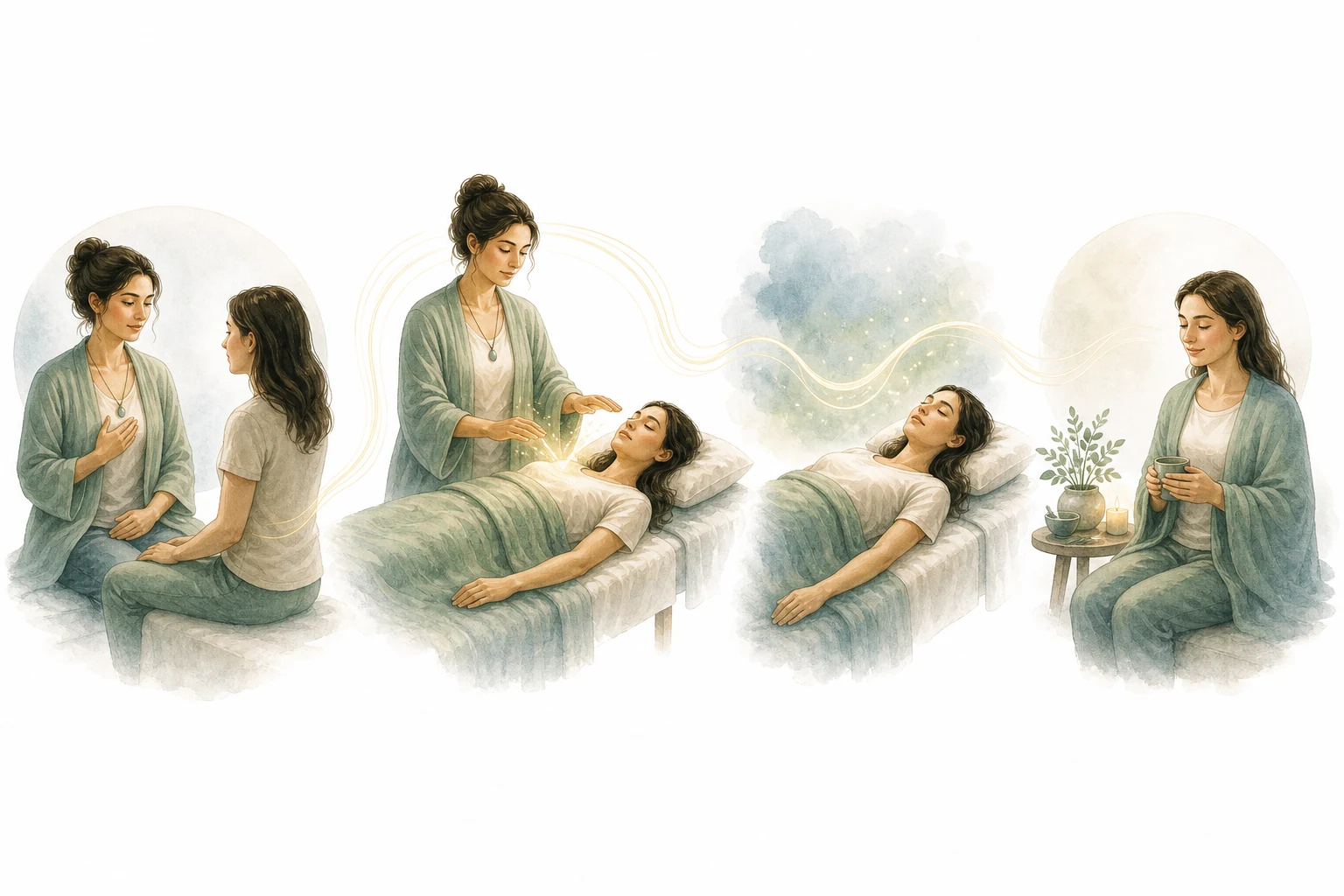
A Typical Reiki Session Flow
The stages of a Reiki session from arrival to aftercare.
Arrival (5-10 min)
Meet practitioner. Discuss health and intentions. Get consent. Ask questions.
Preparation (2-3 min)
Remove shoes and glasses. Lie down. Get comfortable. Practitioner may offer blanket.
Reiki Session (45-90 min)
Practitioner places hands in positions. You rest. May feel heat, tingling, emotions. May fall asleep.
Closing (2-3 min)
Practitioner grounds you. Gently touch feet or shoulders. Slowly sit up.
Aftercare (5-10 min)
Discuss session. Drink water. Receive aftercare guidance. Schedule follow-up.
Sensations and Experiences
What You Might Experience During a Reiki Session
Everyone experiences Reiki differently. Some people feel obvious sensations. Others feel nothing at all. Both are normal.
Common sensations include: heat (practitioner's hands feel warm, or warmth spreads through your body), tingling (like gentle pins and needles), pulsing (rhythmic sensation), deep relaxation (muscles release, breathing deepens), emotional release (crying, laughing, sudden sadness or joy), seeing colors or images with eyes closed, feeling spacey or dreamy, falling asleep, and feeling nothing at all.
None of these are 'correct' or 'incorrect.' They are just your body's response. Trust whatever happens. Do not try to force a particular experience.
Practical Preparation
What to Wear and Bring to a Reiki Session
Wear comfortable, loose-fitting clothing. You will be lying down for 45-90 minutes. Tight jeans, belts, or constrictive clothing can be uncomfortable.
Remove your shoes before getting on the table. Remove glasses if you wear them. You may keep jewelry on, though some practitioners recommend removing large or dangling pieces.
You do not need to bring anything special. The practitioner will have a table, blankets, and water. Some people bring a journal to write down insights afterward.
Key takeaways
The shortest useful version of this page.
You lie down fully clothed. The practitioner places hands gently on or near your body.
Sessions last 45-90 minutes. You may feel heat, tingling, deep relaxation, or nothing at all.
Falling asleep or crying is normal. Both are fine.
Wear comfortable, loose-fitting clothing. Remove shoes and glasses.
You are in control. You can ask to stop at any time.
After the session, rest, hydrate, and avoid alcohol for 24 hours.
Frequently asked questions
Do I need to believe in Reiki for it to work?
No. Reiki's physiological effects (relaxation response, stress reduction) occur regardless of belief. Skeptics can benefit too.
Can I receive Reiki if I am pregnant?
Yes. Many pregnant women find Reiki helpful. Some practitioners recommend avoiding belly touch in the first trimester as a precaution.
Can children receive Reiki?
Yes. Sessions for children are shorter (15-30 minutes). Get the child's consent.
How many sessions will I need?
That depends on your goals. One session can be relaxing. For lasting change, regular sessions (weekly) or daily self-Reiki is recommended.
What if I do not feel anything?
That is normal. Many people feel nothing during their first session. Reiki is still working. Look for effects after the session: better sleep, calmer mood, less anxiety.
Sources
Sources are listed for transparency. A citation supports only the claim it directly addresses. Prefer primary research, systematic reviews, government health agencies and official institutional pages when evaluating health-related statements.
- Bronwen and Frans Stiene, The Reiki Sourcebook, 2003.
- Practitioner experience and client reports.
- Traditional Reiki session protocols.
Found a broken source or unsupported claim? Report a correction .