Defining Master
What Does 'First Reiki Master' Actually Mean?
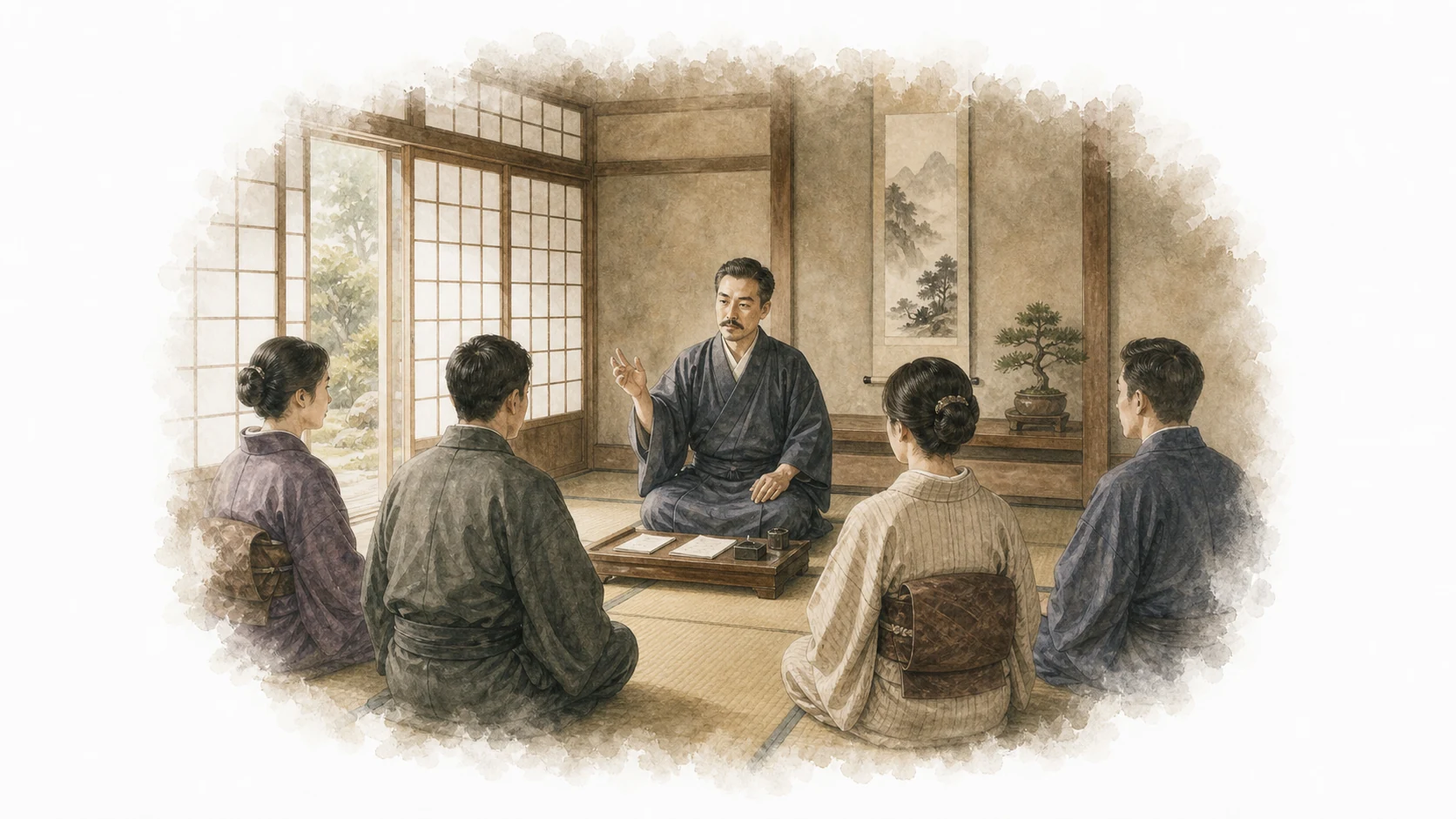
The term 'Reiki master' is modern. Usui did not use it. He had different levels of teaching authority, but the specific title 'master' as we use it today came later, particularly in Western Reiki.
If we define 'first Reiki master' as 'the first person after Usui to be authorized to teach Reiki at the highest level,' then there were several. Usui trained a group of senior students, sometimes called shihan, who had the authority to teach. Records suggest there were between sixteen and twenty of these senior students.
If we define 'first Reiki master' as 'the person who led the Reiki organization after Usui's death,' then the answer is Chujiro Hayashi. Hayashi was a naval officer who trained with Usui in 1925, just a year before Usui died. After Usui's death, Hayashi opened a clinic and became the primary transmitter of the lineage that would eventually reach the West.
The Lineage Braid
How Reiki lineage flows from Usui through multiple channels.
Mikao Usui
Founder. Trained senior students 1922-1926.
Japanese Lineage
Usui Reiki Ryoho Gakkai continued under presidents. Less known in West.
Chujiro Hayashi
Trained 1925. Opened clinic. Trained Takata.
Hawayo Takata
Trained by Hayashi. Brought Reiki to West. Trained 22 masters.
Western Lineages
Multiple branches from Takata's 22 masters.
Key Figures in Early Lineage
- Usui trains approximately 2,000 students, with 16-20 trained to senior level.Creates a pool of potential successors.
- Chujiro Hayashi, a naval officer, trains with Usui.Hayashi becomes the primary successor in the Western lineage.
- Usui dies. Hayashi opens a Reiki clinic in Tokyo.Hayashi becomes the de facto leader of the lineage that would reach the West.
- Hawayo Takata receives Reiki from Hayashi and later becomes a master.Takata becomes the bridge from Japan to the West.
- Takata teaches Reiki in Hawaii and North America.Reiki spreads globally from this point.
The First Western Lineage Master
Chujiro Hayashi: The Man Who Carried Reiki Forward
Chujiro Hayashi was a naval officer, a man of discipline and organization. He came to Usui in 1925, late in Usui's teaching career. He trained intensively and was one of the senior students authorized to teach.
After Usui's death in 1926, Hayashi did something crucial. He opened a formal Reiki clinic in Tokyo. The clinic treated patients on a schedule, kept records, and operated like a medical practice. This was different from Usui's more informal teaching style.
Hayashi also made a decision that would shape Reiki history. He trained Hawayo Takata, a Japanese-American woman from Hawaii. Takata had come to Japan for treatment of serious health problems. Reiki healed her. She asked to learn. Hayashi trained her, eventually making her a master. When Hayashi died in 1940, Takata became the carrier of his lineage.
Not the Only Branch
The Japanese Lineage and Other Successors
While Hayashi's lineage became the dominant one in the West, it was not the only one. The Usui Reiki Ryoho Gakkai, the organization Usui founded, continued in Japan under a succession of presidents. This Japanese lineage is less known in the West but still exists today.
Other senior students of Usui also taught independently. Toshihiro Eguchi, for example, developed his own laying-on-of-hands practice derived from Usui's teaching. Some modern Reiki lineages trace their origin to these other students, not to Hayashi.
The existence of multiple lineages is not a problem. It is a feature of how oral traditions spread. Different students heard different things, emphasized different aspects, adapted to different contexts. The braid is strong because it has multiple strands.
What People Get Wrong About the First Master
Usui was the first Reiki master.
Usui was the founder. The title 'master' was applied to senior students after his death.
There was a single, clear line of succession from Usui.
Usui trained multiple senior students. Succession was not singular.
Hawayo Takata was the first Reiki master.
Takata was the first Western Reiki master. Hayashi and others preceded her.
The Japanese lineage is the 'true' lineage and others are false.
All legitimate lineages trace back to Usui. Different branches are valid.
Major Lineages from Usui
Mikao Usui
FounderDeveloped Reiki in 1922. Taught approximately 2,000 students.
Chujiro Hayashi
Western Lineage BearerTrained 1925. Opened Tokyo clinic. Trained Hawayo Takata.
Hawayo Takata
Western BridgeTrained by Hayashi. Brought Reiki to North America. Trained 22 masters.
Usui Reiki Ryoho Gakkai
Japanese LineageOrganization founded by Usui. Continues in Japan under presidents.
Other Senior Students
Independent BranchesEguchi and others developed their own practices based on Usui's teaching.
Key takeaways
The shortest useful version of this page.
Mikao Usui was the founder, not the first Reiki master.
Usui trained multiple senior students. There was no single first master.
Chujiro Hayashi is recognized as the first Grand Master in the Western lineage.
Hawayo Takata was the first Western Reiki master.
The Japanese lineage continues through the Usui Reiki Ryoho Gakkai.
Different lineages are different branches of the same tree, not competing truths.
Frequently asked questions
Did Usui call himself a Reiki master?
No. He used terms like 'founder' or 'teacher.' The master title came later.
How many masters did Usui train?
Estimates vary, but probably 16 to 20 people trained to the highest level of teaching authority.
Is Hayashi's lineage the only legitimate one?
No. Multiple legitimate lineages trace back to Usui through different senior students.
What about the Japanese lineage? Is it still active?
Yes. The Usui Reiki Ryoho Gakkai continues in Japan, though it is less known internationally.
Does it matter which lineage I learn?
Most teachers and practitioners say no. The practice, not the lineage, is what matters. But knowing your lineage can connect you to tradition.
Sources
Sources are listed for transparency. A citation supports only the claim it directly addresses. Prefer primary research, systematic reviews, government health agencies and official institutional pages when evaluating health-related statements.
- Frank Arjava Petter, Reiki Fire, 1997
- Bronwen and Frans Stiene, The Reiki Sourcebook, 2003
- William Lee Rand, Reiki research at the International Center for Reiki Training
- Japanese lineage records from Usui Reiki Ryoho Gakkai
Found a broken source or unsupported claim? Report a correction .