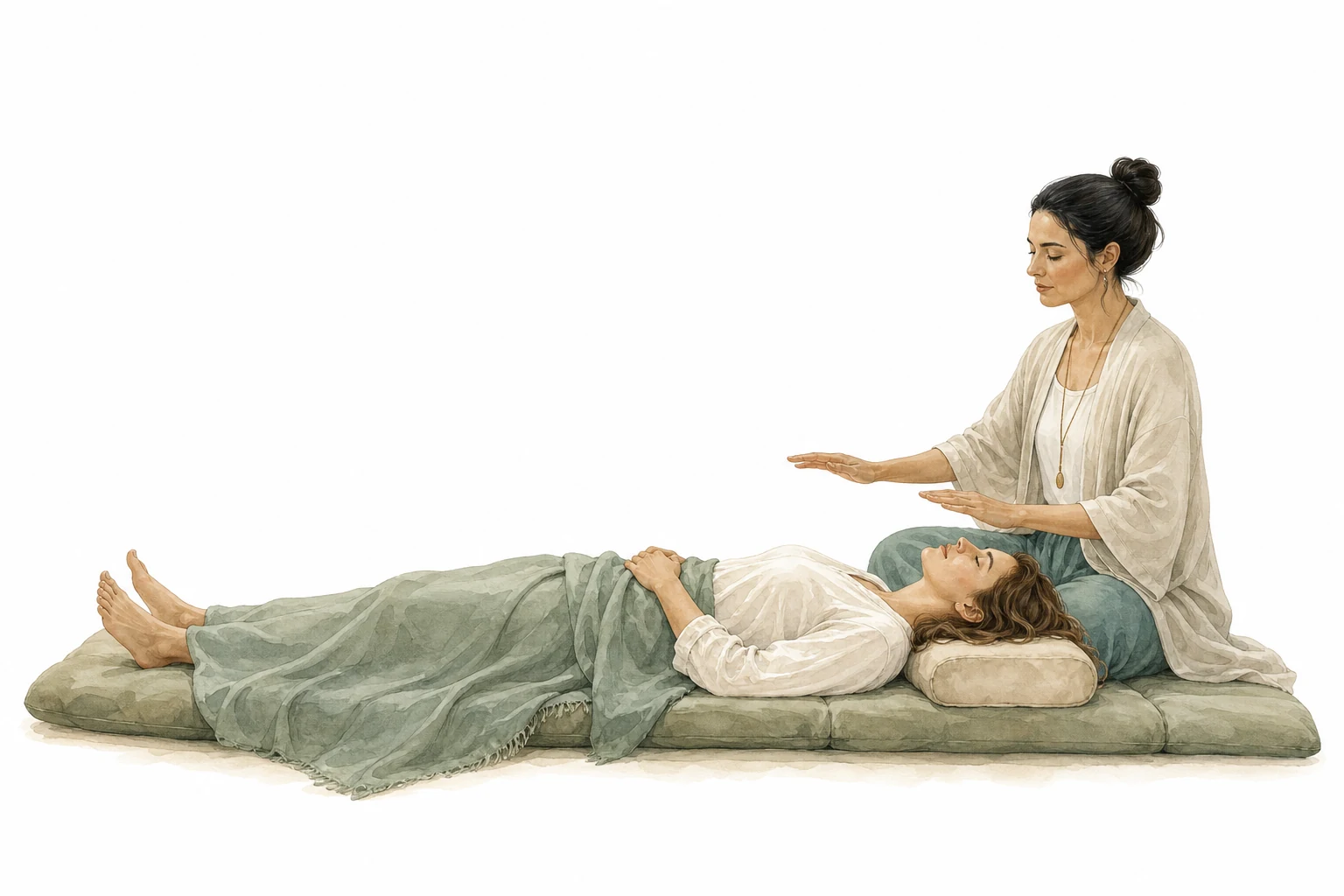
The Evidence for Anxiety
What Research Shows About Reiki and Anxiety
Anxiety is one of the most studied conditions in Reiki research. The reason is practical: anxiety is measurable. Heart rate. Blood pressure. Cortisol levels. Researchers can quantify what happens.
Some studies have reported anxiety-score changes compared with control conditions, but findings remain limited. A 2011 review of randomized controlled trials found moderate evidence for Reiki in reducing anxiety, particularly in clinical settings like surgery preparation and cancer care.
The effect is not massive. Reiki is not a magic bullet for anxiety. But it is real. And it has no side effects. For many people, that combination is compelling.
How Reiki Reduces Anxiety
The physiological pathway from Reiki to anxiety reduction.
Reiki Session
Gentle touch or hovering. Quiet environment. Focused attention.
Parasympathetic Activation
Rest and digest. Heart rate slows. Breathing deepens. Muscles relax.
Reduced Cortisol
Stress hormone decreases. Measurable in studies.
Reduced Anxiety
Less worry. Calmer mind. Better sleep. Greater resilience.
What Research Says About Reiki for Anxiety
A summary of key studies and their findings.
Anxiety scores after Reiki in some surgical studies
Scientific Study
Anxiety scores after Reiki in some cancer-care studies
Scientific Study
possible associations with relaxation-related measures have been explored; evidence remains limited
Scientific Study
Effects may be due to placebo or general relaxation
Skeptical View
Reiki should not replace anxiety medication
Medical Guidance
How Reiki Practitioners Approach Anxiety
Some recipients report feeling calmer after sessions, sleeping better, or feeling less reactive to stress. Individual experiences vary. Reiki does not cure anxiety and is not a substitute for appropriate mental-health care.
The evidence for Reiki and anxiety is promising but not conclusive. Reiki seems to help with the physiological symptoms of anxiety: racing heart, shallow breathing, tension. It does not address the cognitive patterns of worry. For best results, combine Reiki with therapy or CBT.
If you have an anxiety disorder, do not stop medication or therapy. Reiki is a complement, not a replacement. Use it alongside professional care.
Key takeaways
The shortest useful version of this page.
Reiki can help reduce anxiety, particularly situational anxiety like pre-surgery nerves.
Some studies have reported reductions in anxiety scores after Reiki more effectively than placebo.
The mechanism is likely nervous system regulation: parasympathetic activation, cortisol reduction.
Reiki is not a cure for anxiety disorders. Do not stop therapy or medication.
Use Reiki as a complementary tool for symptom management.
Daily self-Reiki may help reduce baseline anxiety over time.
Frequently asked questions
How many Reiki sessions for anxiety?
Many people feel calmer after one session. For lasting change, regular sessions (weekly) or daily self-Reiki are recommended.
Can Reiki replace my anxiety medication?
No. Do not stop medication without medical supervision. Reiki can complement medication, not replace it.
Is Reiki better than meditation for anxiety?
Both are helpful. Some people prefer Reiki because it is passive (someone else is doing the work). Others prefer meditation because they can do it anytime. Try both.
Can Reiki make anxiety worse?
Rarely. Some people experience temporary emotional release that feels uncomfortable. This usually passes quickly. If anxiety worsens, talk to your practitioner or therapist.
Does self-Reiki work for anxiety?
Yes. Daily self-Reiki can help reduce baseline anxiety. Practice for 10-15 minutes daily. Consistency matters more than session length.
Sources
Sources are listed for transparency. A citation supports only the claim it directly addresses. Prefer primary research, systematic reviews, government health agencies and official institutional pages when evaluating health-related statements.
- National Center for Complementary and Integrative Health (NCCIH), Reiki Research.
- Studies on Reiki for anxiety in surgical and cancer patients.
- Bronwen and Frans Stiene, The Reiki Sourcebook, 2003.
Found a broken source or unsupported claim? Report a correction .