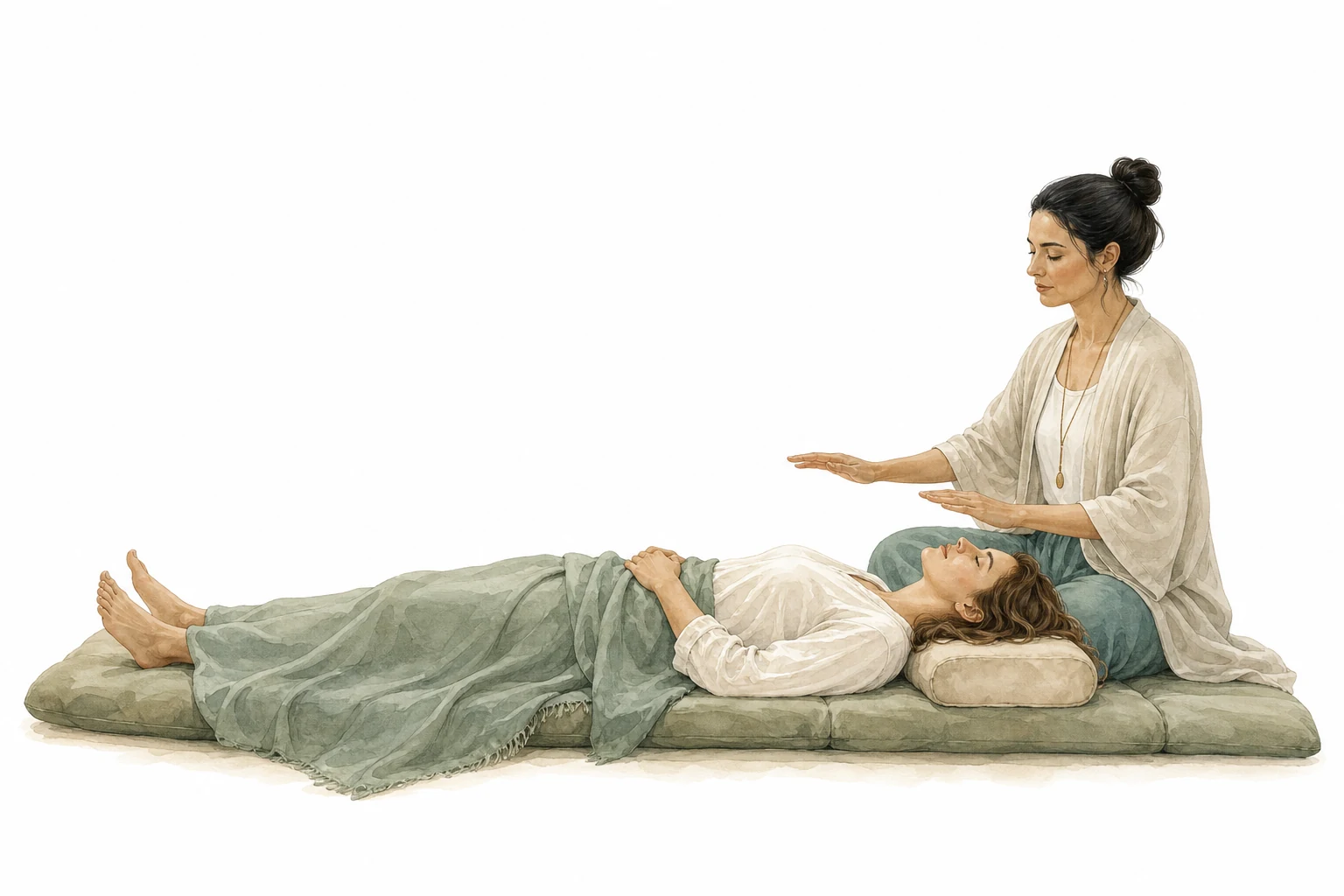
Stress, Tension, and the Jaw
How Reiki May Help with TMJ
TMJ (temporomandibular joint dysfunction) affects the jaw joint and the muscles that control jaw movement. Symptoms include pain, clicking, locking, and difficulty opening the mouth.
Stress is a major contributor to TMJ. People under stress often clench their jaws or grind their teeth. This puts tension on the joint and surrounding muscles.
Reiki reduces stress. It activates the parasympathetic nervous system. Muscles relax. The jaw can release. This may reduce TMJ symptoms. It is not a cure. But it can help.
Reiki and TMJ: The Stress Connection
How Reiki may affect TMJ through stress reduction.
Stress
Major contributor to TMJ. Causes jaw clenching and teeth grinding.
Jaw Tension
Muscles in jaw and face become tight. Joint is strained.
TMJ Symptoms
Pain, clicking, locking, difficulty opening mouth.
Reiki Session
Activates relaxation response. Reduces stress.
Relaxed Jaw
Muscles release. Less clenching. Reduced pain.
What Research Says About Reiki for TMJ
There is very little direct research on Reiki and TMJ. Evidence is mostly extrapolated from stress and pain studies.
Reiki reduces stress (major TMJ contributor)
Scientific Study
Reiki reduces muscle tension
Scientific Study
Reiki reduces pain
Scientific Study
Reiki fixes structural TMJ issues
Medical Guidance
Reiki should not replace dental care for TMJ
Medical Guidance
How Reiki Practitioners Approach TMJ
Some people with jaw tension report temporary relief after Reiki sessions. Individual experiences vary. Reiki does not cure TMJ and should not replace dental or medical care.
TMJ often has multiple causes: stress, clenching, structural issues. Reiki can help with the stress and tension components. It cannot fix structural problems. Use Reiki alongside dental care.
If you have TMJ, see a dentist or doctor. Do not rely on Reiki alone. Reiki can help with symptoms, but it is not a cure for structural issues.
Self-Reiki for TMJ: A Simple Practice
Hand position
Place your hands gently on your cheeks, jaw, or temples. Hold for 5-10 minutes.
Intention
Set the intention: 'I invite Reiki to release tension in my jaw and face.'
Breath
Breathe deeply. On each exhale, imagine the jaw softening and releasing.
Awareness
Notice if you are clenching. Consciously relax the jaw. Drop the tongue from the roof of the mouth.
Frequency
Practice daily. Even 5 minutes can help.
Key takeaways
The shortest useful version of this page.
Reiki may help with TMJ by reducing jaw tension and stress.
TMJ is often stress-related. Reiki reduces stress.
Reiki does not fix structural issues in the jaw joint.
Use Reiki alongside dental or medical care for TMJ.
Self-Reiki on the jaw area can be helpful.
Evidence is mostly anecdotal. Try it and see if it helps you.
Frequently asked questions
Can Reiki cure TMJ?
No. Reiki does not cure TMJ. It may help with symptoms like pain and tension, but it does not fix structural issues.
Will Reiki stop my jaw clenching?
It may help. Stress reduction is a major benefit of Reiki. Lower stress often means less clenching. But Reiki is not a guaranteed cure.
How many Reiki sessions for TMJ?
Some people feel relief after one session. Others need regular sessions. Daily self-Reiki can also help.
Can I do Reiki on my own jaw?
Yes. Self-Reiki on the jaw area is safe and easy. Place your hands on your cheeks or temples. Hold for 5-10 minutes.
Should I see a dentist for TMJ?
Yes. Reiki is complementary. It is not a replacement for dental care. See a dentist or doctor for diagnosis and treatment.
Sources
Sources are listed for transparency. A citation supports only the claim it directly addresses. Prefer primary research, systematic reviews, government health agencies and official institutional pages when evaluating health-related statements.
- Studies on Reiki for stress and pain.
- Dental/medical guidelines for TMJ.
- Bronwen and Frans Stiene, The Reiki Sourcebook, 2003.
- Practitioner experience and client reports.
Found a broken source or unsupported claim? Report a correction .