The Body Under Pressure
How Reiki May Reduce Stress
Stress begins as a useful alarm. The body prepares to act. Heart rate rises. Muscles tighten. Attention narrows. That is helpful when the danger is real and brief.
Modern stress is often neither real in the old sense nor brief. It is bills, deadlines, caregiving, traffic, messages, uncertainty. The alarm keeps ringing. The body pays the bill.
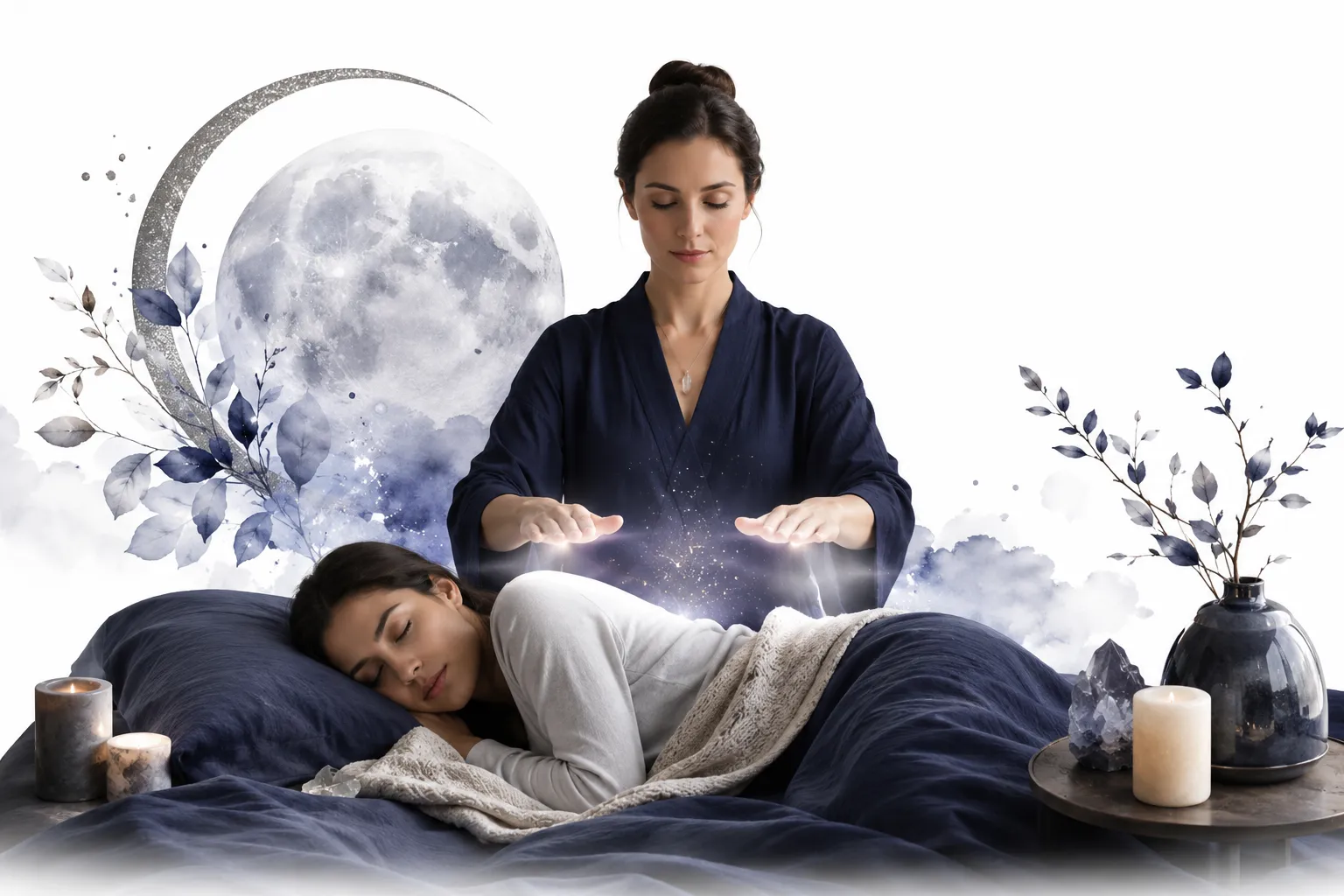
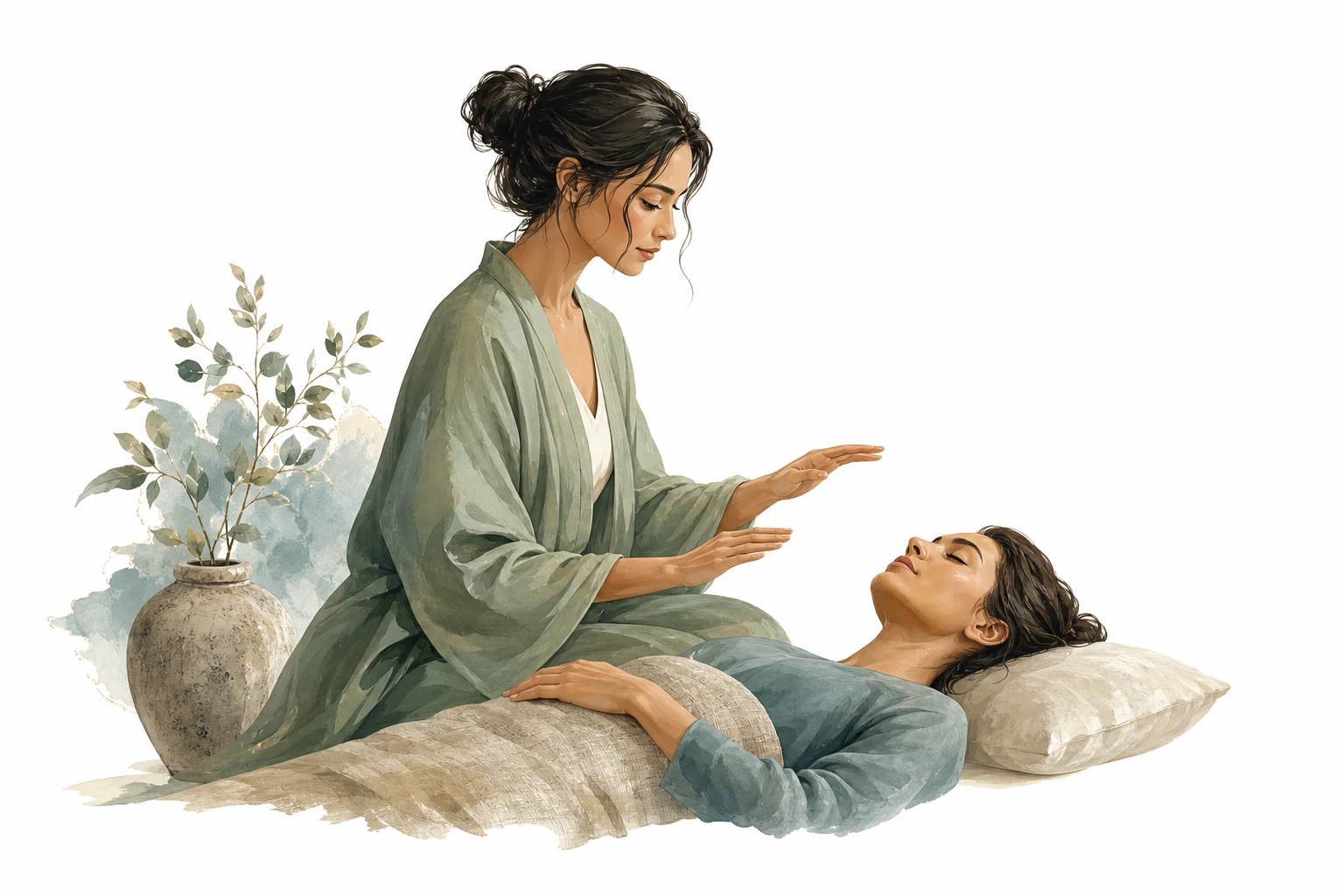
Reiki gives the body a pause. Gentle touch, stillness, and focused attention can activate the relaxation response. The alarm softens. The body remembers that rest is allowed.
Reiki and the Stress Response
How a Reiki session may calm stress physiology.
Stress Response
The body is braced. Heart rate and tension rise.
Reiki Session
Quiet space, gentle touch, focused attention.
Relaxation Response
Breath slows. Muscles release. the body feels safer.
Less Stress Load
Clearer mind, softer body, more capacity to cope.
What Research Says About Reiki for Stress
The evidence is not perfect, but stress reduction is one of the more plausible and commonly reported Reiki benefits.
Reiki promotes relaxation and reduces perceived stress
Clinical studies and reviews
Reiki may lower physiological stress markers
Small studies
Benefits may overlap with placebo, rest, and supportive attention
Research limitation
Reiki should be used as complementary stress support
Medical guidance
Reiki removes the external cause of stress
Practical limitation
How Practitioners Work With Stress
Stress clients often arrive talking quickly, breathing high in the chest, and holding tension in the shoulders. By the end of the session, the room is quieter. Their body has changed before their story has changed.
Reiki's value for stress is practical. It helps people rest. It gives the nervous system a rehearsal of calm. That does not make it a cure-all. It makes it useful.
If stress is causing panic attacks, chest pain, severe insomnia, depression, substance use, or thoughts of self-harm, professional care is needed. Reiki can sit beside that care. It should not replace it.
Why Reiki Can Feel So Calming
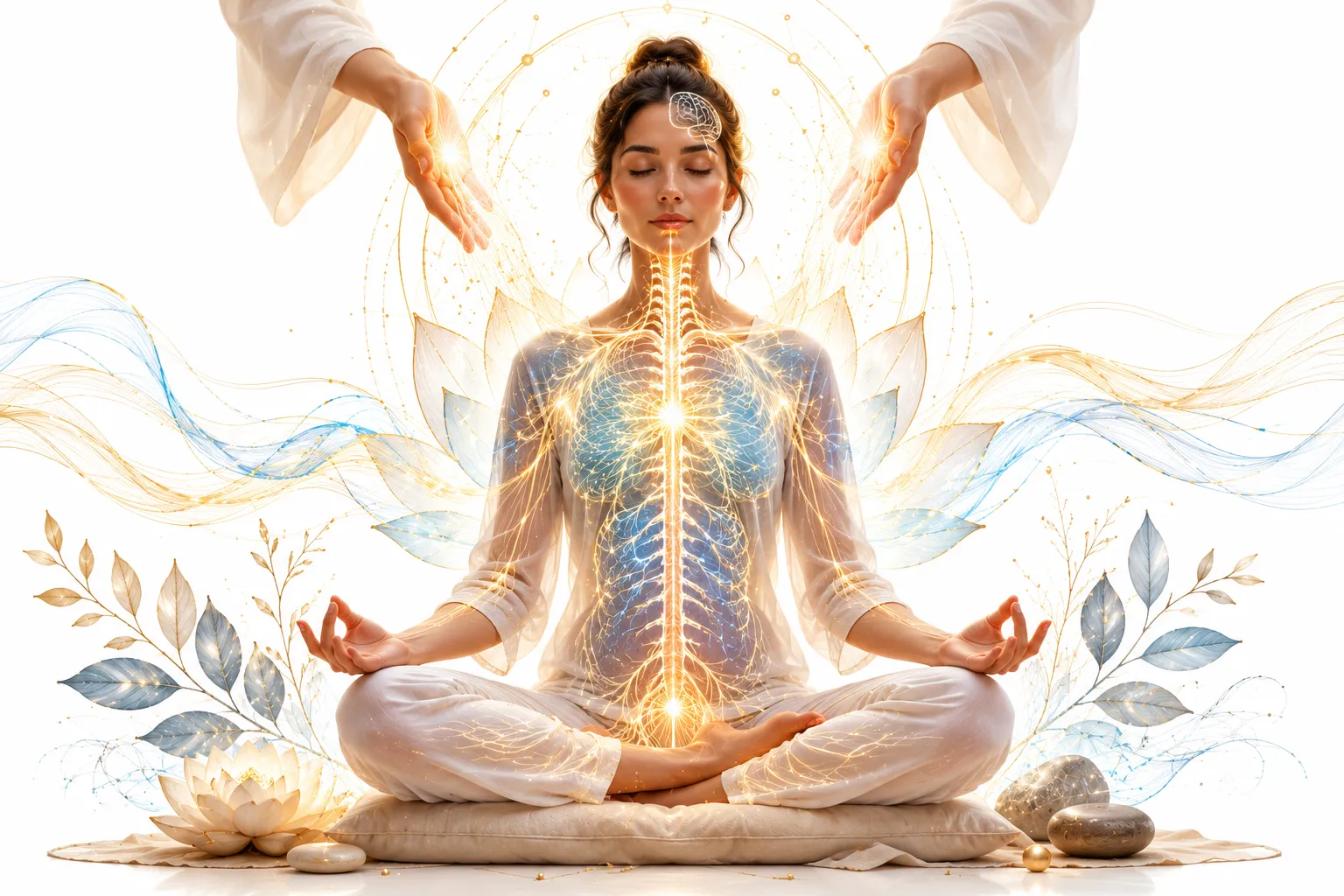
The likely pathway is simple: safety signal, relaxation response, recovery.
The Body Receives a Safety Signal
A quiet room, gentle hands, and permission to stop doing things tell the nervous system that immediate action is not required.
Like lowering a raised drawbridge.The Breath Changes
As the body settles, breathing often slows by itself. You do not have to force it.
Like a fan moving from high speed to low.Muscles Stop Guarding
The jaw, neck, shoulders, back, and belly may release some of their protective tension.
Like unclenching a fist you forgot you were making.The Mind Gets More Room
The same problems may remain, but they are no longer pressed against your face. You can think with more space.
Like stepping back from a painting to see the whole picture.
How to Use Reiki for Daily Stress
Morning reset
Place one hand on the heart and one on the belly for five minutes before checking your phone.
Midday pause
Put both hands on the thighs, feet flat on the floor, and breathe slowly for three minutes.
After work
Use Reiki to mark the boundary between work and home. Let the body know the shift has ended.
Before bed
Use head, heart, belly, and feet positions to release the day and prepare for sleep.
Key takeaways
The shortest useful version of this page.
Reiki may help with stress by activating the relaxation response.
The most realistic benefits are calmer breathing, softer muscles, and a quieter nervous system.
Evidence is limited but supportive for relaxation and perceived stress reduction.
Reiki does not remove external stressors. Practical changes may still be necessary.
Use Reiki alongside sleep, movement, therapy, medical care, and real-life support.
Frequently asked questions
Can Reiki reduce stress quickly?
Many people feel calmer after one session. Lasting stress resilience usually requires regular practice and practical changes to stress sources.
How often should I get Reiki for stress?
Weekly sessions can help during high-stress periods. For maintenance, monthly sessions or daily self-Reiki may be enough.
Can I do self-Reiki when I am stressed at work?
Yes. Place your hands on your thighs or over your heart for a few minutes. Keep it discreet and simple.
Is Reiki better than meditation for stress?
Not necessarily. Some people prefer Reiki because it is body-based and passive. Others do better with meditation, breathwork, or exercise.
Can Reiki help burnout?
It may help the exhaustion and nervous system overload of burnout, but burnout also requires rest, boundaries, workload changes, and support.
Sources
Sources are listed for transparency. A citation supports only the claim it directly addresses. Prefer primary research, systematic reviews, government health agencies and official institutional pages when evaluating health-related statements.
- National Center for Complementary and Integrative Health (NCCIH), Reiki and relaxation research.
- Studies and reviews on Reiki for stress, anxiety, and relaxation.
- Bronwen and Frans Stiene, The Reiki Sourcebook, 2003.
Found a broken source or unsupported claim? Report a correction .