Measurable Changes
The Physiological Effects of a Reiki Session
Reiki is often described as 'energy healing.' But energy is not the only thing changing. Your physical body responds in measurable ways.
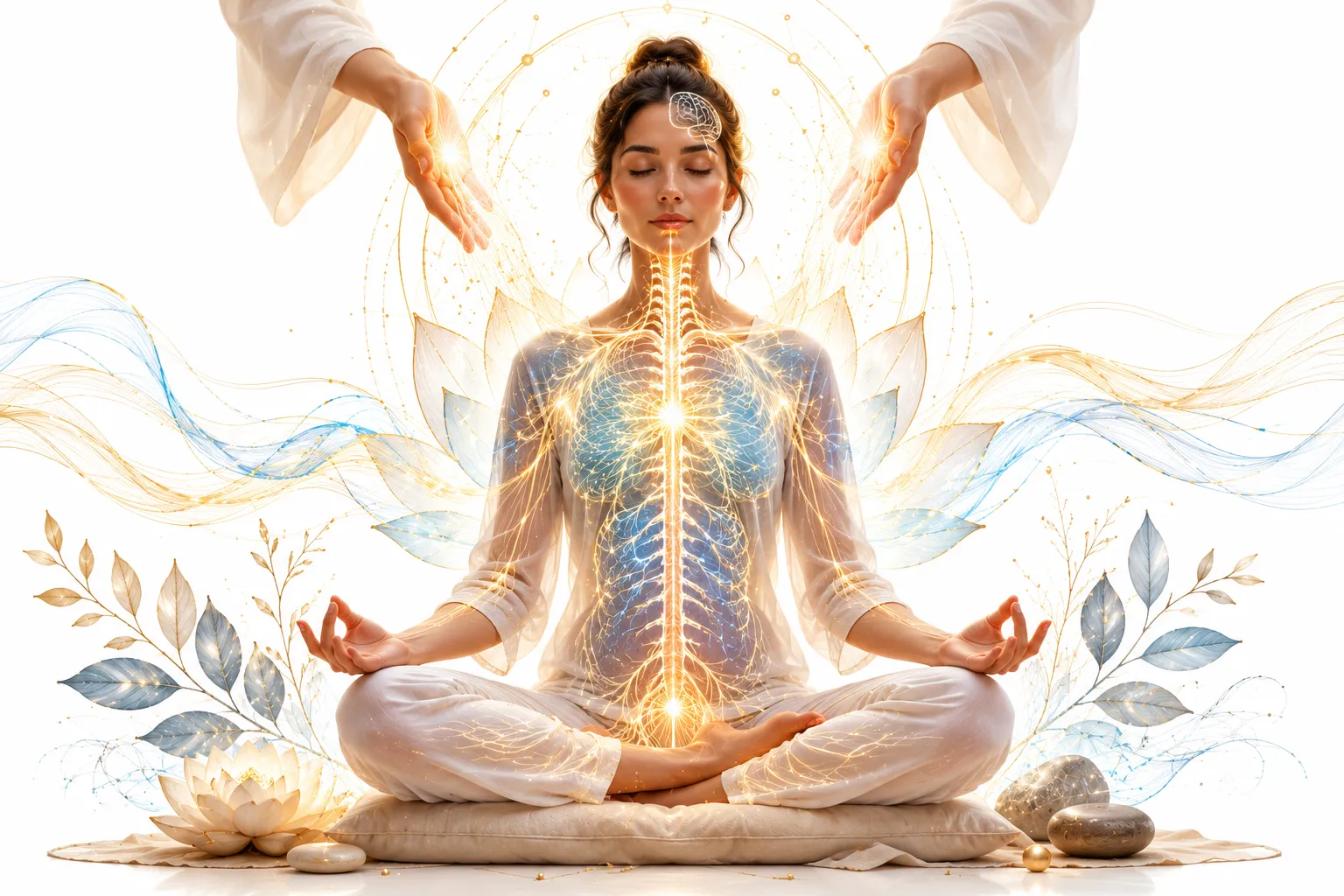
The most significant change is nervous system shift. The sympathetic (fight or flight) system downregulates. The parasympathetic (rest and digest) system activates. This is the relaxation response.
Once the relaxation response is activated, a cascade of changes follows. Heart rate slows. Breathing deepens. Blood pressure drops. Stress hormones decrease. Muscles release. The body enters a state conducive to healing.
The Reiki Physiology Cascade
How Reiki triggers a cascade of physiological changes.
Reiki Session
Gentle touch, quiet environment, focused attention. Triggers relaxation response.
Parasympathetic Activation
Rest and digest. The body shifts from survival mode to healing mode.
Physical Changes
Heart rate slows. Cortisol drops. Brain waves shift. Muscles relax.
Subjective Experience
Deep relaxation, peace, emotional release, sense of well-being.
The Main Event
How Reiki Changes Your Nervous System
Your nervous system has two main modes. Sympathetic is the gas pedal. It gets you ready for action, for danger, for stress. Parasympathetic is the brake. It slows you down, helps you rest, repairs your body.
Most modern humans spend too much time with their foot on the gas. Chronic stress keeps the sympathetic system activated. The body never gets the signal that it is safe to rest.
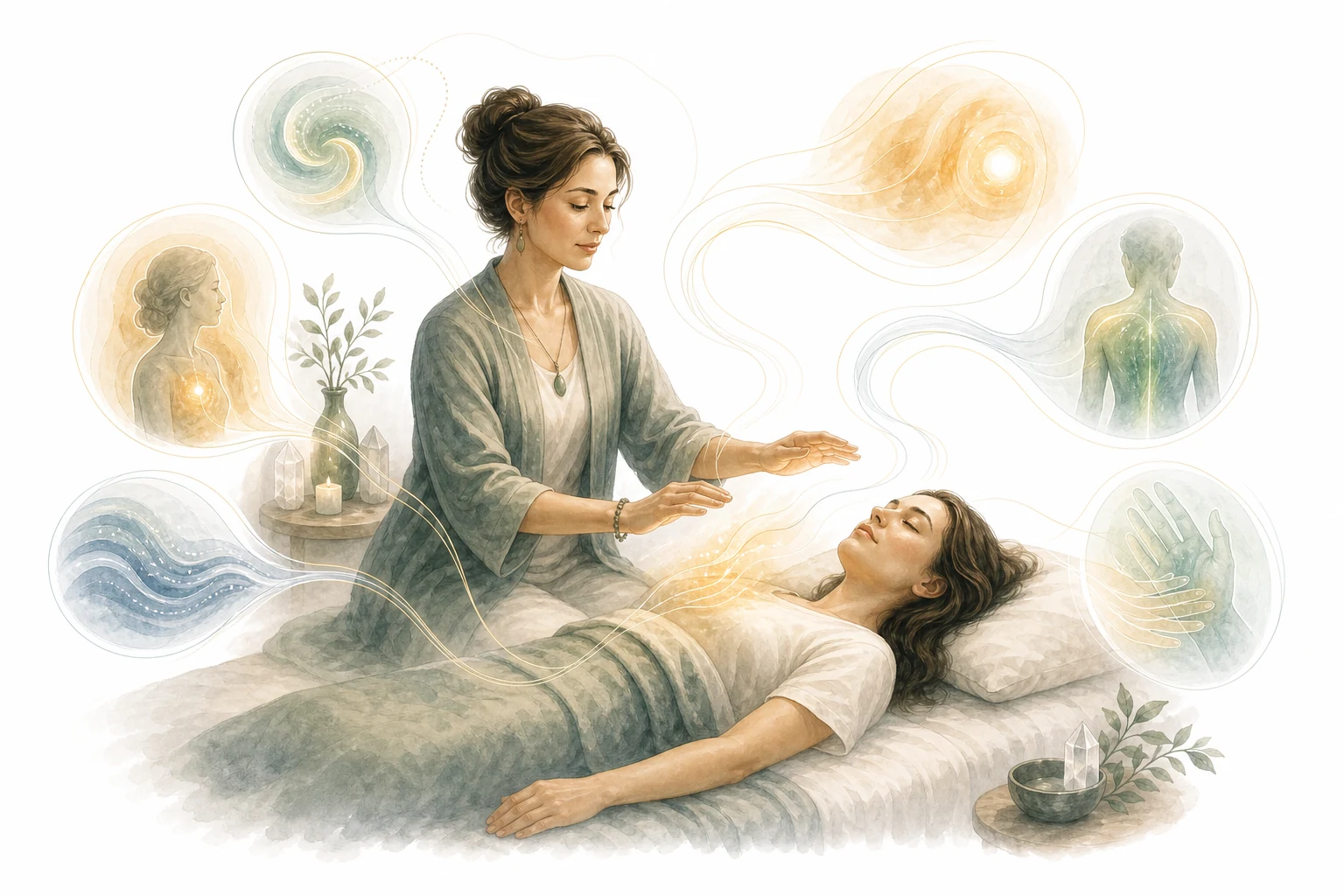
Reiki puts your foot on the brake. The gentle touch, the quiet space, the focused attention, all signal safety to your nervous system. The parasympathetic system activates. Your body can finally rest.
The Chemical Shift
Hormonal Changes During Reiki
The most studied hormonal change during Reiki is cortisol. Cortisol is the primary stress hormone. Multiple studies have shown that Reiki reduces cortisol levels, sometimes by 25-50%.
Other hormones may also change. Oxytocin, the 'bonding' or 'love' hormone, may increase with compassionate touch. Endorphins, the body's natural pain relievers, may increase as well.
These hormonal shifts explain why Reiki feels good. Less stress hormone. More bonding hormone. More natural pain relief. The body's chemistry changes to support healing.
The Mind Quieting
Brain Wave Changes During Reiki
Your brain produces different wave patterns depending on your state. Beta waves are active, alert, thinking. Alpha waves are relaxed, calm, meditative. Theta waves are deeply relaxed, creative, dreamlike.
During Reiki, brain waves tend to shift from beta toward alpha and theta. The mind quiets. The internal chatter slows down. You enter a state of relaxed alertness or light meditation.
This shift is why people often feel 'spacey' or 'dreamy' after Reiki. The brain has been in a different mode. It takes time to shift back.
How Practitioners Understand the Physiology
Some researchers have explored whether Reiki sessions are associated with relaxation-related physiological changes, but current evidence does not establish a Reiki-specific mechanism. Recipients may notice slower breathing or muscle release; experiences vary and should not be described as medical healing.
The physiological changes during Reiki are real and measurable. But they are not unique to Reiki. Meditation, deep breathing, and other relaxation practices produce similar effects. What matters is that Reiki works for many people.
The relaxation response is beneficial, but it is not a cure for disease. Use Reiki alongside medical care, not instead of it.
Key takeaways
The shortest useful version of this page.
During Reiki, the parasympathetic nervous system activates (rest and digest).
Heart rate slows, cortisol decreases, and muscles relax.
Brain waves shift toward alpha and theta states (relaxed alertness and light meditation).
These changes are real and measurable, not just subjective feelings.
The relaxation response explains why Reiki helps with stress, anxiety, and related conditions.
Similar physiological changes occur with meditation, deep breathing, and other relaxation practices.
Frequently asked questions
Can you measure what happens during Reiki?
Yes. Studies have measured heart rate, blood pressure, cortisol levels, and brain waves during Reiki. All show changes consistent with relaxation.
Is the relaxation response unique to Reiki?
No. Meditation, deep breathing, massage, and other relaxation practices produce similar effects. Reiki is one of many ways to activate the parasympathetic nervous system.
Why do some people feel heat or tingling?
These sensations are likely due to increased blood flow and nervous system changes. They are common but not universal.
Why do some people feel nothing?
Everyone is different. Some people are less sensitive to subtle physiological changes. Feeling nothing does not mean nothing is happening.
Can these physiological changes be harmful?
No. The relaxation response is beneficial. It reduces stress, lowers blood pressure, and supports immune function.
Sources
Sources are listed for transparency. A citation supports only the claim it directly addresses. Prefer primary research, systematic reviews, government health agencies and official institutional pages when evaluating health-related statements.
- Studies on cortisol reduction and Reiki.
- Studies on heart rate and blood pressure during Reiki.
- Studies on brain waves during energy healing.
- Bronwen and Frans Stiene, The Reiki Sourcebook, 2003.
Found a broken source or unsupported claim? Report a correction .