Pain and the Relaxation Response
How Reiki May Reduce Pain Perception
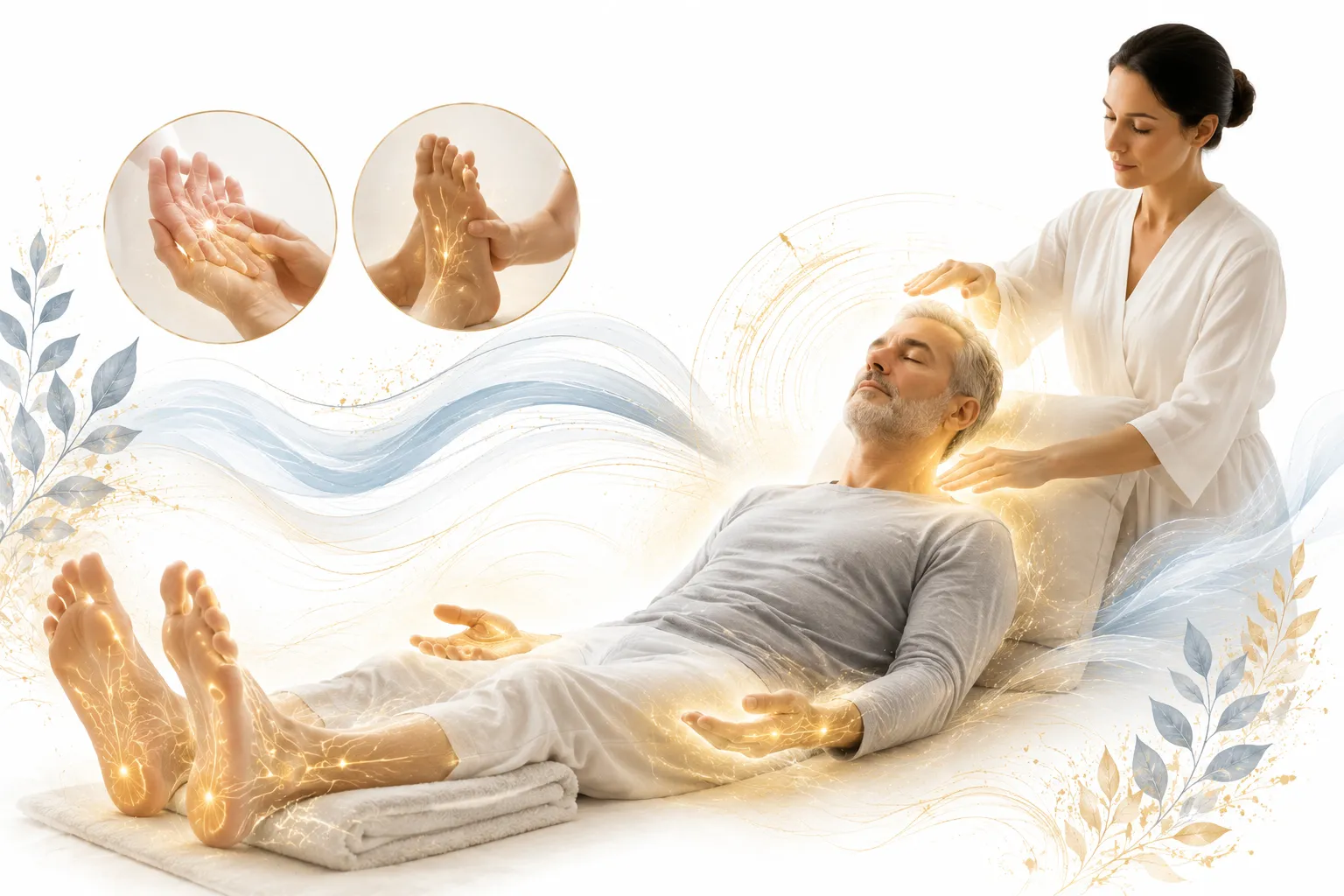
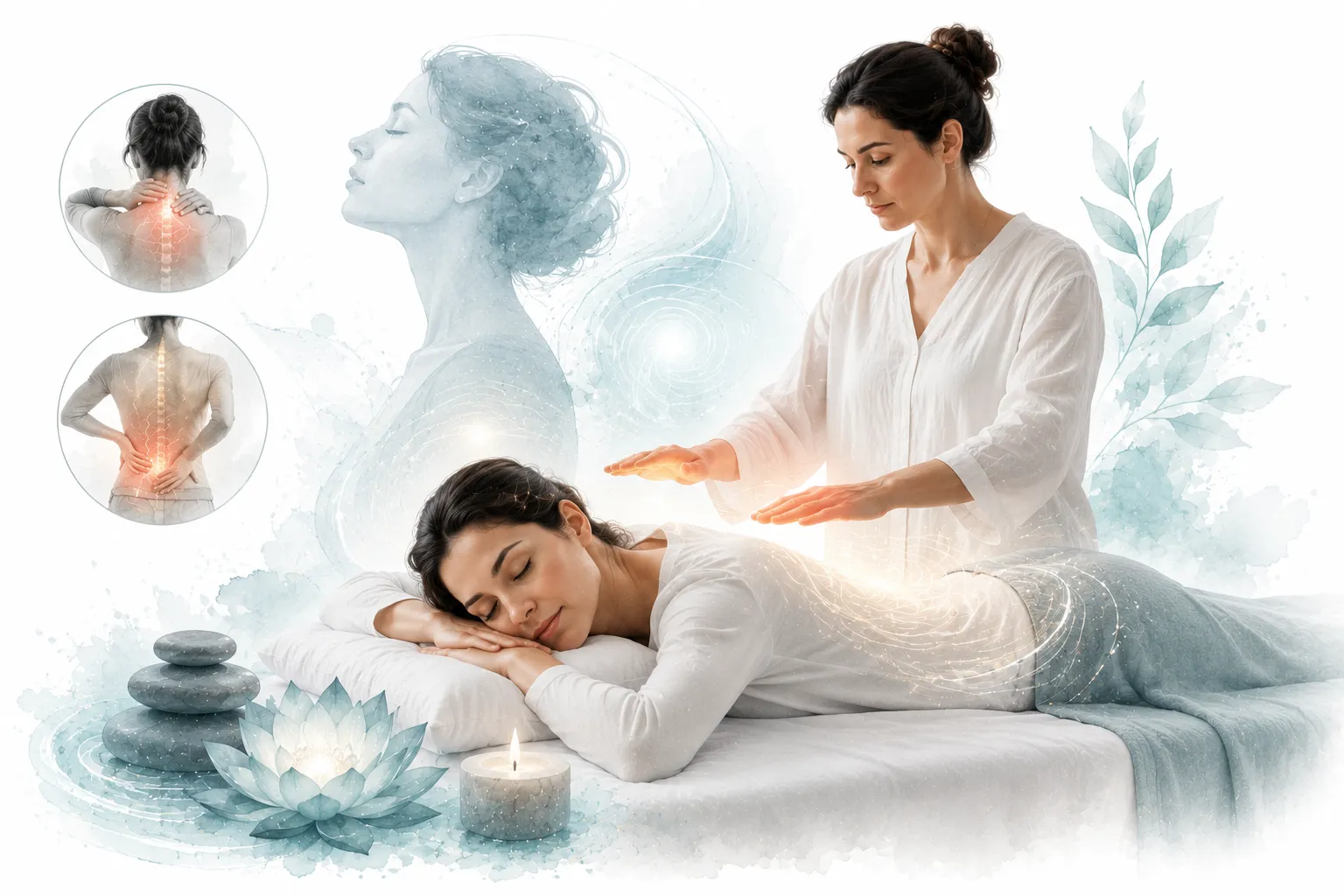
Pain is not just a physical sensation. It is influenced by stress, anxiety, attention, and expectation. The brain processes pain signals through multiple filters.
Some researchers have explored whether Reiki sessions are associated with relaxation-related physiological changes, but current evidence does not establish a Reiki-specific mechanism. The rest and digest response. When the body relaxes, pain perception often decreases. Not because the injury healed. Because the alarm turned down.
This is why Reiki is not a cure for pain. It does not fix the underlying cause. But it can make the pain more bearable. For someone suffering, that is valuable.
How Reiki May Reduce Pain
The pathway from Reiki to pain relief.
Reiki Session
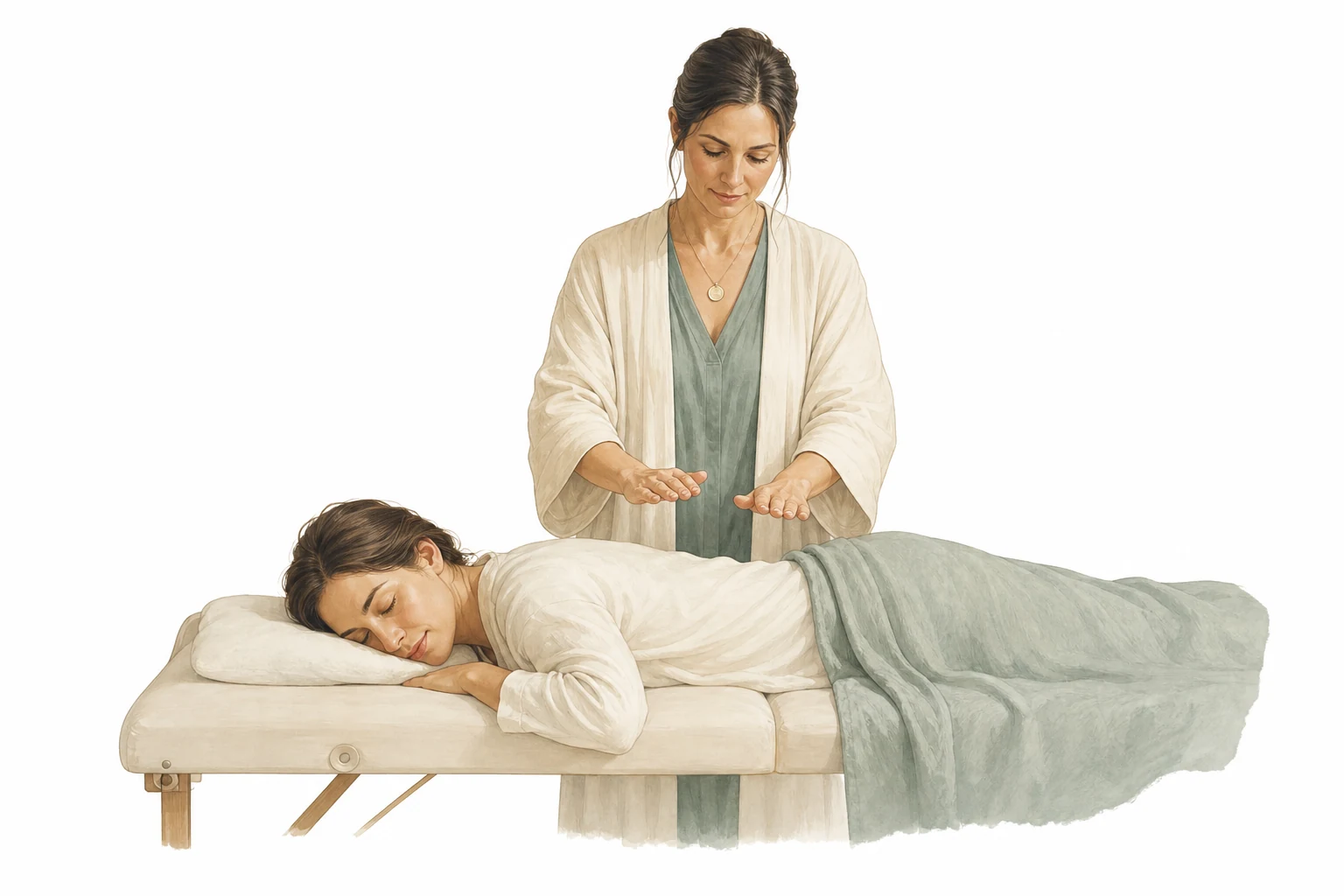
Gentle touch or hovering. Activates relaxation response.
Relaxation Response
Parasympathetic activation. Heart rate slows. Muscles relax.
Reduced Stress
Lower cortisol. Less muscle tension. Calmer nervous system.
Reduced Pain
Pain perception decreases. Pain becomes more bearable.
What Research Says About Reiki for Pain
A review of available studies on Reiki and pain management.
Reiki reduces chronic pain
Scientific Study
Reiki reduces post-surgical pain
Scientific Study
Reiki reduces headache frequency
Scientific Study
Effects may be due to placebo or general relaxation
Skeptical View
Reiki should complement, not replace, medical pain management
Medical Guidance
How Practitioners Approach Pain Management
Many clients with chronic pain report that Reiki helps. The pain does not always disappear. But it becomes less sharp, less consuming. They can think about something else. They can sleep better. That is a real benefit.
Reiki is not a replacement for pain medication or physical therapy. But it can be a valuable addition. Less stress, better sleep, and reduced muscle tension all help with pain. Reiki supports these changes.
If you have severe or undiagnosed pain, see a doctor first. Do not use Reiki instead of medical care. Use it alongside medical care.
Key takeaways
The shortest useful version of this page.
Reiki may help reduce pain perception, especially for chronic pain, headaches, and post-surgical pain.
Evidence is limited but promising. More research is needed.
The mechanism is the relaxation response, not tissue repair.
Effects are often temporary. Regular sessions or daily self-Reiki may provide cumulative benefits.
Reiki is not a substitute for medical pain management. Always see a doctor for pain.
Frequently asked questions
Can Reiki cure my chronic pain?
No. Reiki does not cure the underlying cause of pain. It may help manage pain perception. See a doctor for diagnosis and treatment.
How many Reiki sessions for pain relief?
Some people feel relief after one session. For chronic pain, regular sessions (weekly) or daily self-Reiki are recommended.
Can Reiki replace my pain medication?
No. Never stop pain medication without your doctor's supervision. Reiki is complementary, not a replacement.
Is Reiki safe for post-surgical pain?
Yes, but avoid direct touch on incisions. Hovering hands or distance Reiki is fine. Always follow your surgeon's instructions.
What if Reiki does not help my pain?
Reiki does not work for everyone. That is normal. Continue working with your doctor to find effective pain management strategies.
Sources
Sources are listed for transparency. A citation supports only the claim it directly addresses. Prefer primary research, systematic reviews, government health agencies and official institutional pages when evaluating health-related statements.
- Studies on Reiki for chronic pain, post-surgical pain, and headaches.
- National Center for Complementary and Integrative Health (NCCIH).
- Bronwen and Frans Stiene, The Reiki Sourcebook, 2003.
Found a broken source or unsupported claim? Report a correction .