Two Perspectives
How Reiki Works: Tradition and Science
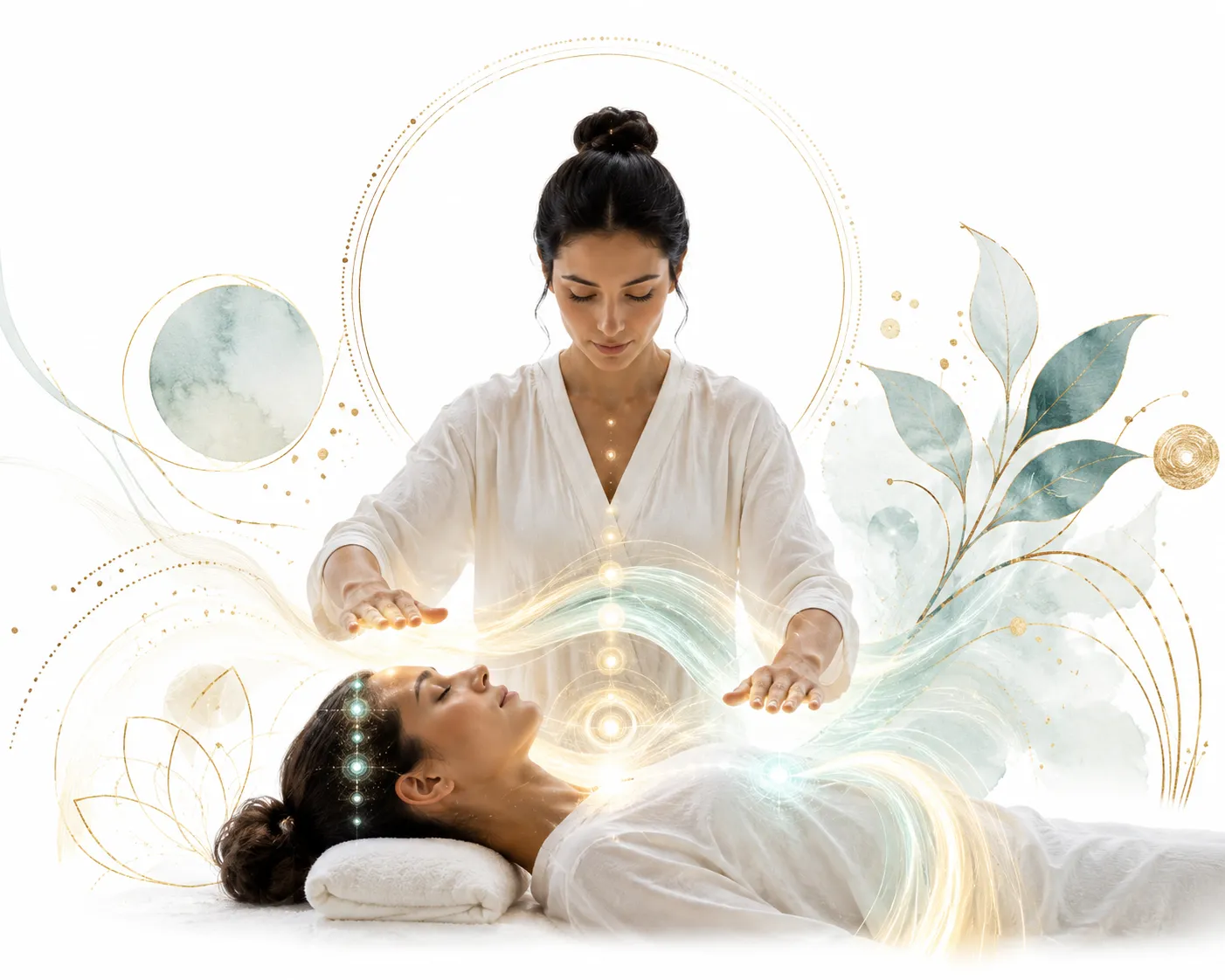
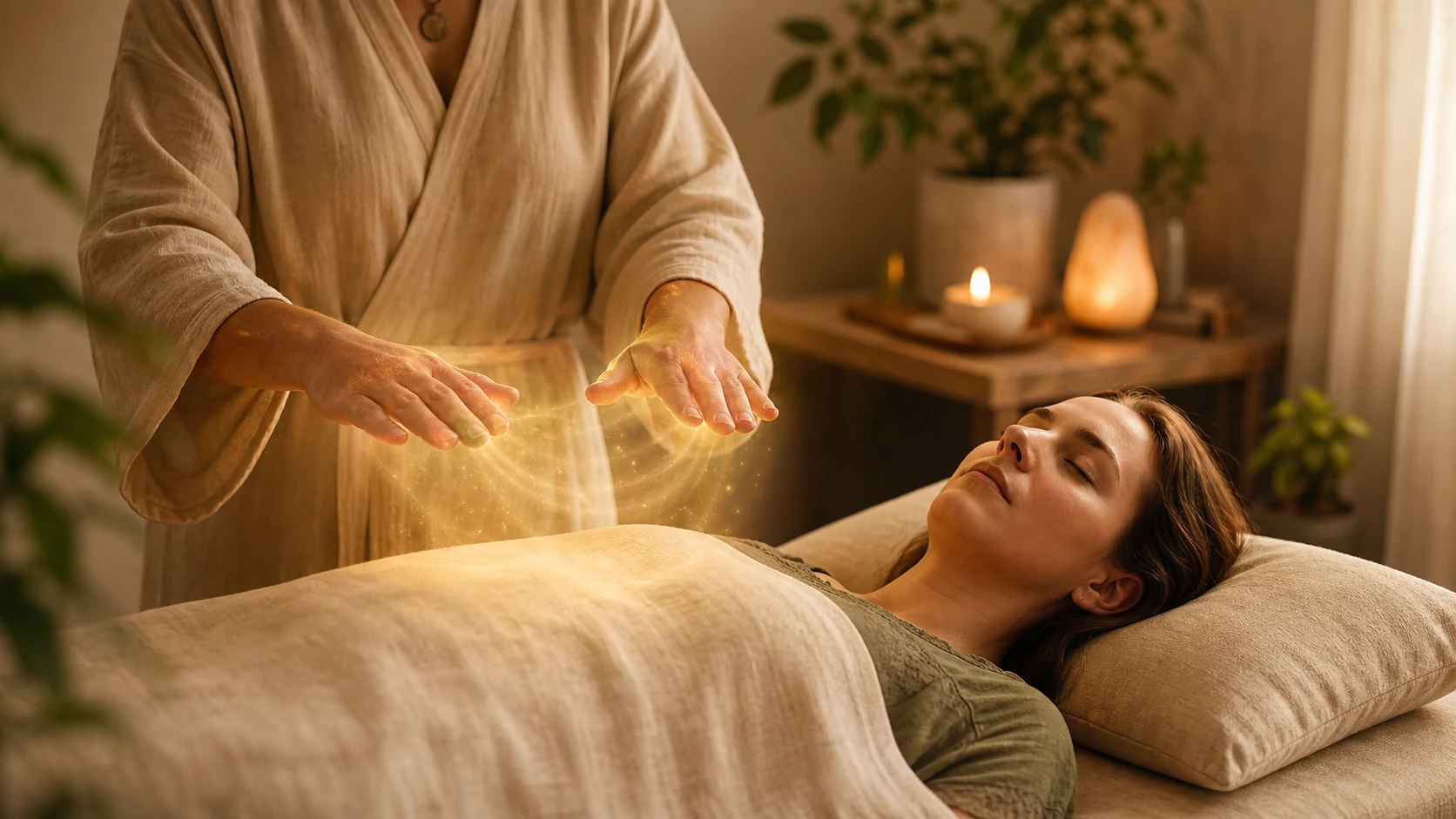
According to Reiki tradition, Usui Reiki works by channeling universal life energy. The practitioner is a conduit. The energy flows through them to the recipient. The recipient's body uses this energy to support its natural healing processes.
From a scientific perspective, the mechanism is less clear. Some researchers suggest Reiki works through the relaxation response, the placebo effect, and the power of compassionate touch. The evidence is limited but some studies show benefits for pain, anxiety, and stress.
Both perspectives have value. The traditional explanation provides meaning. The scientific explanation provides evidence. The practice works for many people, regardless of which explanation you prefer.
How Reiki Works
The process from intention to healing.
Intention
Practitioner sets intention to channel Reiki. Opens the channel (Reiki tradition).
Hand Positions
Practitioner places hands on or near the body. Corresponds to energy centers.
Energy Flow
According to Reiki tradition, energy flows through hands to recipient.
Healing Response
According to Reiki tradition, body uses energy for healing. Reduced pain, less stress, improved well-being.
The Reiki Tradition
How Reiki Works According to Tradition
According to Reiki tradition, Usui Reiki works by channeling universal life energy. This energy is called ki in Japanese. It flows through all living things.
The practitioner is a conduit. They do not create the energy. They channel it. The energy flows through their hands to the recipient. The recipient's body uses this energy to support its natural healing processes.
The symbols and attunements are tools to help the practitioner channel the energy more effectively. They focus the intention and open the channel.
The Scientific Perspective
What Research Suggests About How Reiki Works
From a scientific perspective, the mechanism of Reiki is less clear. Some researchers suggest Reiki works through the relaxation response. The gentle touch and quiet environment trigger the parasympathetic nervous system. This reduces stress hormones and promotes healing.
Others suggest the placebo effect plays a significant role. Believing that Reiki will help can produce real physiological changes. This is not 'just' placebo. The placebo effect is a real effect.
Compassionate touch may also play a role. Touch releases oxytocin, the 'bonding' hormone. It reduces pain perception and creates feelings of safety.
The evidence is limited. Most studies are small. More research is needed to understand how Reiki works.
What Practitioners Say
I do not know exactly how Reiki works. I know it works for many people. I have seen it help with pain, anxiety, and stress. I trust the tradition. I trust the experience. The energy flows. The healing happens.
Reiki works in ways we do not fully understand. The traditional explanation is meaningful. The scientific explanation is incomplete. Both are valid. The practice works for many people. That is what matters.
Reiki is not a substitute for medical care. It is a complementary therapy. Use it alongside medical treatment. Do not replace it.
Key takeaways
The shortest useful version of this page.
According to Reiki tradition, Reiki works by channeling universal life energy.
From a scientific perspective, it may work through the relaxation response, placebo, and compassionate touch.
The practice involves intention, hand positions, and symbols (Reiki tradition).
The evidence is limited but some studies show benefits for pain, anxiety, and stress.
Reiki is a complementary therapy, not a substitute for medical care.
The exact mechanism remains unclear.
Frequently asked questions
How does Usui Reiki work?
According to Reiki tradition, it works by channeling universal life energy. From a scientific perspective, the mechanism is unclear but may involve the relaxation response and placebo.
Is there scientific evidence for how Reiki works?
The evidence is limited. Some studies show benefits for pain, anxiety, and stress. The mechanism is not fully understood.
Does Reiki energy really exist?
There is no scientific evidence for ki as a measurable energy. It is a traditional concept central to Reiki practice.
Can Reiki be explained by science?
Partially. The relaxation response, placebo effect, and compassionate touch can explain some of Reiki's effects. The specific mechanism remains unclear.
Does the practitioner need to believe in Reiki for it to work?
According to Reiki practitioners, no. The energy flows regardless of belief. The scientific evidence does not confirm this. Some argue effects may come from relaxation and attention.
Sources
Sources are listed for transparency. A citation supports only the claim it directly addresses. Prefer primary research, systematic reviews, government health agencies and official institutional pages when evaluating health-related statements.
- Frank Arjava Petter, Reiki Fire, 1997.
- Bronwen and Frans Stiene, The Reiki Sourcebook, 2003.
- National Center for Complementary and Integrative Health (NCCIH), Reiki Research.
- Traditional Usui Reiki teachings.
Found a broken source or unsupported claim? Report a correction .