The Science of a Powerful Experience
What Is Actually Happening During a Reiki Session
Let us start with what Reiki is not. It is not magic. It is not supernatural energy from another dimension. It is not a miracle cure. These explanations are not necessary. The real explanations are more grounded and just as impressive.
Your body has two main nervous system states. Sympathetic: fight or flight. Stress. High alert. Parasympathetic: rest and digest. Calm. Healing. Most modern humans spend too much time in sympathetic. Reiki activates parasympathetic.
When parasympathetic activates, your heart rate slows. Blood pressure drops. Muscles relax. Digestion improves. Immune function increases. Pain perception decreases. This is not mysterious. This is physiology. And it feels powerful because being stuck in survival mode is exhausting. Finally resting is profound.
The Physiology of a Reiki Session
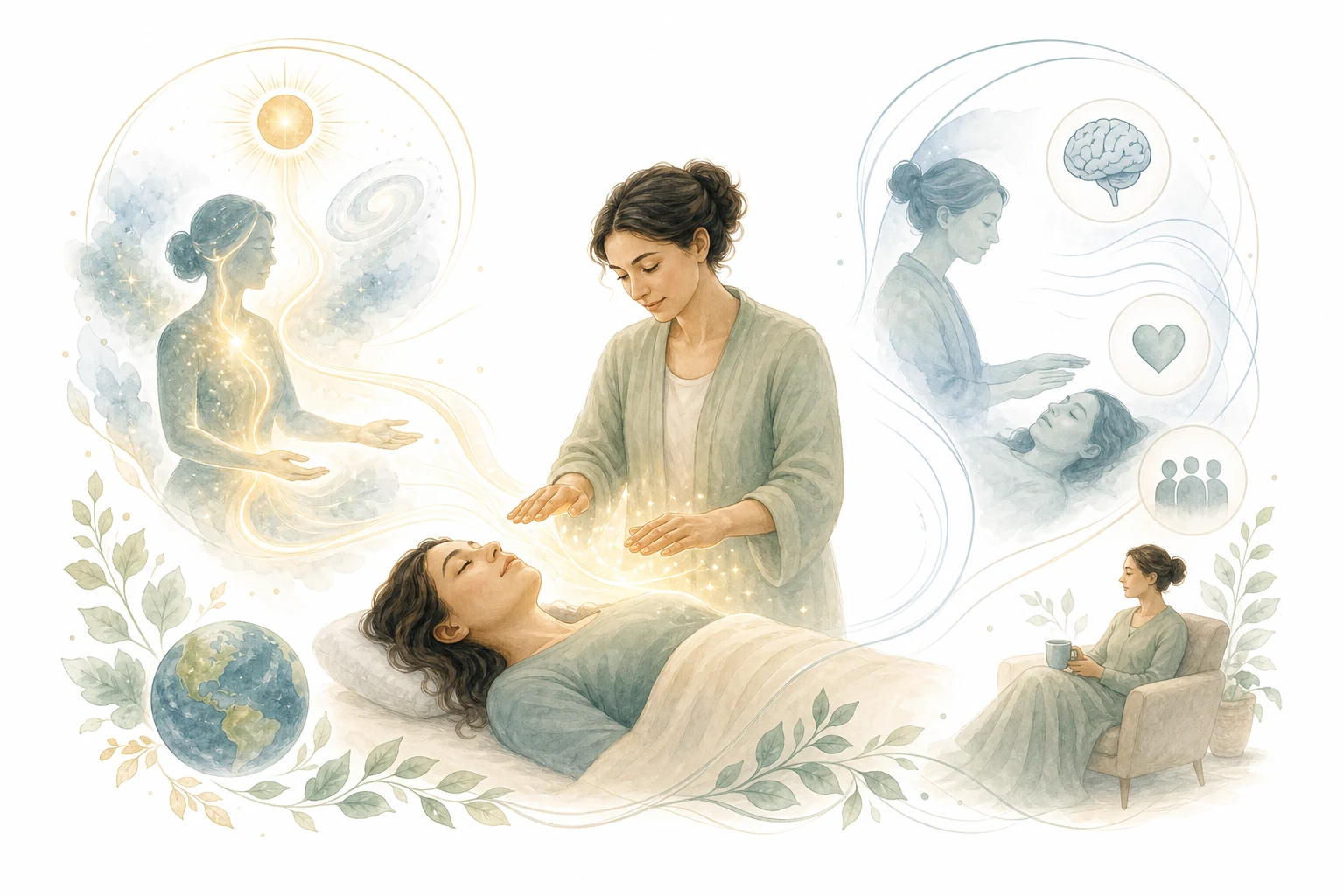
What happens in your body during and after Reiki.
Brain
Alpha waves increase. Relaxed alertness. Mind settles.
Nervous System
Parasympathetic activates. Rest and digest mode.
Heart
Heart rate slows. Heart rate variability improves.
Stress Hormones
Cortisol decreases. Adrenaline decreases.
Oxytocin
Increases with compassionate touch. Feeling of safety.
The Main Event
How Reiki Calms the Nervous System
Your nervous system has two gears. Sympathetic is the gas pedal. It gets you going, helps you respond to threats, keeps you alert. Parasympathetic is the brake. It slows you down, helps you rest, repairs your body.
Modern life keeps your foot on the gas. Deadlines. Traffic. News. Social media. Work stress. Family stress. Money stress. The sympathetic system never turns off. Your body stays in low-level survival mode all the time.
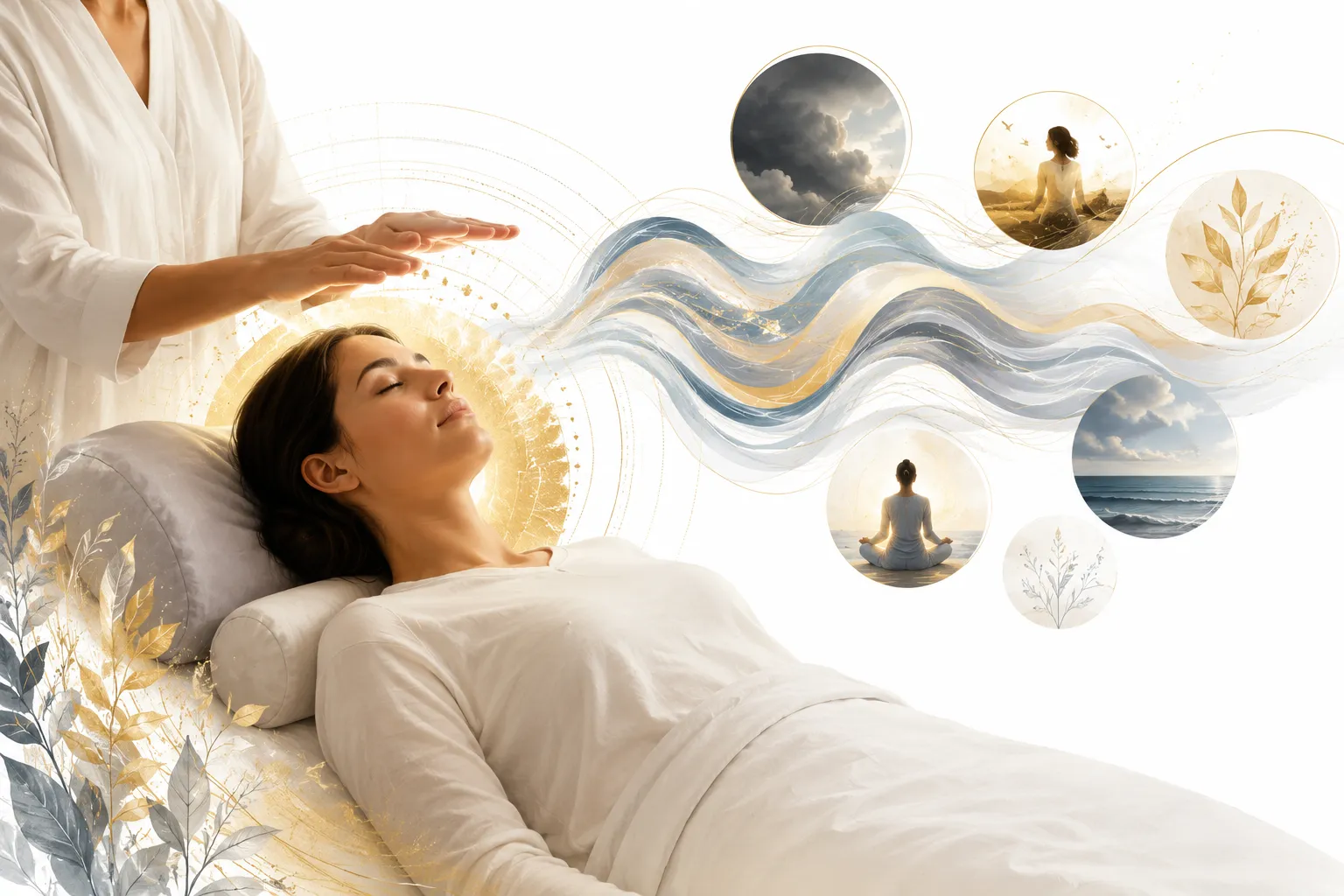
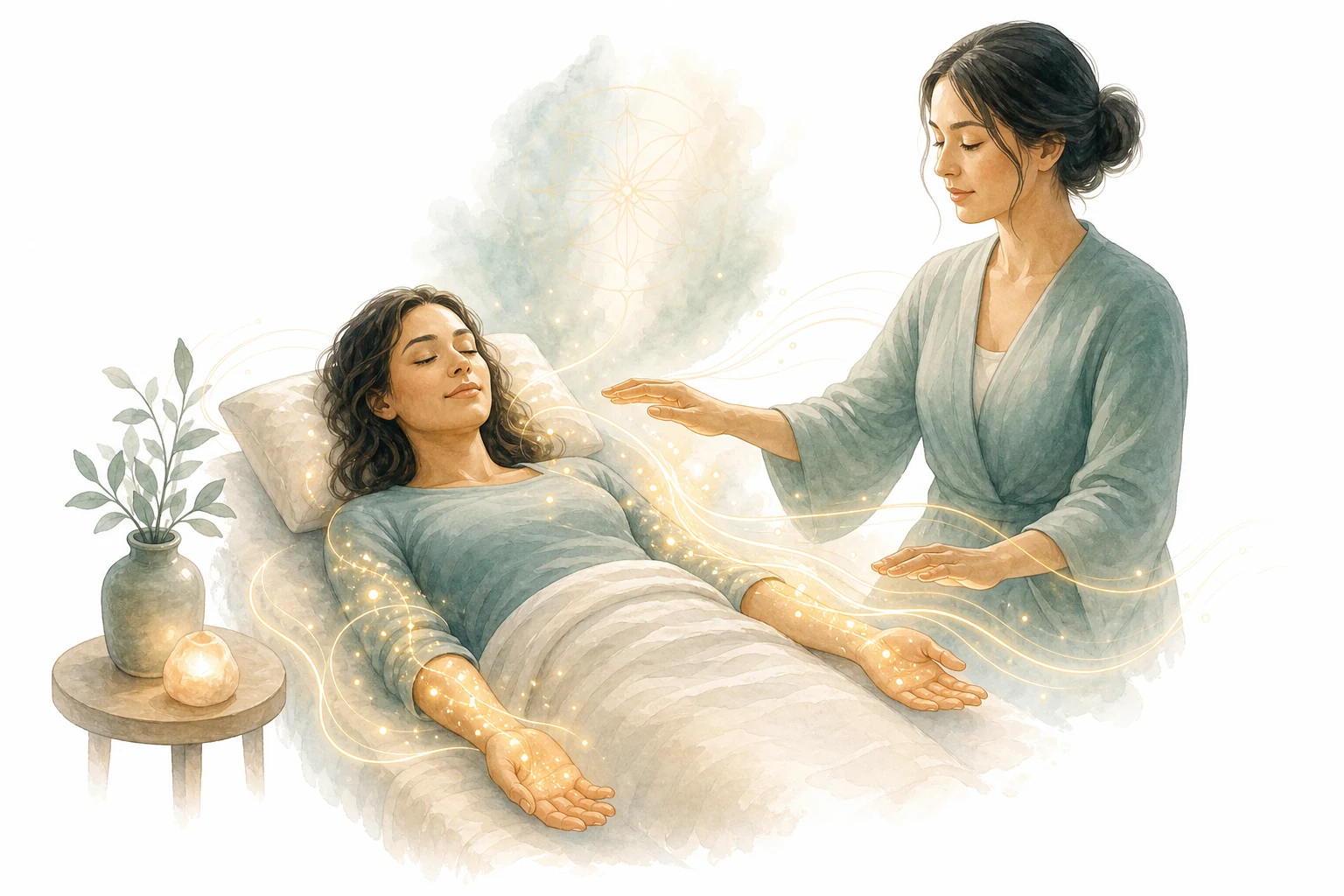
Reiki puts your foot on the brake. The gentle touch, the quiet space, the focused attention, all signal safety to your nervous system. The parasympathetic system activates. Your body can finally rest. This feels powerful because you may not have truly rested in years.
Why People Cry
Stored Emotions and the Body
Emotions are not just in your mind. They are in your body. Tension in your shoulders. A knot in your stomach. A tightness in your chest. These are physical manifestations of emotional states.
When Reiki relaxes the body, stored emotions can surface. You might cry without knowing why. You might feel anger, sadness, or joy. You might yawn, sigh, or feel tingling. This is release. It is not a sign that something is wrong. It is a sign that something is shifting.
Many people find emotional release to be the most powerful part of Reiki. They leave sessions feeling lighter, clearer, more at peace. The emotion that was stuck has moved. The body has let go.
The Step-by-Step Process of a Reiki Session
What happens from start to finish, physiologically and experientially.
Settle
You lie down. The room is quiet. Your nervous system begins to shift. The sympathetic activation starts to decrease.
Like a shaken snow globe beginning to settle.Touch
The practitioner places hands gently on or near your body. Compassionate touch releases oxytocin. Safety increases.
Like a warm blanket on a cold night.Relax
Parasympathetic activates. Heart rate slows. Breathing deepens. Muscles release.
Like sinking into a warm bath.Release
Stored emotions or tension may surface. You might cry, yawn, or feel heat or tingling.
Like opening a shaken soda bottle slowly.Integrate
After the session, you feel relaxed, perhaps spacey. The body continues to process. Aftercare supports integration.
Like letting the snow globe sit quietly.
Key takeaways
The shortest useful version of this page.
Reiki's power comes from activating the parasympathetic nervous system.
Stress hormone reduction, oxytocin release, and emotional release all contribute to the experience.
The effects are physiological and psychological, not supernatural.
Not everyone feels powerful effects. Both powerful and subtle experiences are normal.
Regular practice, not occasional sessions, creates lasting change.
Frequently asked questions
Is Reiki's power just placebo?
Placebo is part of it, as it is with all healing practices. But placebo is a real effect. And there are additional physiological mechanisms: nervous system regulation, oxytocin release, stress hormone reduction.
Why do some people feel nothing during Reiki?
Everyone is different. Some people are less sensitive to subtle energy. Some are too stressed to relax deeply. Feeling nothing does not mean nothing is happening.
Can Reiki be too powerful?
Occasionally, people feel overwhelmed by emotional release. This is usually temporary. Work with an experienced practitioner who can help you integrate.
Why do I cry during Reiki?
Emotional release. Your body is letting go of stored emotions. This is normal and often feels good afterward.
How can I get the most powerful experience?
Relax into it. Do not try to make anything happen. Trust the process. Practice self-Reiki regularly to build sensitivity.
Sources
Sources are listed for transparency. A citation supports only the claim it directly addresses. Prefer primary research, systematic reviews, government health agencies and official institutional pages when evaluating health-related statements.
- Studies on parasympathetic activation and Reiki.
- Research on cortisol reduction with Reiki.
- Bronwen and Frans Stiene, The Reiki Sourcebook, 2003.
- Porges, S. (2011). The Polyvagal Theory.
Found a broken source or unsupported claim? Report a correction .