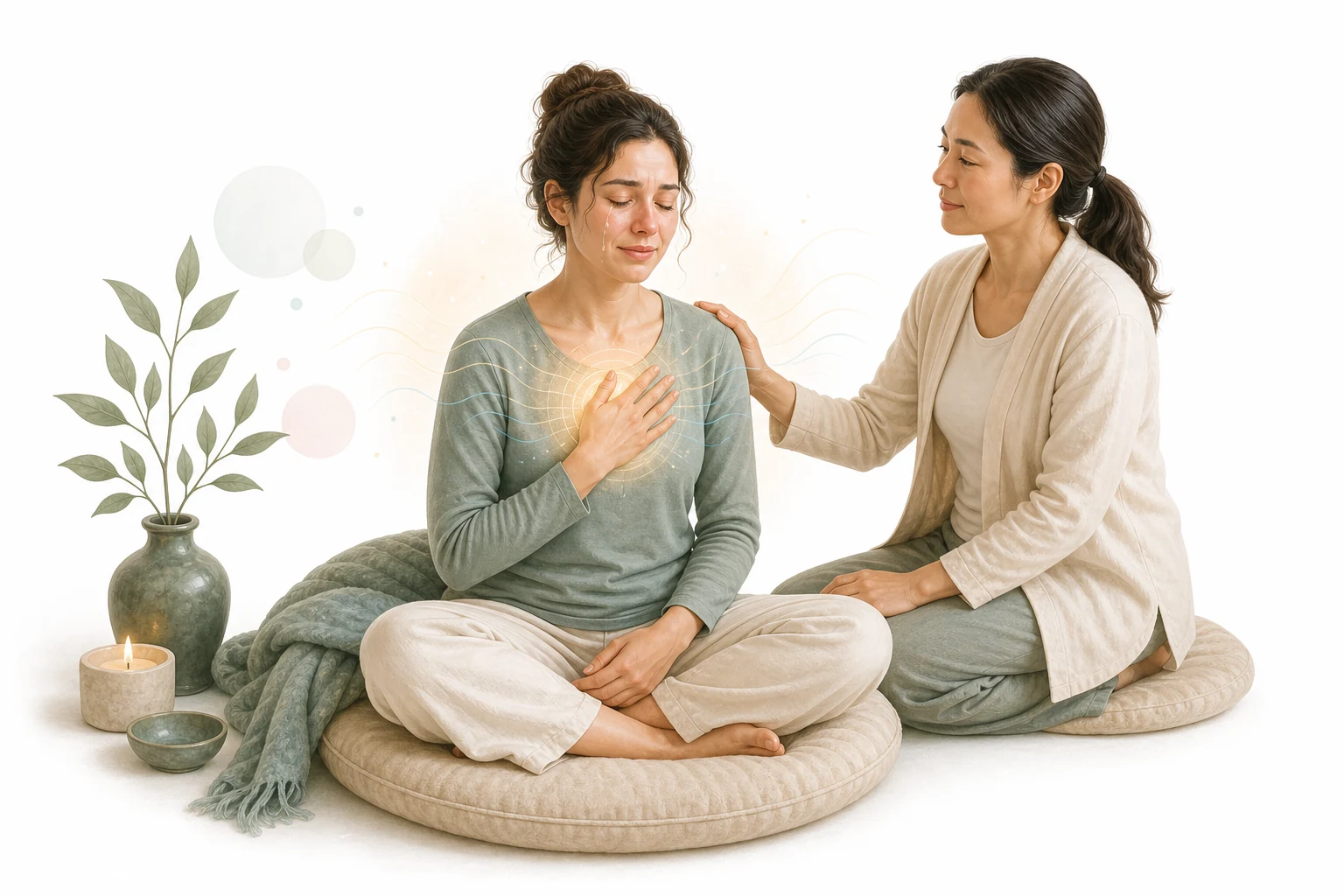
The Body Remembers
Why Emotions Surface During and After Reiki
The body stores emotions. Not metaphorically. Physically. Tension in the shoulders. A knot in the stomach. Tightness in the chest. These are emotions held in tissue.
When Reiki relaxes the body, the holding patterns release. The tension melts. And the emotions that were stored in that tension surface. This is emotional release.
Crying is the most common form. But emotional release can also look like laughing, yawning, sighing, feeling sudden anger, or experiencing unexpected joy. All are normal. All are healthy.
The Emotional Release Process
How stored emotions surface during Reiki.
Stored Emotions
Tension, grief, fear, anger held in body. Stored in muscles, fascia, tissue.
Reiki Relaxation
Nervous system shifts. Muscles release. Holding patterns dissolve.
Emotional Release
Stored emotions surface. Crying, laughing, yawning, sighing. Normal and healthy.
Feeling Lighter
Emotion no longer stuck. Peace, clarity, relief. Integration.
The Physiology of Tears
Why Crying Is a Healthy Release
Crying is not a sign of weakness. It is not a sign that something is wrong. It is a physiological release mechanism. Tears contain stress hormones. Crying literally removes stress chemicals from your body.
There are three types of tears. Basal tears lubricate your eyes. Reflex tears respond to irritants like smoke. Emotional tears respond to feelings. Emotional tears have a different chemical composition. They contain stress hormones and pain-relieving endorphins.
When you cry after Reiki, you are not 'being emotional.' You are releasing stress hormones. You are literally detoxing emotions. Let it flow.
Supporting Emotional Release
How to Respond When You Cry After Reiki
First, do not suppress it. Do not apologize. Do not try to stop the tears. Emotional release is healing. Let it happen.
Second, do not try to figure out 'why.' You may not know why you are crying. That is fine. The body knows. You do not need to understand it intellectually.
Third, breathe. Deep, slow breaths help the release move through you. Do not hold your breath. Do not tighten your body. Soften. Let go.
Finally, after the release, drink water. Rest. Be gentle with yourself. The release may continue in waves. That is normal.
How Practitioners Understand Emotional Release
When a client cries during or after a session, I do not see it as a problem. I see it as a sign that something shifted. I offer tissues, water, and space. I do not try to stop the tears. I do not ask 'why.' I just hold space.
Emotional release is common and healthy. But if you feel overwhelmed or if the release continues for days, talk to your practitioner or a therapist. Reiki is not a substitute for mental health care.
If you have a history of trauma, emotional release can feel intense. Work with a trauma-informed practitioner. Have a support system in place. Reiki can support trauma healing, but it should be used alongside professional therapy, not instead of it.
Key takeaways
The shortest useful version of this page.
Crying after Reiki is common and normal. It is a sign of emotional release.
Stored emotions (grief, fear, anger) are held in the body. Reiki relaxes the body, allowing them to surface.
Crying is a healthy release. Tears contain stress hormones.
Do not suppress tears. Let them flow. Do not try to figure out 'why.'
Other forms of release include laughing, yawning, sighing, or feeling sudden emotions.
If emotional release feels overwhelming, talk to your practitioner or a therapist.
Frequently asked questions
Is it normal to cry during Reiki?
Yes. Very common. Many people cry during or after sessions. It is a sign of emotional release.
What if I do not know why I am crying?
That is fine. The body knows why. You do not need to understand it intellectually. Just let the tears flow.
What if I feel angry after Reiki?
Anger is also a form of emotional release. Stored anger is surfacing. Let it move through you. Do not direct it at anyone. Breathe. It will pass.
How long does emotional release last?
Usually minutes to hours. Occasionally, release can continue in waves for a few days. If it persists longer, talk to your practitioner or a therapist.
Should I stop Reiki if I cry every time?
No. Crying is a sign that Reiki is working. It means stored emotions are releasing. This is healing. Continue Reiki. The crying may decrease over time as the stored emotions clear.
Sources
Sources are listed for transparency. A citation supports only the claim it directly addresses. Prefer primary research, systematic reviews, government health agencies and official institutional pages when evaluating health-related statements.
- Bronwen and Frans Stiene, The Reiki Sourcebook, 2003.
- Practitioner experience and client reports.
- Studies on emotional tears and stress hormones.
Found a broken source or unsupported claim? Report a correction .