Reiki Benefits
What Reiki Is Best For
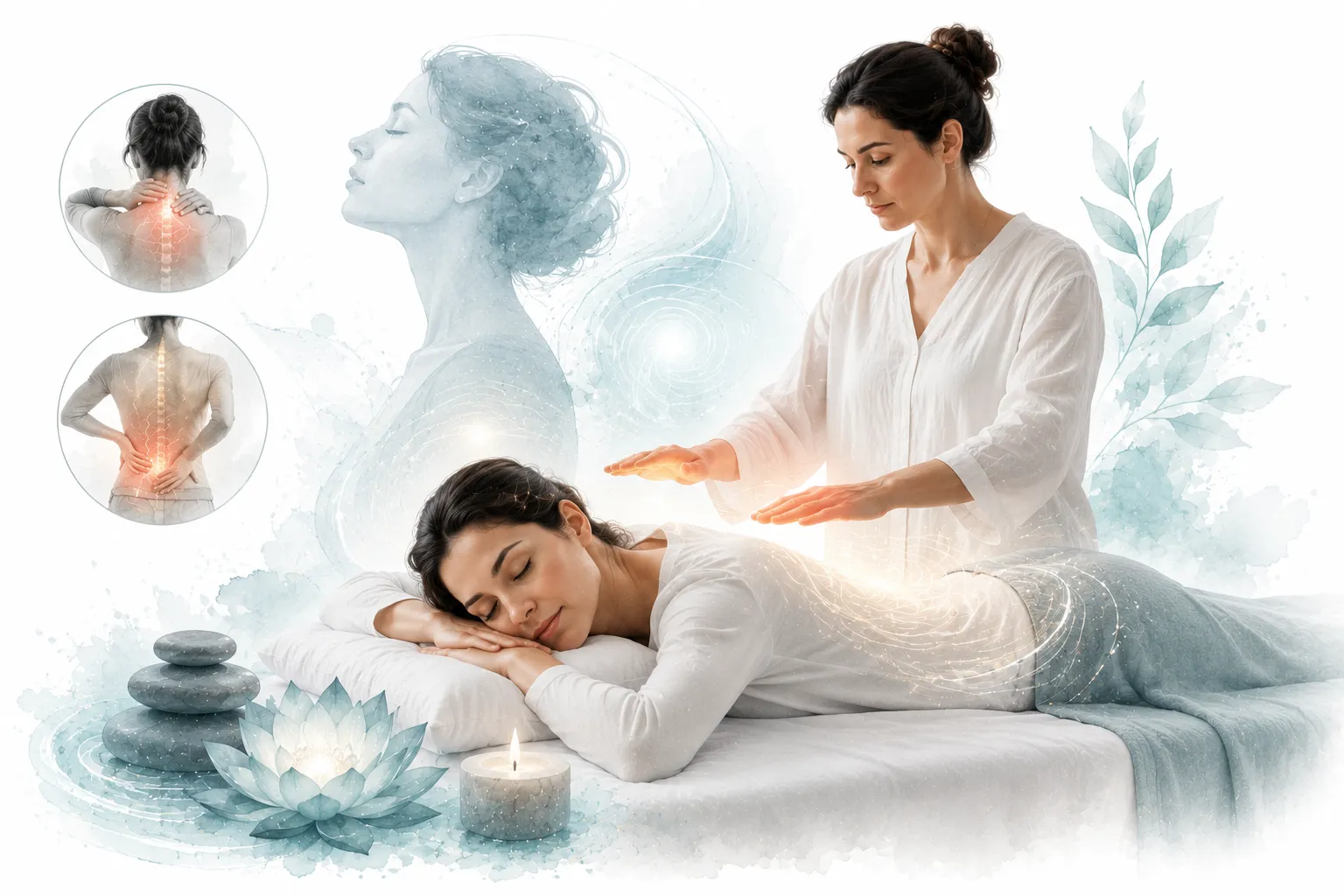
Reiki is a gentle, complementary therapy. It supports the body's natural healing abilities. It is not a cure for any disease.
The best evidence for Reiki is for stress reduction. Some studies have explored stress-related measures after Reiki, but findings remain limited.
People also use Reiki for anxiety, pain, sleep problems, and emotional healing. It is often used alongside medical care.
Reiki Benefits
What Reiki is good for.
Stress Reduction
Best evidence. Lowers cortisol. Activates relaxation.
Anxiety Relief
Limited evidence. Calms nervous system. Reduces worry.
Pain Management
Some evidence. Reduces pain perception.
Better Sleep
Common benefit. Improves sleep quality.
Emotional Healing
Supports release of stored emotions.
The Best Evidence
Reiki for Stress Reduction
Stress is the condition Reiki is best for. Some studies have explored stress-related measures after Reiki, but findings remain limited and do not establish a Reiki-specific mechanism.
Less stress means better sleep, lower blood pressure, and improved immune function. Reiki helps your body recover from chronic stress.
If you are stressed, Reiki can help. It is gentle. It is effective. It has no side effects.
Calming the Mind
Reiki for Anxiety
Anxiety is a common reason people try Reiki. Reiki calms the nervous system. It reduces worry. It helps you feel safe.
Reiki is not a cure for anxiety disorders. But it can help manage symptoms. It can be used alongside therapy and medication.
Many people with anxiety find Reiki helps them feel more grounded and less reactive.
Managing Discomfort
Reiki for Pain
Reiki may help with pain. It does not treat the cause of pain. It changes how you experience it.
The relaxation response reduces pain perception. Less stress means less pain. Reiki can help with chronic pain, back pain, and headaches.
Always see a doctor for pain. Use Reiki alongside medical care.
Key takeaways
The shortest useful version of this page.
Reiki is best for stress reduction.
It also helps with anxiety, pain, sleep, and emotional healing.
Reiki is not a cure for any disease.
Reiki is a complementary therapy, not an alternative.
Always continue medical care.
Reiki supports overall well-being.
Frequently asked questions
What is Reiki best for?
Stress reduction is what Reiki is best for. It also helps with anxiety, pain, and sleep.
Is Reiki good for chronic pain?
Some people find Reiki helps with chronic pain. It is not a cure. Use it alongside medical care.
Is Reiki good for anxiety?
Yes. Reiki calms the nervous system. It is often used for anxiety.
Is Reiki good for depression?
Reiki may help with depression symptoms. It is not a cure. Use it alongside therapy and medication.
Is Reiki good for cancer patients?
Yes. Reiki is used in many cancer centers for symptom management. It does not treat cancer. It helps with side effects.
Sources
Sources are listed for transparency. A citation supports only the claim it directly addresses. Prefer primary research, systematic reviews, government health agencies and official institutional pages when evaluating health-related statements.
- National Center for Complementary and Integrative Health (NCCIH), Reiki Research.
- Bronwen and Frans Stiene, The Reiki Sourcebook, 2003.
- Practitioner experience and guidance.
Found a broken source or unsupported claim? Report a correction .