Your Own Hands
A Complete Guide to Self-Reiki Hand Positions
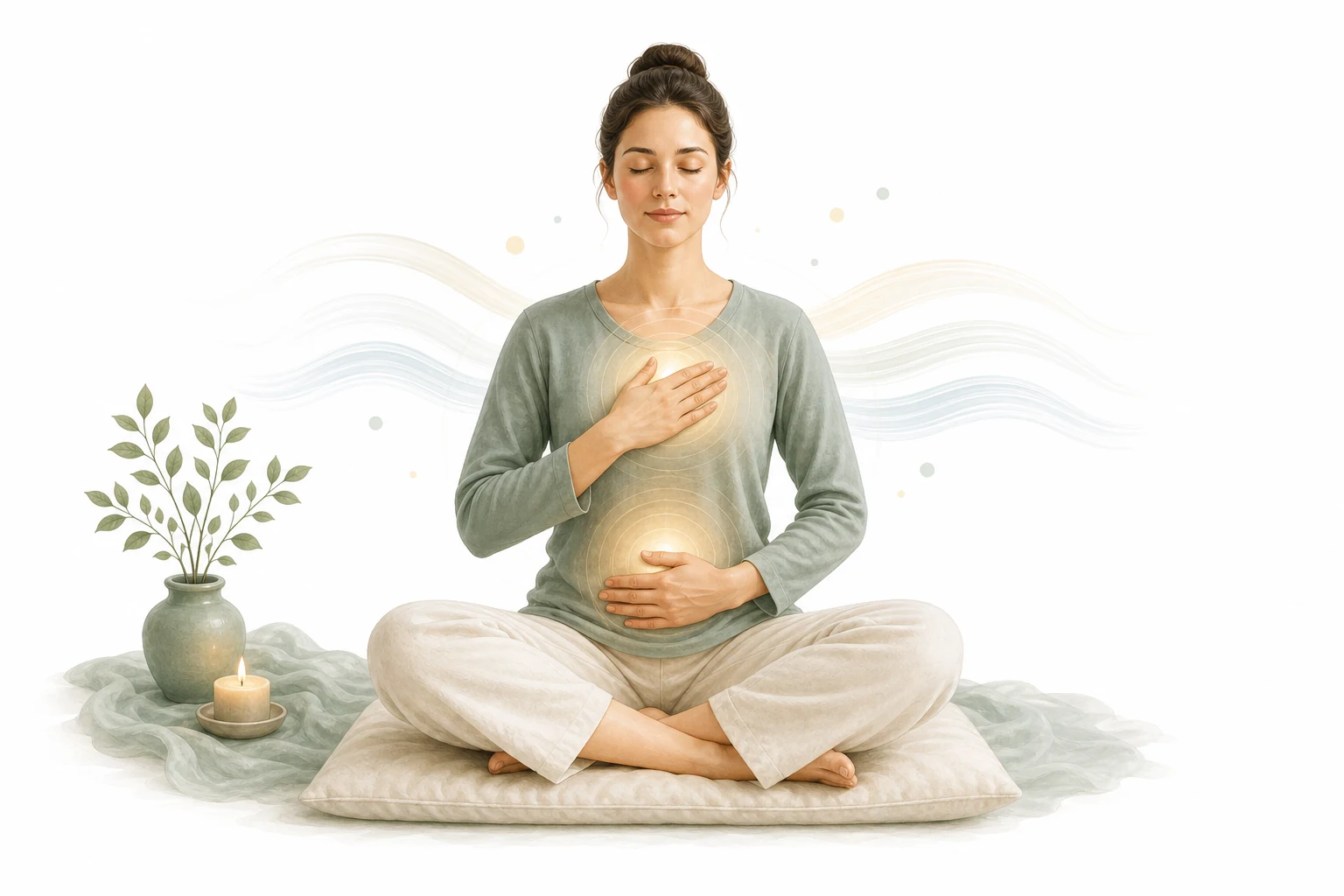
Self-Reiki is the foundation of traditional Usui Reiki practice. According to Reiki tradition, you heal yourself first. You cannot give what you do not have.
The practice is simple. You place your hands on your body. You hold intention. You relax. The energy flows. According to Reiki tradition, the energy flows where it is needed most.
You do not need to memorize all positions. Trust your intuition. Let your hands be guided. The more you practice, the more natural it becomes.
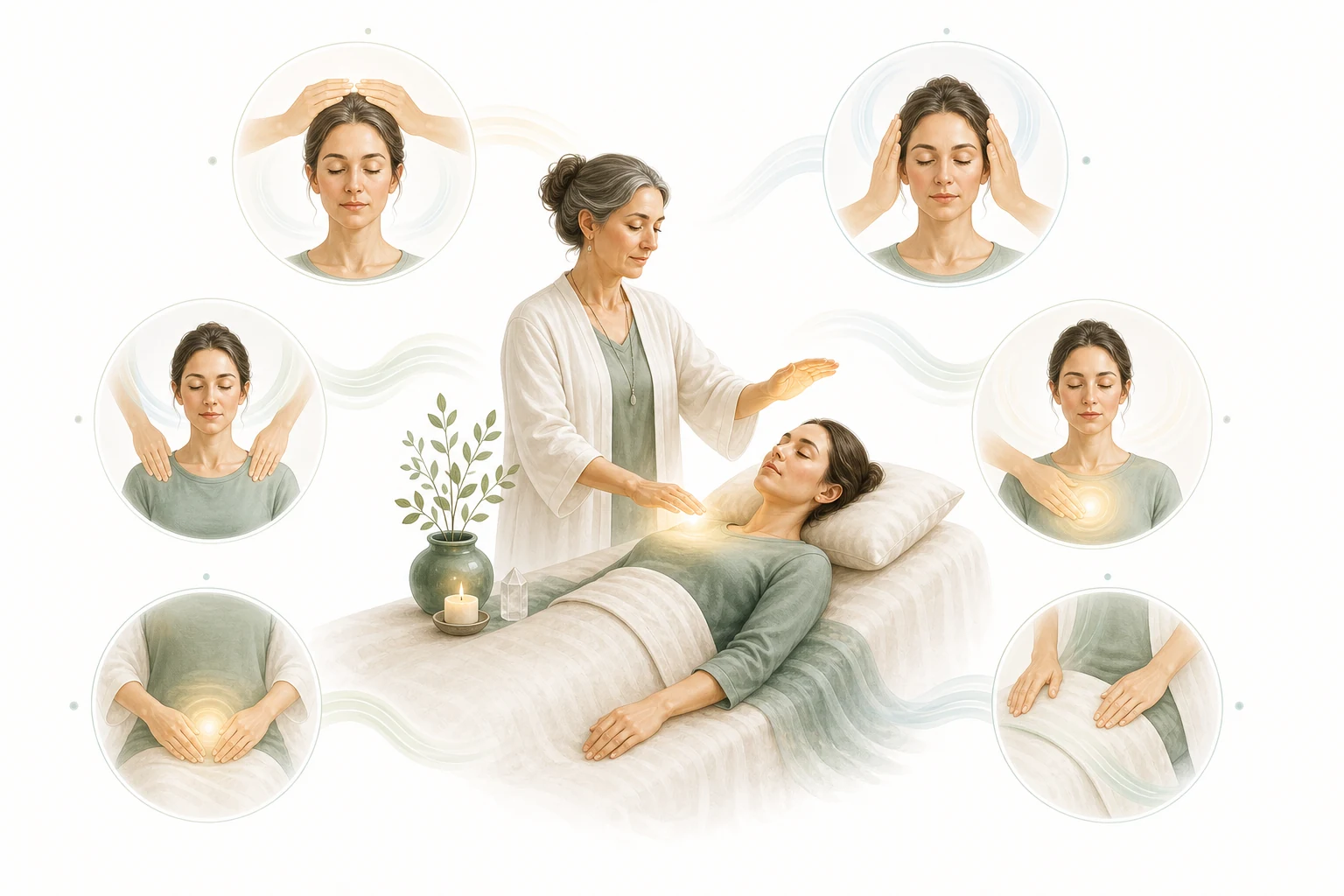
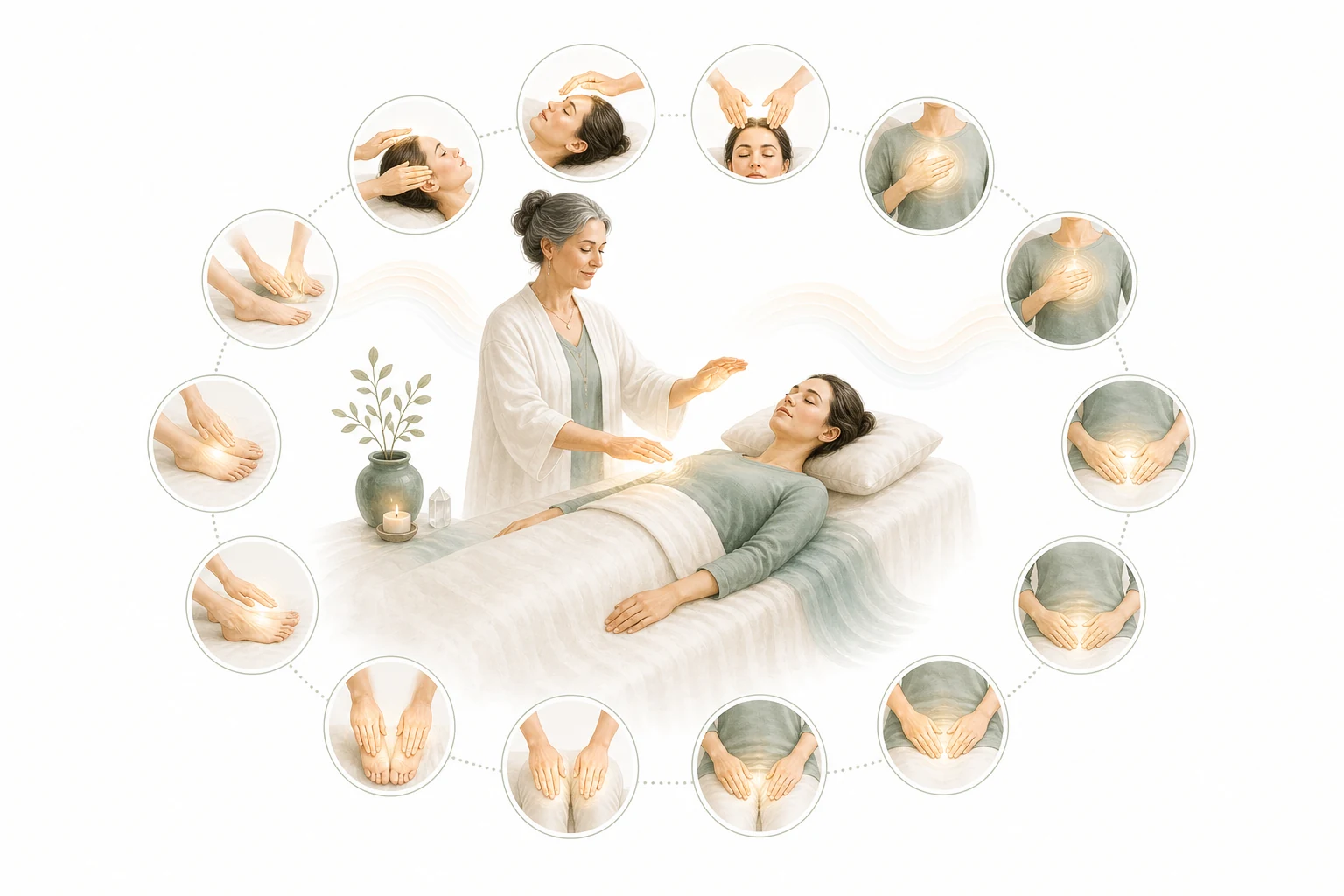
Self-Reiki Hand Positions
Standard hand positions for self-treatment.
Head and Eyes
Hands on crown, covering eyes. Relaxes mind and eyes.
Temples and Ears
Hands on sides of head. Releases jaw and ear tension.
Throat
Hand on throat. Communication and thyroid.
Chest
Hands on upper chest. Heart and lungs. Emotional release.
Stomach
Hands on abdomen. Digestion and solar plexus.
Pelvis
Hands on lower belly. Reproductive organs and hips.
Legs and Feet
Hands on thighs, knees, ankles, feet. Grounding.
Practical Instructions
How to Practice Self-Reiki Hand Positions
Find a quiet place where you will not be interrupted. Sit or lie down comfortably. Close your eyes.
Take three deep breaths. Release tension on the exhale. Settle into presence.
Place your hands on your crown, covering your eyes. Hold for 2-5 minutes. Feel the energy flowing.
Move down to your throat. Hold for 2-5 minutes. You may feel release of tension or emotion.
Move to your chest, over your heart. Hold for 2-5 minutes. This is the emotional center.
Move to your abdomen. Hold for 2-5 minutes. This is the personal power center.
Move to your lower belly. Hold for 2-5 minutes. This is the grounding and creative center.
Move to your thighs, knees, ankles, and finally feet. Spend 1-2 minutes on each.
Rest for a few minutes with your hands at your sides. Drink water. Notice how you feel.
Practitioner Wisdom
Tips for Self-Reiki Practice
Do not worry about doing it 'wrong.' According to Reiki tradition, Reiki flows whether your hands are in the 'correct' position or not.
You do not need to feel sensations to be effective. Some practitioners feel a lot. Some feel nothing. Both give effective Reiki.
Practice daily. Consistency matters more than session length. Even 10 minutes helps.
If you miss a day, do not worry. Just practice the next day. The practice is not about perfection. It is about showing up.
Key takeaways
The shortest useful version of this page.
Self-Reiki is the foundation of traditional Usui Reiki practice.
Practice daily, even if only for 10-15 minutes.
Follow the hand positions from head to feet.
Stay in each position 2-5 minutes, or until the energy shifts.
Trust your intuition. If an area calls for attention, stay there.
After the session, rest and hydrate.
Consistency matters more than session length.
Frequently asked questions
How long should a self-Reiki session be?
A full session with all hand positions takes 30-60 minutes. A short session of 10-15 minutes is also beneficial. Consistency matters more than duration.
Can I do self-Reiki in bed?
Yes. Many people practice self-Reiki as they fall asleep or when they wake up.
What if I cannot reach all areas?
Use hovering hands. You do not need to touch the body. Hovering is also Reiki.
How many hand positions are there?
There are 12-15 standard positions. But you do not need to use all of them. Trust your intuition.
What if I do not feel anything during self-Reiki?
That is normal. Feeling nothing does not mean nothing is happening. Reiki works whether you feel it or not.
Sources
Sources are listed for transparency. A citation supports only the claim it directly addresses. Prefer primary research, systematic reviews, government health agencies and official institutional pages when evaluating health-related statements.
- Bronwen and Frans Stiene, The Reiki Sourcebook, 2003.
- Traditional Usui Reiki Level 1 teaching materials.
- Practitioner experience and client reports.
Found a broken source or unsupported claim? Report a correction .