Step by Step
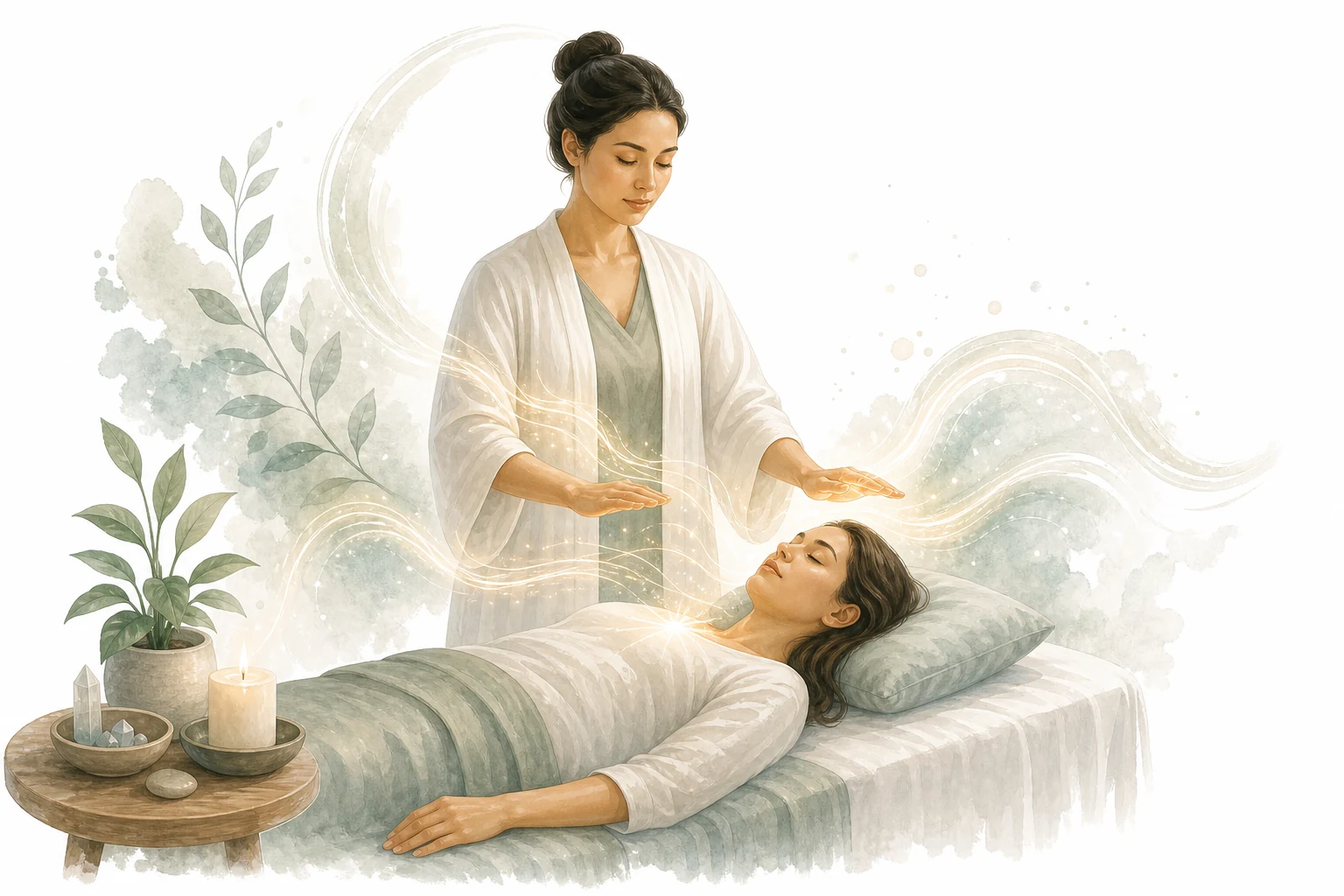
A Complete Guide to Giving a Reiki Session
Giving Reiki to someone else is both simple and profound. The technique is straightforward. The experience is unique every time.
This guide assumes you have received a Reiki attunement. Self-practice is essential before treating others. You cannot give what you do not have.
Remember: Reiki is not about you. You are a channel. The less you try to 'do,' the more Reiki can flow. Trust the process. Trust the energy.
Standard Reiki Hand Positions
Common hand positions for a full body session.
Head and Eyes
Hands on crown, covering eyes. Relaxes mind and eyes.
Temples and Ears
Hands on sides of head. Releases jaw and ear tension.
Throat
Hands on front and back of neck or one hand on throat. Communication and thyroid.
Chest/Heart
Hands on upper chest. Heart and lungs. Emotional center.
Stomach/Solar Plexus
Hands on upper abdomen. Digestion, personal power, stress.
Pelvis
Hands on lower belly. Reproductive organs, hips, grounding.
Legs
Hands on thighs, knees, ankles. Grounding, circulation.
Feet
Hands on soles or tops of feet. Grounding, completion.
Detailed Instructions for Each Phase
A complete walkthrough of a Reiki session.
Prepare the Space
Choose a quiet room where you will not be interrupted. Have a massage table or comfortable surface. Provide a blanket if needed. Play soft music if desired. Dim the lights.
Like setting the stage before a play.Get Consent
Explain what will happen. Ask if the recipient has any concerns. Get explicit permission to touch. Explain they can say stop at any time.
Like asking before hugging someone.Ground Yourself
Take three deep breaths. Set your intention: 'I am a channel for Reiki healing. May this session be for the highest good.' Call in Reiki energy.
Like centering yourself before a performance.Begin at the Head
Place your hands gently on the recipient's crown and over their eyes. Hold for 2-5 minutes. Notice sensations.
Like cupping a baby bird.Move Down the Body
Follow the standard hand positions. Stay in each position until you feel the energy change or stop. Trust your intuition. If a position feels 'stuck,' stay longer.
Like following a map, but taking detours when something catches your eye.Use Intuition
If you feel drawn to an area not in the standard positions, go there. If you feel heat or pulsing, stay longer. If you feel cold or stagnation, stay until it shifts.
Like a GPS that reroutes based on traffic.End at the Feet
Finish with hands on the feet. This grounds the energy. Hold for a few minutes.
Like putting the car in park.Ground the Recipient
Gently touch their feet or shoulders. Say something like 'I am completing the session. Take your time coming back.'
Like gently waking someone from a nap.Aftercare
Offer water. Suggest rest and hydration. Recommend no alcohol for 24 hours. Suggest self-Reiki.
Like giving someone an umbrella as they leave.
Practitioner Wisdom
Tips for New Practitioners
Do not worry about doing it 'wrong.' Reiki flows whether your hands are in the 'correct' position or not.
You do not need to feel sensations to be effective. Some practitioners feel a lot. Some feel nothing. Both give effective Reiki.
The recipient falling asleep is a good sign. It means deep relaxation.
If you feel tired after sessions, ground yourself. Practice self-Reiki. The tiredness usually passes.
Practice on friends and family before offering paid sessions. Experience builds confidence.
Always prioritize your own self-Reiki practice. You cannot pour from an empty cup.
Key takeaways
The shortest useful version of this page.
Prepare the space and get consent before starting.
Ground yourself and set your intention.
Follow standard hand positions from head to feet.
Stay in each position 2-5 minutes, or until the energy shifts.
Trust your intuition. Let your hands be guided.
End at the feet and ground the recipient.
Offer aftercare guidance: rest, hydrate, avoid alcohol.
This guide is for attuned practitioners only.
Frequently asked questions
Do I need to memorize all the hand positions?
Not at first. Use a diagram as a reference. With practice, the positions become natural. Trust your intuition to guide you.
How long should a session last?
45-90 minutes is typical. Shorter sessions (15-30 minutes) are fine for specific issues or when time is limited.
What if I do not feel anything during the session?
That is normal. Practitioners often say sensation is optional and not required for a session. Scientific evidence has not established a specific therapeutic effect independent of context or expectation.
Can I talk during Reiki?
Some practitioners talk. Most prefer silence to allow deep relaxation. Brief check-ins ('Is this pressure okay?') are fine.
What if the recipient has a strong emotional release?
This is normal. Stay calm. Reassure them it is okay. Do not try to stop the release. If they seem overwhelmed, gently ground them with touch on the feet or shoulders.
Sources
Sources are listed for transparency. A citation supports only the claim it directly addresses. Prefer primary research, systematic reviews, government health agencies and official institutional pages when evaluating health-related statements.
- Traditional Reiki teaching materials.
- Bronwen and Frans Stiene, The Reiki Sourcebook, 2003.
- Practitioner experience and clinical guides.
Found a broken source or unsupported claim? Report a correction .