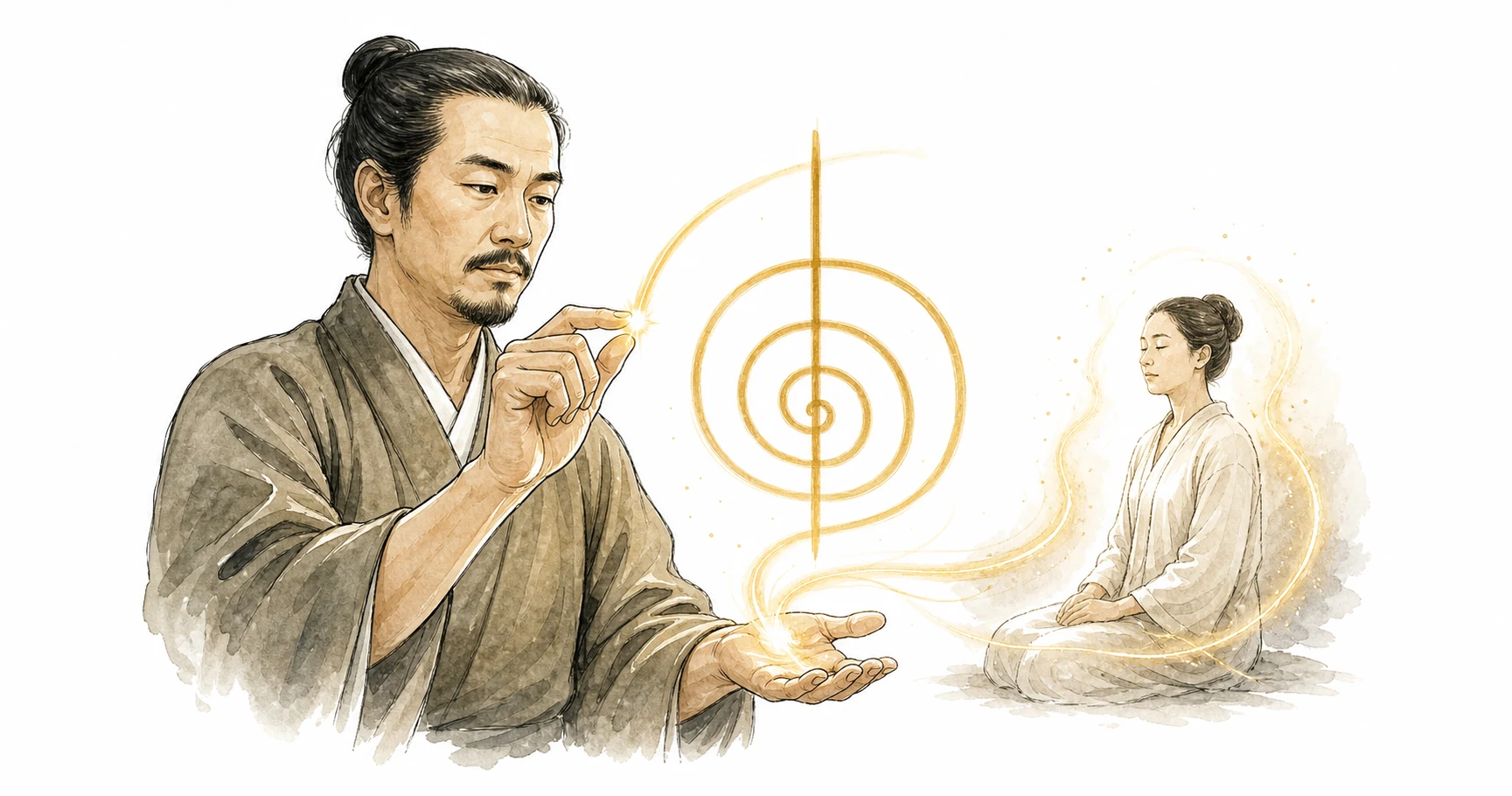
Three Ways to Give Reiki
Hands-On, Hands-Off, and Distance Reiki
Reiki is energy. Energy does not require physical contact. It flows through intention. Touch is one way to direct it. It is not the only way.
There are three main ways to give Reiki: hands-on (gentle touch), hands-off (hovering hands), and distance Reiki (sending energy across space and time).
All three are equally valid. All three are Reiki. The key is intention. The energy flows where you direct it.
Three Ways to Give Reiki
Hands-on, hands-off, and distance Reiki.
Hands-On Reiki
Gentle touch on the body. Combines energy with the comfort of touch.
Hands-Off Reiki
Hovering hands above the body. Used for sensitive areas, burns, or when touch is not desired.
Distance Reiki
Sending Reiki across space and time. Uses the Hon Sha Ze Sho Nen symbol.
Traditional Touch
Hands-On Reiki
Hands-on Reiki is the most common traditional method. The practitioner places hands gently on the recipient's body.
The touch is gentle. It is not massage. It is not pressure. It is simply resting hands. The energy flows through the hands into the body.
Many people find the touch comforting. It provides a sense of connection and safety. It is the traditional method taught in most Reiki classes.
No Touch
Hands-Off Reiki
Hands-off Reiki is exactly what it sounds like. The practitioner holds hands above the body, without touching.
This is used for sensitive areas: the face, burns, wounds, or areas of pain. It is also used when the recipient prefers not to be touched.
The energy still flows. Touch is not required. The hands are still directing the energy. The intention is the same.
Across Space and Time
Distance Reiki
Distance Reiki is sending Reiki to someone who is not physically present. The recipient can be in another room, another city, or another country.
Distance Reiki uses the Hon Sha Ze Sho Nen symbol. It transcends time and space. The energy flows regardless of distance.
Many people find distance Reiki equally effective. Recipients often report feeling warmth, tingling, or relaxation during distance sessions.
How Practitioners Choose the Method
I use all three methods. Hands-on for comfort. Hands-off for sensitive areas. Distance for clients who cannot come in person. All three work. The choice depends on the situation, not the effectiveness.
Touch is not required for Reiki. But it is lovely. Touch provides comfort and connection. If someone wants touch, I use it. If someone prefers no touch, I use hands-off. Both are Reiki.
Always ask permission before touching. Some people do not want to be touched. Respect their boundaries. Use hands-off or distance Reiki instead.
Key takeaways
The shortest useful version of this page.
Reiki does not require touch. It can be done hands-on, hands-off, or from a distance.
Hands-on Reiki uses gentle touch. It is the traditional method.
Hands-off Reiki uses hovering hands. It is used for sensitive areas or when touch is not desired.
Distance Reiki sends energy across space and time. It is equally effective.
The key is intention, not touch.
Always ask permission before touching.
Frequently asked questions
Is touch required for Reiki to work?
No. Reiki works with or without touch. Hands-off and distance Reiki are equally effective.
Can I do Reiki without touching someone?
Yes. Use hands-off Reiki (hovering hands) or distance Reiki.
Is distance Reiki as effective as hands-on Reiki?
Yes. Many practitioners find distance Reiki equally effective. The energy flows regardless of distance.
Why do some practitioners touch and others not?
Touch is traditional and provides comfort. But some people prefer no touch. Both are valid.
Can I do Reiki on myself without touch?
Yes. You can use hands-off self-Reiki (hovering hands) or just set the intention. Self-Reiki works without touch too.
Sources
Sources are listed for transparency. A citation supports only the claim it directly addresses. Prefer primary research, systematic reviews, government health agencies and official institutional pages when evaluating health-related statements.
- Bronwen and Frans Stiene, The Reiki Sourcebook, 2003.
- Traditional Usui Reiki teachings.
- Practitioner experience and guidance.
Found a broken source or unsupported claim? Report a correction .