The Chakra Perspective on Hypertension
How Different Chakras May Contribute to High Blood Pressure
In chakra theory, physical symptoms are often the result of energetic imbalances. High blood pressure is no exception. It is typically seen as involving multiple chakras, not just one.
The root chakra (first chakra, at the base of the spine) is associated with survival, security, and the adrenal glands. Chronic fear or insecurity can keep the root chakra overactive, leading to chronic fight-or-flight activation. This raises blood pressure.
The solar plexus chakra (third chakra, upper abdomen) is associated with personal power, stress, and control. Chronic stress and control issues can imbalance this chakra, contributing to hypertension.
The heart chakra (fourth chakra, center of chest) is associated with the physical heart, circulation, and emotions like anger and resentment. Unprocessed anger is a known contributor to high blood pressure in both conventional and energy medicine.
Chakras and Blood Pressure
Which chakras are most involved in hypertension.
Root Chakra
Fear, insecurity, survival. Fight-or-flight activation. Elevated cortisol and blood pressure.
Solar Plexus
Stress, control, power. Chronic tension. Elevated stress hormones and blood pressure.
Heart Chakra
Anger, resentment, grief. Direct physical effect on heart and circulation. Hypertension.
Other Chakras
Less directly involved, but overall balance affects all physical systems.
The Survival Center
Root Chakra and High Blood Pressure
The root chakra is located at the base of the spine. It is associated with the color red, the earth element, and the emotions of safety, security, and survival.
When the root chakra is out of balance, you may feel fearful, anxious, insecure, or disconnected from your body. You may feel like the world is not safe.
This triggers the adrenal glands to produce cortisol and adrenaline. The body goes into fight-or-flight mode. Chronic root chakra imbalance leads to chronic fight-or-flight activation. This raises blood pressure.
Healing the root chakra involves grounding practices: walking barefoot, spending time in nature, eating root vegetables, and Reiki on the root chakra area.
The Emotional Center
Heart Chakra and High Blood Pressure
The heart chakra is located in the center of the chest. It is associated with the color green, the air element, and the emotions of love, compassion, anger, resentment, and grief.
When the heart chakra is out of balance, you may hold onto anger, resentment, or grief. You may have difficulty forgiving. You may feel disconnected from love.
Unprocessed anger is a known contributor to high blood pressure in both conventional medicine and energy medicine. The heart chakra directly affects the physical heart and circulation.
Healing the heart chakra involves practices that open the heart: forgiveness work, gratitude practice, self-compassion, and Reiki on the heart chakra area.
How Reiki Addresses Chakra Imbalances in Hypertension
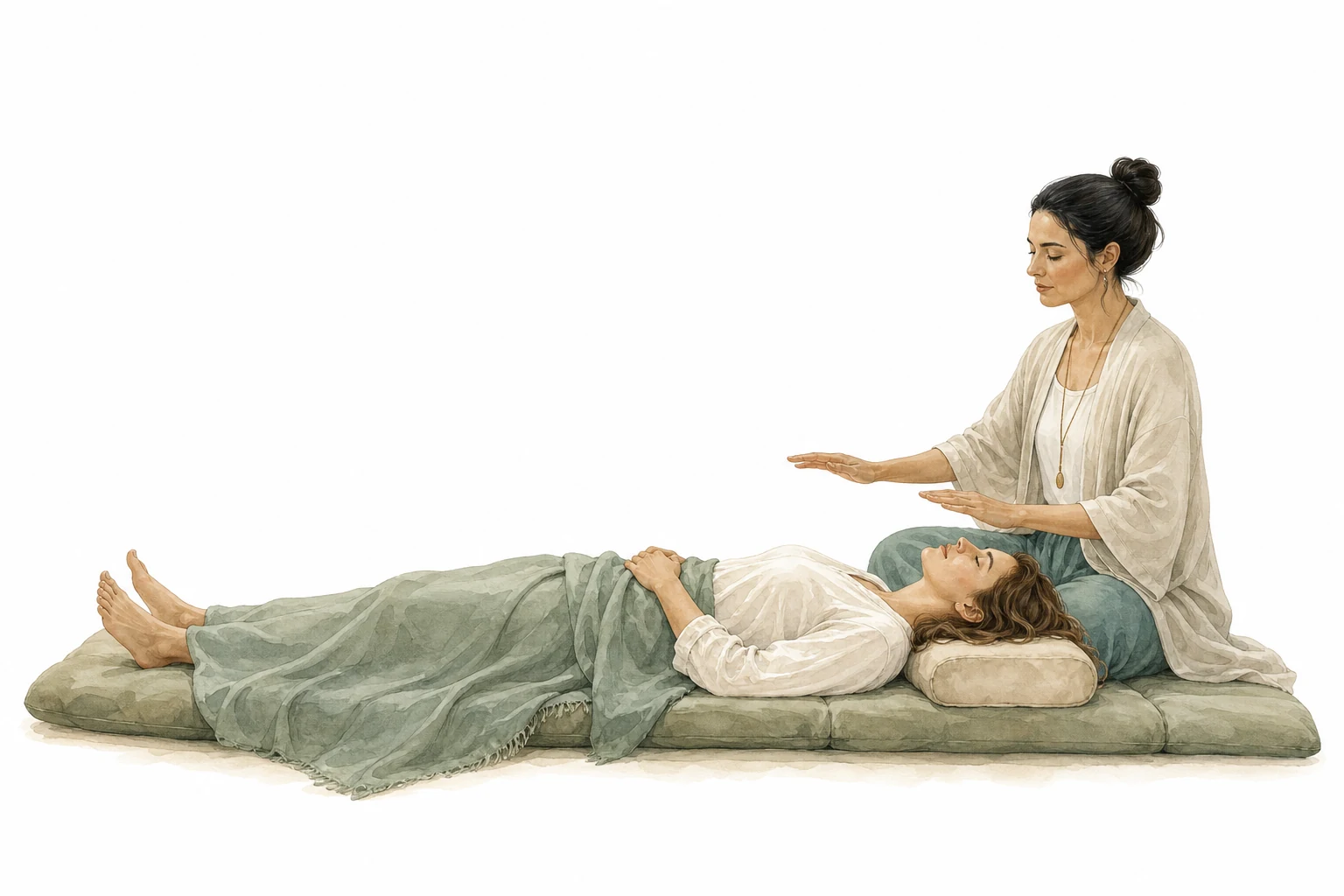
When a client has high blood pressure, I work on all the chakras, but I pay special attention to the root, solar plexus, and heart. I look for areas that feel cold, dense, or stagnant. I use Reiki to balance and open these chakras.
Chakra work is complementary to medical care. It can help address the stress, fear, and anger that contribute to high blood pressure. But it is not a replacement for medication or medical monitoring.
Do not stop blood pressure medication because you are working on your chakras. Continue medical care. Use Reiki and chakra balancing alongside your doctor's recommendations.
Key takeaways
The shortest useful version of this page.
In chakra theory, high blood pressure typically involves the root, solar plexus, and heart chakras.
Root chakra imbalance: fear, insecurity, chronic fight-or-flight activation.
Solar plexus imbalance: chronic stress, control issues, power struggles.
Heart chakra imbalance: anger, resentment, unprocessed grief.
Reiki can help balance these chakras alongside medical treatment.
Chakra work complements, does not replace, medical care for hypertension.
Frequently asked questions
Can balancing my root chakra lower my blood pressure?
It may help by reducing chronic stress and fear. But it is not a substitute for medication. Use chakra work alongside medical care.
How can I balance my heart chakra for blood pressure?
Practice forgiveness, gratitude, and self-compassion. Receive Reiki on the heart area. Spend time in nature. Do heart-opening yoga poses.
Which chakra is most important for blood pressure?
The root chakra (fear and survival) and the heart chakra (anger and circulation) are both very important. Work on both.
Can Reiki alone cure high blood pressure?
No. Reiki is complementary, not a cure. Continue medical treatment. Use Reiki for stress reduction and chakra balancing.
How often should I get Reiki for chakra balancing?
Weekly sessions are common for active work. Daily self-Reiki is ideal for maintenance.
Sources
Sources are listed for transparency. A citation supports only the claim it directly addresses. Prefer primary research, systematic reviews, government health agencies and official institutional pages when evaluating health-related statements.
- Anodea Judith, Eastern Body, Western Mind, 1996.
- Traditional chakra teachings.
- Reiki and chakra balancing practices.
- Bronwen and Frans Stiene, The Reiki Sourcebook, 2003.
Found a broken source or unsupported claim? Report a correction .