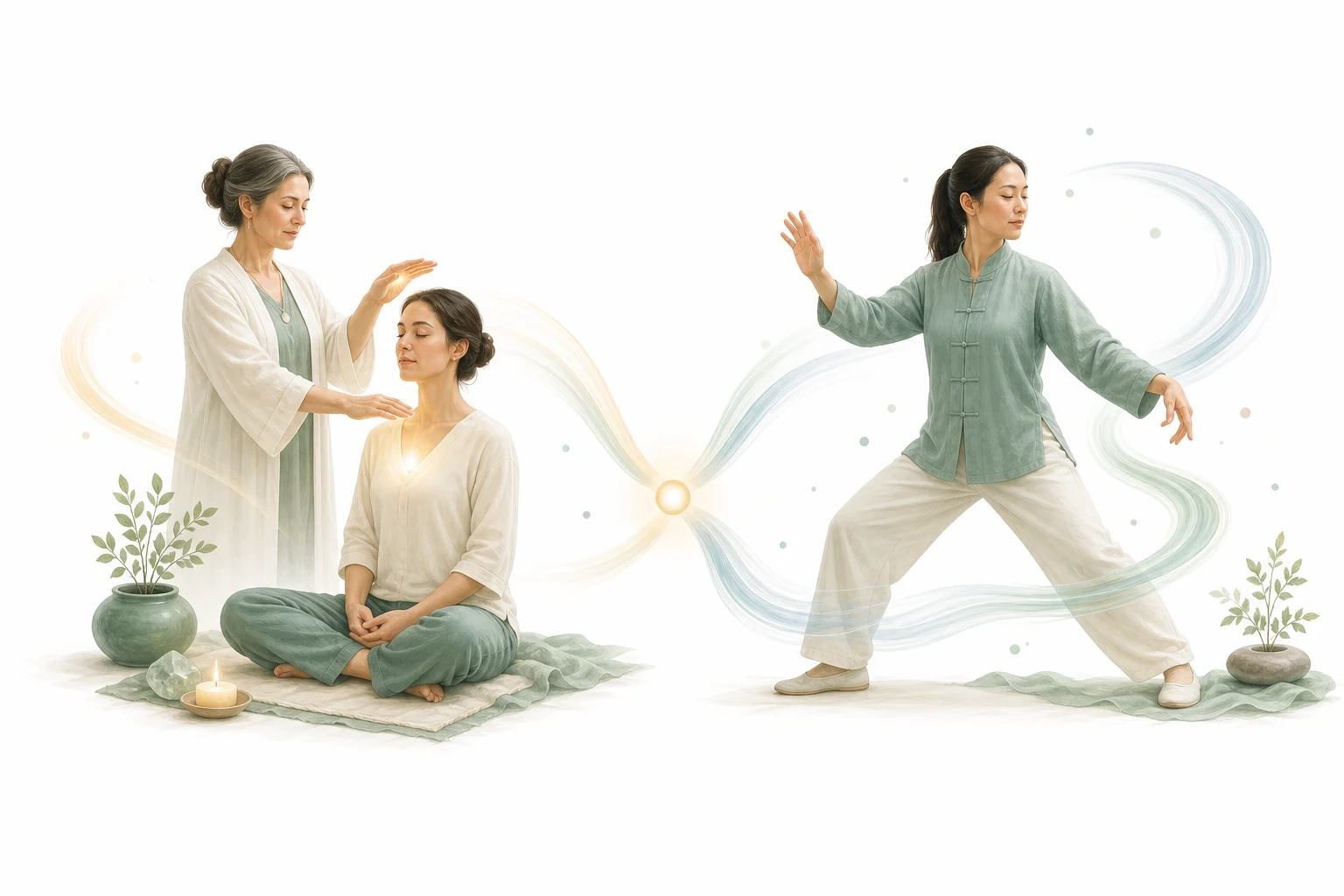
Energy Practices Compared
Reiki vs Qigong
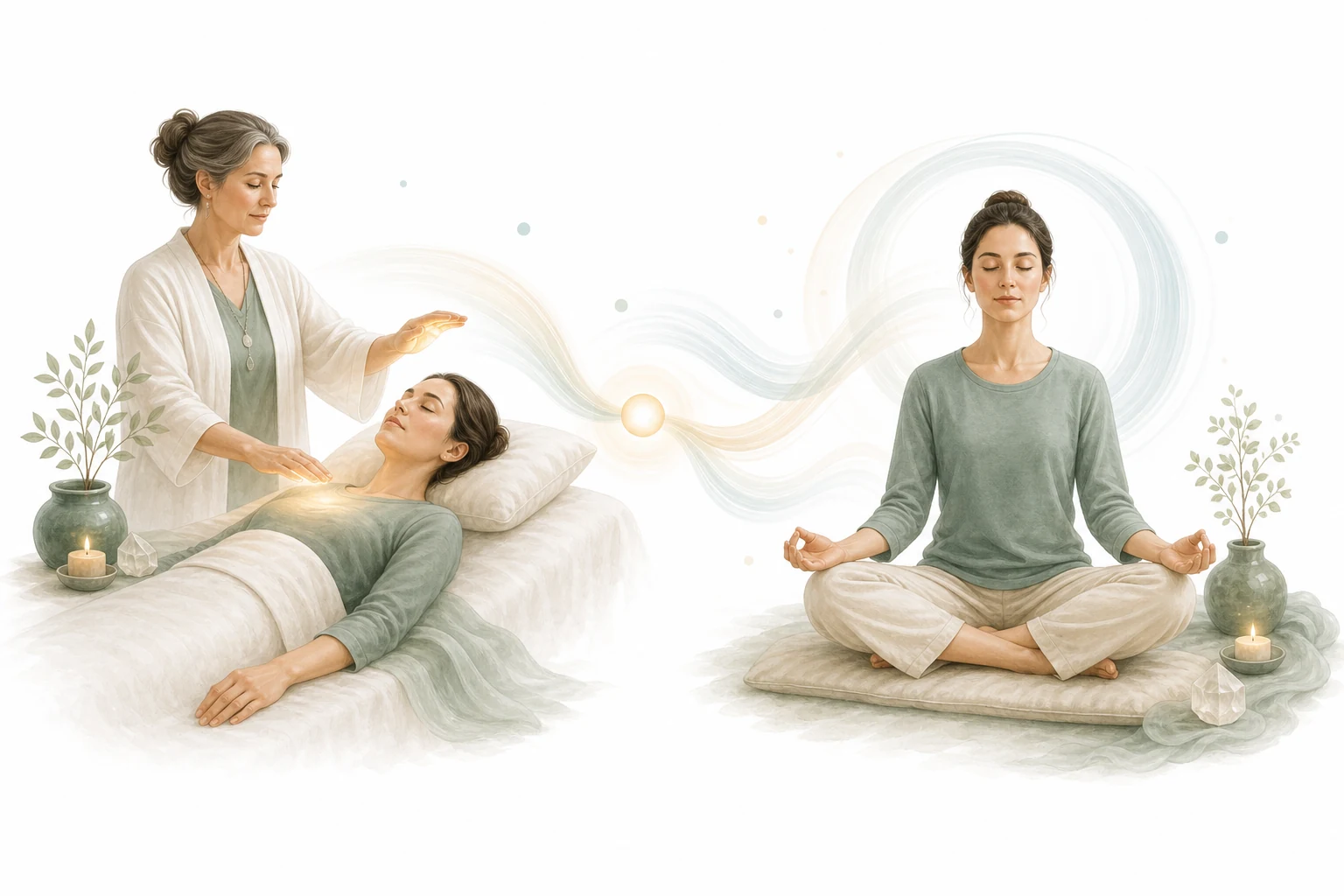
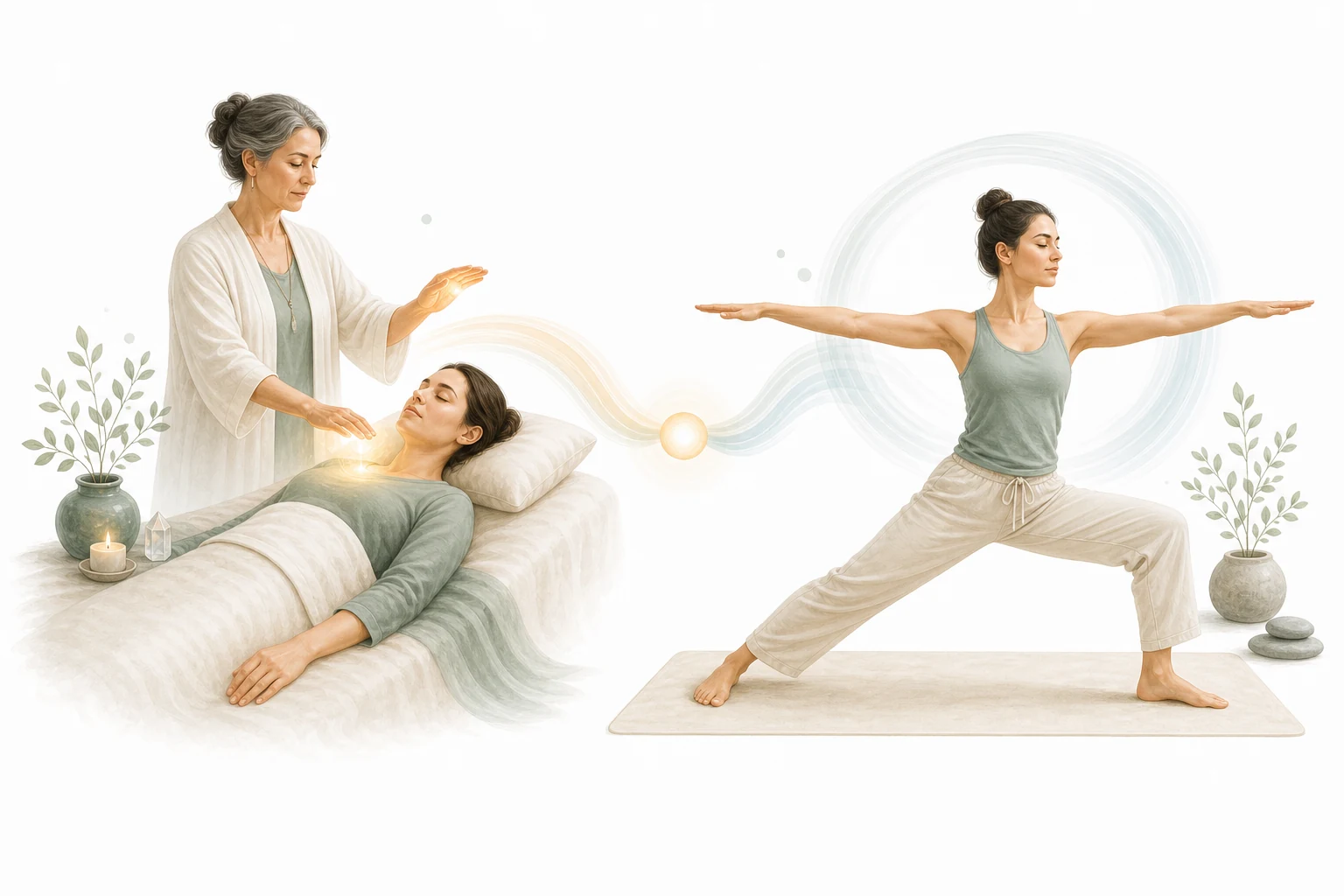
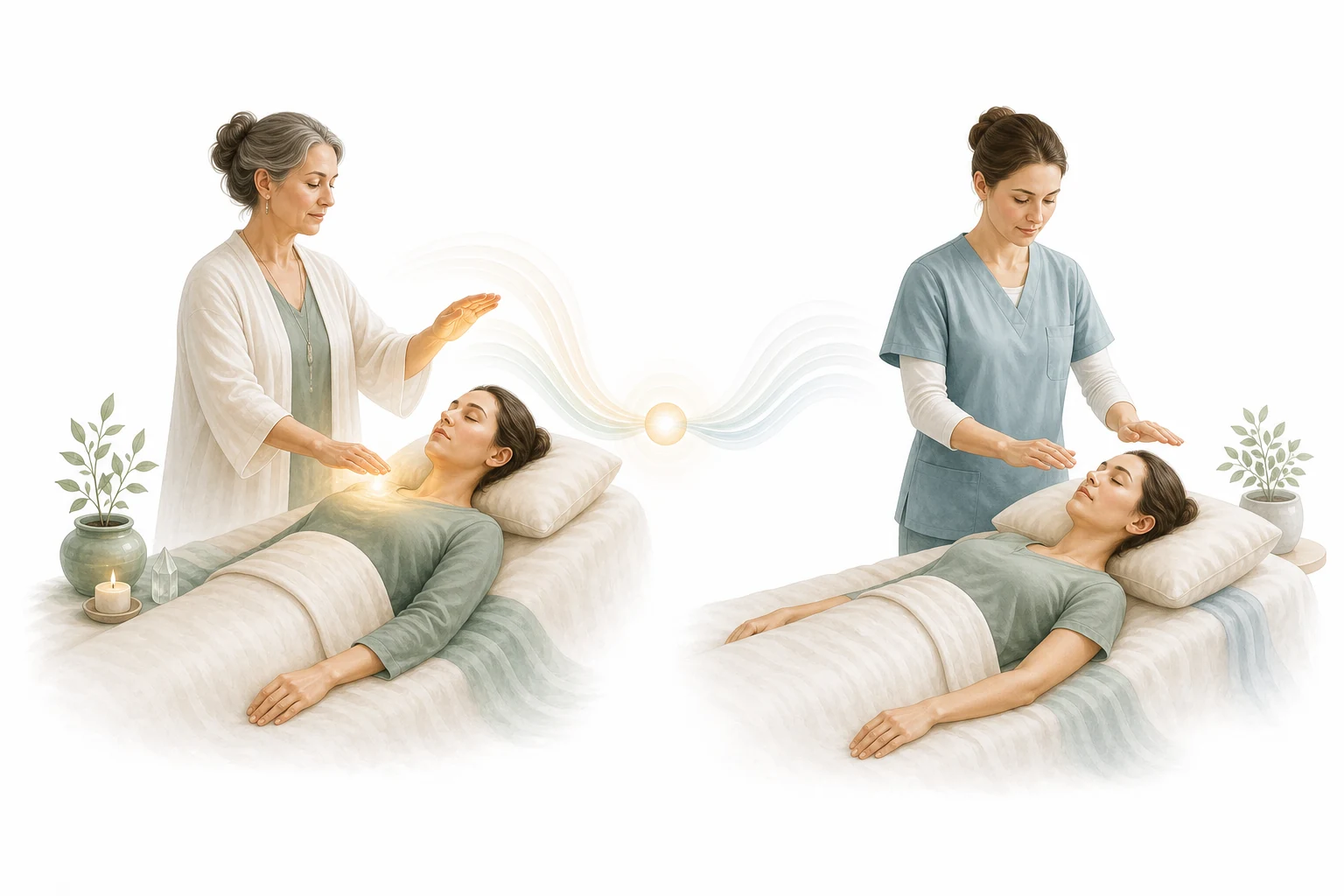
Reiki and qigong are different practices. Reiki is an energy healing practice where a practitioner places hands on or near the body to channel energy.
Qigong is a Chinese practice that involves movement, breath, and intention to cultivate and balance energy.
According to Reiki practitioners, Reiki works with universal energy. Qigong works with personal energy. Both are calming and healing. They can be combined.
Reiki vs Qigong
A side-by-side comparison.
Reiki
Hands-on energy healing. Japanese. Works with universal energy.
Qigong
Movement, breath, intention. Chinese. Works with personal energy.
Both
Energy practices. Calming. Healing. Can be combined.
The Japanese Practice
What Makes Reiki Unique
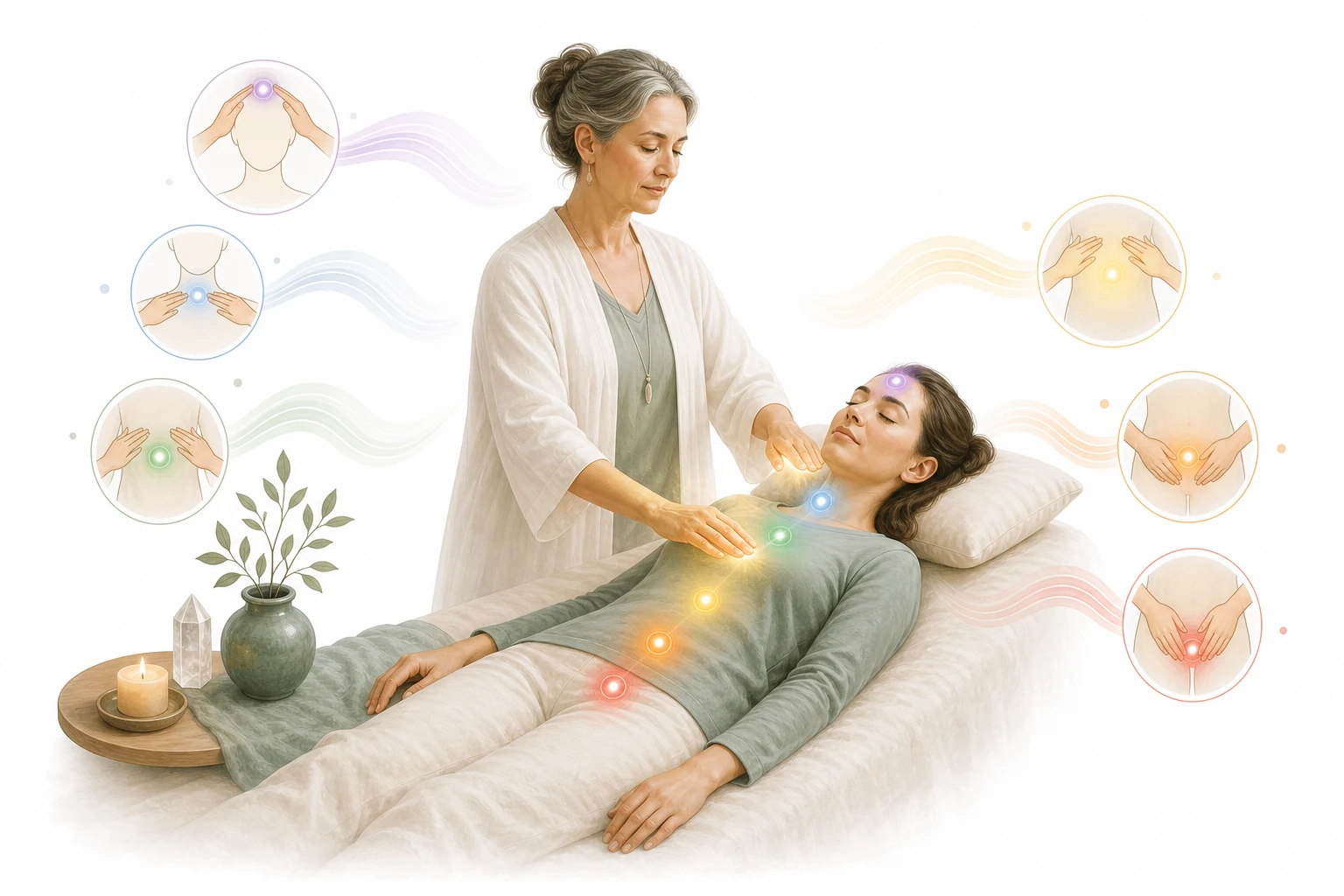
Reiki is an energy healing practice from Japan. According to Reiki tradition, it channels universal life energy through the hands.
Reiki can be done on yourself or with a practitioner. It involves placing hands on or near the body.
Reiki supports physical and emotional healing. It is calming and restorative.
The Chinese Practice
What Makes Qigong Unique
Qigong is a Chinese practice that involves movement, breath, and intention to cultivate and balance energy.
Qigong can be done alone. It does not require a practitioner.
Qigong supports energy balance, stress relief, and overall well-being.
Key takeaways
The shortest useful version of this page.
Reiki is hands-on energy healing from Japan.
Qigong involves movement, breath, and intention from China.
Reiki works with universal energy.
Qigong works with personal energy.
They can be combined.
Choose what works for you.
Frequently asked questions
What is the difference between Reiki and qigong?
Reiki is hands-on energy healing from Japan. Qigong involves movement, breath, and intention from China.
Can I do Reiki and qigong together?
Yes. Many people use both practices. They complement each other.
Which is better, Reiki or qigong?
Neither is better. They are different. Choose what works for you.
Does qigong require a practitioner?
No. Qigong can be done alone. You can practice at home or in a class.
Is qigong part of Reiki training?
No. Qigong is a separate practice. Some Reiki practitioners also practice qigong.
Sources
Sources are listed for transparency. A citation supports only the claim it directly addresses. Prefer primary research, systematic reviews, government health agencies and official institutional pages when evaluating health-related statements.
- Bronwen and Frans Stiene, The Reiki Sourcebook, 2003.
- Qigong research and practice.
- Traditional Reiki teachings.
Found a broken source or unsupported claim? Report a correction .